A compilation of posts on water. Ways of utilising water. As a tip: a cost-effective dump, as 'unintentional' 'run off' or as general human-caused eutrophication of water bodies. Taking risks with public health by polluting the elixir of wet for all life.
Water & public health:
On the use of water and on the creation of dead zones 28082007
The water bodies of the Earth are being used as a cost-effective way to dump the unwanted.
Drinking water and healthy water bodies Pt II 04090207
Sydney's drinking water, we are being told 'is no public health risk'. Some areas of Australian coasts are so polluted, that it “can cause selective inhibition of phytoplankton species”
Drinking water security sewage and emerging bugs Pt III 10092007
"Growing population centres and the inefficient use of water is “the greatest threat to waterways”. Urbanisation, norovirus, disease history
Drinking water, food & health:
Drinking water security, Sydney belly: Cryptosporidiosis, Giardia 17102007
Reducing risks when eating out 21092007
More on Sydney water, Health and Pollution 27092007
Manly restaurants and eateries - a wishlist 13112008
Draining Sub-urbia, 'run off' Eutrophication:
Water chemical mashup over suburbia 23082007
Shelly Beach palm gully creek 20102007
Impervious surfaces, spaces for cars and running toxins in urban heat islands:
The world as a car park - hot and oozing toxins running into our water streams 13092007
Lawns - water guzzling & toxic
Lawn transplants costing the Earth - Manly style 09082007
A mono-culture of petrol and water intensive regime of foreign grasses (lawn), noise, air and soil pollution.
Coastal lawns golf and pesticides 04082005
'Run-off' to Manly Beach, dog feces and chemical cocktails:
Water quality at the beach 09082007
Careless urban sprawl in coastal areas is devouring wetlands and other natural buffers such as dunes and beach grass that would otherwise help filter out dangerous pollution.“ Local beaches are ranked here for both faecal coliforms and enterococci. Some of the waterborne illnesses like gastroenteritis, dysentery, hepatitis, respiratory ailments etc. probably hit people 'out of the blue'. Toxic waste such as heavy metals etc also show their effects only after some time.
Suburbs draining toxins into Manly Beach and Lagoon 16012006  Suburbs drain toxins and feces to Manly beach and Manly lagoon as a way of disposing of these unwanted substances cheaply. All the everyday actions of the everyday people are then drained into the non 'my space'. Socialise externalities" Mr Galloway found that concentrations of nitrogen, phosphorus, copper, lead and zinc in Manly's stormwater exceed ANZECC guidelines for pollutant concentrations in waterways by between two and 168 times."
Draining Manly suburbs pipe at the beach 20102005
Can Manly afford not to share North Head with Penguins? 19102008
Red Tides in the making...
Preventing red tides at Shelly beach, Manly 06102008
Proud to waste water
Wasting water as a life-style 25032007
Desalination mega projects - Water as a commodity
Water and Desalination Factories by M. Barlow 08102008
Privatising water, offshore factories sludge in the ocean
Desalination - A mega project or water conservation and whales 13082008
Mnly tag: water
Blog Action Day 2010 Water, Twitter: blogactionday, #BAD2010
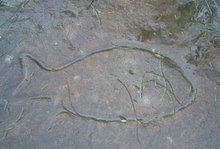
Images: 1. Water sculpture for gathering clouds by the Eora people of the Sydney sandstone region. 2. Ancient drinking trough (for horses ?) in a town square, Lake Constance
16 October 2010
Water on MNLY Blog

07 December 2008
Manly Ocean Care Day - A Green & Blue Network
 Manly Ocean Care Day Festival 2008 - Some impressions from along the beachfront:
The Maori community
was demonstrating their fibre and wood craft. Te Papa Wawata Ki Te Moana performed traditional songs. Using Native New Zealand flax (Phormium tenax and Phormium cookianum) women were demonstrating their weaving skills in a Pacific ambiance, that they had created in their hut. Beautiful handbags and backpacks with intricated patterns. Occasionally Pandanus and flax are also used.
There are some New Zealand flax plants in Manly delighting nectar-feeding birds, bats and possums. Of course there are many fibre plants, that the local Guringai population use/d. There are always weaving artefacts by Tjanpi, the Aboriginal women's basket weaving project from the Central Western Desert region of Australia available in Manly.
"Always was, always will be Aboriginal land"
Australians for Native Title and Reconcilitation (ANTaR ) was focussing on “ issues impacting on Aboriginal and Torres Strait Islander people”. Their Sea of Hands installation is well known.
The Aboriginal Heritage Office is caring for over 1000 sites of Aboriginal culture and heritage in the areas of Sydney known as North Sydney, Lane Cove, Willoughby, Manly, Warringah, Ku-ring-gai and Pittwater. They educate (pdfs) and one can volunteer to report back on the state of vandalism of the sites.
The Ocean & its wildlife
ORRCA is protecting and affording welfare of seals, sea lions, dolphins and dugongs.The rescue organisation trains people, gives advice on 1st aid for marine mammal rescue. They like to hear of any sightings 24/7 - Ph.: (02) 9415 3333
“The Nature Conservation Council works to conserve nature and protect the water we  drink, the air we breathe and the places we love.” It is “a non-profit, non-government organisation representing 120 community environment groups across NSW.” “Save Fluffy”, seemed so appropriate for Manly, with on average 2-3 dogs in harness. But they do mean the local Grey Nurse Shark which needs saving from exctinction.
NPA~Marine is the marine sector of NPA (National Parks Association of NSW), they are working with local communities, industries, scientists and government... to help create healthy oceans for the future of NSW.
Terrestial
The North Head Sanctuary will get its own nursery and propagate endemic flora.
Gardening
Great to hand out native Australian (endemic) plants.
Permaculture North is "Sharing Sustainable Solutions with Communities" They offer "an amazing array of skills in self reliance, energy & water conservation, qualified permaculture design and teaching". Rumour has it that there might be a community garden in the future and nature strips will be released from the terror of lawns and petrol 'gardening'.
Fauna WIRES is "helping injured, orphaned and displaced wildlife".
The stuffed variety of Australian wildlife was preferred as no one wanted to cuddle the poor creatures into discomfort. Leave them in THEIR habitat.
The cat cage was a good idea and should be compulsory.
A dog on the beach, as every day.
Draining Sub-urbia
Stormwater displays - where did all that coloured water go? Did they come in a cleaned car?
Public Spaces
People from Little Manly Beach want a public reserve zoned as Open Space not more real estate.
Edibles - Slow & Local Food
Slow Foods Sydney would like to “preserve and promote local culinary traditions and foods.” Go local-vore and organic, educate about junk food, agribusiness and factory foods. They do not like pesticides, but regional markets. Where were all the Manly chefs?
The Manly Food Coop, for that very local, low packaging organic food - of course.
Sustainable Seafoodies - Soon there will be an "an online guide to sustainable seafood in NSW" Again Manly chefs, do take note on your menues!
A lot on watertanks, solar equipment and light green commodities.
There were many more stalls and activities...
Ideas for future actions
It would be desirable to hand out less dead tree material and refer/put information/displays on the web. Additional networking could strengthen the causes and communities. There seemed to be a forest of resposibilities, eg if this creature is on the beach, in the ocean, on state territory or NPs etc. It is confusing. Too many boarder/ interests for the flux of life. An integrated ecological management plan would benefit the blue & green and all creatures in these biomes. Images:
1. Maori weaving
2. "Save Fluffy", Save the Grey Nurse Shark, nccnsw
3. Rigtail Possum, dazzled by the daylight
4. The Event along the Manly Beachfront
More:
Manly Beach Ocean Care Day Animation
Ocean Care - Of Albatrosses and Red Tides
Stuff at Manly Beach on November 2008 and December 2008
10 October 2008
Banksy's "Village Pet Store and Charcoal Grill"
 “New Yorkers don’t care about art, they care about pets." One could paraphrase it as: Manly-siders also don't care about art or wildlife, they care about pets. Mass hysteria about submissive, privately owned 'pets' and captive creatures in shops, cages and tanks is good business in times of Black Friday, Halloween and Mega Extinction Rates. Something one CAN control.
Banksy's animatronics installation in NYC "Village Pet Store and Charcoal Grill" grasps attention on " our relationship with animals and the ethics and sustainability of factory farming, but it ended up as chicken nuggets singing." News about " the implications of animal cloning on food safety, animal health and welfare and the environment" seem to be sparse. Human cloning. au. pops up occasionally.
Good write-up at the Wooster Collective
Check out the videos on sausages and the sedated wild captive cats, the 'shop',
Good Flickr images
Image: Banksy? Berlin
Video via banscopetstore
16 September 2008
Manly's Plastic Legacy - From Plastic Toy to Fish
 Time has come to pack the urban tank with plenty of plastic gear and drive to the beach. Unpack the bikes, prams, pack of dogs and convienence food and drink. At the end of the day, the full plastic-poo bags are left, leaking silently. The plastic wrapping for each mouth-full are 'blowin in the wind'. A large range of plastic toys, fast-food containers and lighters are being moved by the waves. The industrial beach cleaning machinery cannot keep up.
Finally, the Pacific becomes the tip full of trash. It is thought t hat 80 % of marine garbage originates from the shores. Most of the inferior plastic toys are broken by frustrated kids seeking non-plastic stimulation. The plastic that does not end up in the ocean, gets heaped up in the streets, awaiting petrol-transport to the 'land-fill'-tip, which is next to a national park. Some have started to recycle this plastic deluge in to art.
In the end, the terrestial tip leaches into the groundwater and the 'marine tip' grinds up all the plastic into tiny little pellets, leaching toxins. These in turn enter the food chain. An inheritance for all the off-spring and the remaining ecology from a plastic world. Map showing where people are most desperate to keep developing human beings entertained via (mostly plastic) toys.
Map: Toys Import, map no. 58 via WorldMapper, © Copyright 2006 SASI Group (University of Sheffield) and Mark Newman (University of Michigan)
"Is there a present that a child or family member just has to have and you can't find it in any store?" Kidsource, 2000
- Keep the Sea plastic free
13 September 2008
Manly Restaurants & Eateries - a Wishlist

 There are some very good restaurants in Manly. Council made an effort to bring the “the basics of food safety, cleanliness, and hygiene practices” to the eateries and restaurants recently. The NSW Food Authority introduced a ' name and shame' register. As we are frequenting these premises with our friends, MNLY has a wish-list.
We'd like:
- a regularly cleaned place, preferably using non-toxic materials
- the provision of hand washing facilities for staff and customers
- a fragrance- free environment
- a smoke-free environment, in and outdoors
- a spam-free ambiance
- an absence of dogs (and their feces) in the food and drink establishments
- an absence of toxic car fumes and unventilated gas heaters in the sitting areas
- that it is stated whether the water was filtered
- that it is mentioned on the menu where the fish/seafood comes from, esp wrt aqua-'culture'.
- In some places the paucity of cleaning is obvious. Some premises elsewhere are disclosing their ecological cleaning agents and the frequency of cleaning.
- The bathroom does not necessarily have to be designed, as is fashionable in event gastronomy, or even cleaned with ecological sound materials. But the bottom line should be clean facilities and functional hand washing basins ( hot water, soap & towels) for staff and customers in times of recurring norvirus, hepatitis and Sydney belly. Toilet paper helps.
- Various toilets offer synthetic fragrance sprays in small toilet cubicles to mask odours, due to lack of ventilation. Entering the premises one is forced to inhale these harmful substances. (pdf)
- The right to breathe while eating out
- Climate damaging flat screens have been installed in many places to pour some solid state spam over the customer held hostage to programs of shameless self-promotion of sales people. Each of the LCD displays is a huge energy guzzler, some use the equivalent energy of 7 fridges (de). These unsolicited, non-informative messages ruin the atmosphere. The choice of music is often, soothing to the staff, but incompatible with the clientele.
- Dogs, prohibited in all food and drink serving places, regularly are seen sitting on laps, eating off the plate, kissing their owner. Staff handle doggy bowls and human implements simultaneously without concern. The dog saliva on the table just gets redistributed with the same old rag, that is used for all tables. True, as seen in real life!
- Unflued gas-heaters, an unhealthy and wasteful form of heating are approaching the end of season now. The doors open up and more vehicle pollution and noise is made available.
Reducing Risks when eating out
Links:
What is an 'air-freshener'?
Health Risks from Perfume: The Most Common Chemicals Found in Thirty-One Fragrance Products by a 1991 EPA Study
What is a fragrance, video
The hidden threats lurking in synthetic fragrances and indoor air “fresheners” pdf
Pharmaceuticals and Personal Care Products as Pollutants (PPCPs)
Common Synthetic Fragrances Found to Harm Wildlife, Humans
Household fragrances may be harming aquatic wildlife
Update 061211
We also would like to eat ethically wrt to industrial relations. Don't serve up up poverty wages, lack of sick leave, and discrimination. Guide (US)
17 October 2007
Drinking Water Security
 Sydney Belly
“Sydney Belly”, gastrointestinal illness and diarrhoea is probably as old as Sydney. As long as water and feces are being mashed up the winners are the pathogens. At the moment care facilities for the young and old are being hit by a norovirus (stomach cramps, diarrhoea and vomiting) again.
Crypto in the drinking water
Bugs (“low levels of cryptosporidium”) found in Sydney's water supply it was reported yesterday are “not posing any threat to the city's drinking water supply“. A boggling check at Sydney Drinking Water Quality report claims that there are NO Cryptosporidium and Giardia found in the crystal clear water. Going a few days back, this seems to have been the case too.
Cryptosporidiosis
Cryptosporidium is a parasite resistant to most disinfectants. It is “ spread through feces of infected hosts and causes sometimes severe diarrhea in humans and animals.” Once it gets into the body via water, food or unhygienic practices, the symptoms are usually gastrointestinal illness, diarrhoea and sometimes vomiting. "...It is the most common non-viral cause of diarrhoea worldwide... People can literally die of diarrhoea: they can lose over 13 litres of fluid a day.“
Some Crypto cases: Rapidly growing populations outstrip infrastructure
Galway, the fastest growing city in Ireland is the prototype “where rapid expansion of housing developments has not been matched by infrastructure upgrades...236 laboratory confirmed cases of Cryptosporidium infection had been identified, with at least 40 resulting in hospitalisation...sewage is the major source of contamination.” Many in the tourist industry have “installed their own water filtration systems to reassure guests.”
The cause of the Milwaukee Cryptosporidium epidemic in 1993 was "found to be sewage that passed through the filtration system of one of the city's drinking water plants.” “ 400,000 people became infected and 60 people" (or 100) "died as a result of drinking infected water”.
The 1998 Sydney Water Crisis requiring 3 million residents to 'boil water ' was memorable for residents and visitors. Two small bugs, Cryptosporidium and Giardia led to changes in Sydney Water Corporation. Years on in 2007 the two pathogens are still causing “severe gastrointestinal illness”. In SA too there were “ 228 cases of cryptosporidiosis this year, compared to 52 for the same period last year.” Sewage and water mix in Australia, South Africa and many other places. How many is ok?
In Milwaukee there are no more than one Cryptosporidium oocyst per 10 litres allowed. It is “now a criminal offence in the UK to supply drinking-water that has more than one Cryptosporidium oocyst per 10 litres”. The 1998 Sydney incident "has shown no evidence of any illness that could be attributed to drinking water contamination. Accordingly, law suits claiming for illness among consumers have recently been withdrawn from Australia's high court.“
Wait- there is more than Crypto and Giardia
There are other pathogens, but there are chemicals that could have very adverse health effects on humans and animals. “Disinfection by-products (DBPs), endocrine disrupting chemicals, antibiotics, polymers and pesticides”. The question is no longer in a risk-society to aim for not having any harmful substances in the drinking water, but the “Acceptable Daily Intake (ADI) ..which can be ingested for an entire lifetime (70 years) without appreciable health risk” Health and the possible cancer are a matter for probability/statistics. (Micropollutants, pdf)
“Balancing burgeoning public needs for safe drinking water with dwindling supplies will be a major challenge for public works managers and regulators in the years to come.”
Previous:
More on Sydney Water, Health and Pollution
Drinking water security and sewage
Reducing Risks when eating out
Reading:
The Sydney Water Crisis, Another Lesson in Health Risk Communication Failure, Dr. Steve E.Hrudey (Professor of Environmental Health Sciences in the Department of Public Health Sciences)
Organic Micropollutants in Water, pdf (www.waterquality.crc.org.au)
Galway Cryptosporidium Outbreak, Health Stream Article - Issue 46 - June 2007
Critical processes affecting Cryptosporidium oocyst survival in the environment, King, B.J. and Monis, P.T. (2007) Parasitology, 134 (Pt 3); 309-23.Health Stream Literature Summary - Issue 46 - June 2007
Waterquality, CRC, au
"Cryptosporidium"- tag, ABC
Image: Water sculpture for gathering clouds by Eora
28 September 2007
Plastic foods, cheap thrills & sensory deprivation
 Stuck in the congested poodle-pram-parade at Manly Beach beach today. Double and triple decker prams, often with dogs in harness and undivided attention to their mobile.
Should the unmanageable brood get noticed, then their mouths get stuffed with highly processed and packaged food, or anything out of plastic. Drink and food come out of plastics for baby or toddler. The sugar and preservative rich diet makes the kids crazy and unmanageable, if the sheer number of kids per person is not manageable in the first place. Tantrum toddlers can all be put back in place in their restraining vehicles and pushed (ideally) away from oneself.
This highly nutritious life-sustaining diet is usually cooked up by many caring cooks. It is the processing and not even the cost of transport, that leaves a huge footprint on the environment. The impoverished and degraded Earth will later bestow a hot and life-less future on these offspring.
Should there still be any (hyper)-activity, then plastic toys or sedatives might do the trick. At lunch carers feast in eateries, while the kid is still restrained in its baby 4x4 isolation chamber. Keeping the 'kid busy' might be done by other restaurant patrons. The food provided later on at school time is found to be “disgraceful” by an food expert. Government sponsored educational campaigns to get parents not to feed them 'fizzy drinks and bags of chips' failed. Mums defied the program and are supplying junk food to (their) school children, it developed into a flourishing business to subvert that "low fat rubbish".
“...Reports of child abuse in Australia have doubled in the last five years ... That translates to one new case every two minutes.” Restraining the development of motor skills, the age appropriate development of the CNS, language development and inappropriate foods would have to qualify as a form of abuse too.
Young babies can use visual clues to pick up on the community of language users if they are given a chance of face to face interaction. The jogging parent on their wearable, checking out the pack of dogs, is usually pushing the pram away from their gaze. The child/ren at the bottom of the double deckers has a very limited impression of the world. The ones seeing nothing but a black plastic gauze for the first bit of their life, might be 'in the dark' for some time.
Well, at the end of the day it is time to hose the many plastic toys down, give the dog a spin on the beach, pack the pram, plastic bikes, dogs etc into the 4WD and drive into a hot turbulent future.
Life in a pram with a fit mum
Global food crisis looms as climate change and population growth strip fertile land
Dyspraxia
21 September 2007
Reducing risks when eating out
The right to know.. What's in the stuff, where is it from?
Occasionally restaurants specify the origin or the quality of their produce.  Free-range eggs being the most commonly declared product in Manly. Most other ingredients, one has to trust, but one can not engage in informed consent. If one does not want to consume food with detrimental health effects, there is very little information provided.
” In Australia alone, more than $1 billion worth of herbicides, fungicides and insecticides are applied each year.“ Part of food literacy might also be that one would like to know the origin and treatment of the food and the ecological footprint of the resource. In various cities people eat local now, even restaurants offer locally produced foods.
Menus with imagination and consideration would be appreciated. Instead it often is the usual fish&seafood-mash up, platters full of lobster by the kg or just meat. Vegetarian dishes containing protein are as rare as organic vegetables on the menus.
Bugs in food and water can cause sickness and death - Sydney 'Gastro'
“In Australia, there are an estimated 5.4 million cases of food-borne illness every year ” In Queensland for example it has “...caused an estimated 10 deaths and 750 hospitalisations in the state every year.” In Sydney, customers do not seem to have a right to know which eateries did not pass as “ the names were best kept secret as revealing them could damage the businesses unnecessarily.“ “Over 80% of foodborne gastroenteritis due to ‘known’ pathogens is caused by pathogenic E.coli, norovirus, Campylobacter and non-typhoidal Salmonella. 32% of all gastroenteritis may be transmitted via contaminated food. Foodborne gastroenteritis results in about 1.2 million people visiting the doctor, 300,000 prescriptions for antibiotics and 2.1 million days of work lost each year.” (pdf) Water as well as food is of course a medium of possible transmission.
Hygiene – as infrastructure and practice
A measure for good hygiene in eateries (or anywhere) are the bathrooms. Facilities and updated cleaning are essential. There seems to be a general decline in the tradition of washing hands (properly, video), often the infrastructure to do so for staff and clients is also lacking.
Recently it was overheard in Manly that a small boy wished to wash his hands after a pee. His male carer convinced him that it is not important. With eateries that do not offer a lavatory one is forced to use the public ones which are in dubious states.
Having (lap-)dogs on seats or eating off dishes is common and a health hazard.
Olfactory assaults
As most bathrooms lack windows some businesses offer 'air freshner sprays' in each cubical. This practice seems more hazardous (pdf) than the previous fumes, the artificial volatile chemical vapours have been distributed into the small confined space. Some of the effects of Volatile Organic Compounds are: ”Eye, nose, and throat irritation; headaches, loss of coordination, nausea; damage to liver, kidney, and central nervous system. Some organics can cause cancer in animals; some are suspected or known to cause cancer in humans”
More cocktails to inhale
Other ambient pollutants in Manly are of course air and noise pollution from  motor vehicles, which often gets topped up with gas/fire heaters (even unflued inside). Occasionally 'romantic' candles add to the cocktail of pollutants. “ Paraffin-based candles.. tend to use wicks which are made with a metal core like zinc or possibly lead." Passive smoking is still an issue, while trying to smell and taste your food. As reported before, most eateries reserve the fresh-air area for people polluting the air. Just where the air is to enter the premise, the combined toxic fumes of the smokers enter the 'non-smoking part' and accumulate there.
Mental spam pollution – while having a drink
Apart from many neon-lit 'convenience' places springing up, another new form of enforced attention grabber has sprung up. Huge screens peddling 'solid state spam', unwanted and unwelcome messages "
It would be advisable to have ecological and ethical audits for businesses, as well as for municipalities, to encourage an open transparent communication with their clients that is sustainable and reciprocal.
See also: Manly Restaurants and Eateries - a Wishlist
Links:
-"...Three-quarters of the world's fish stocks have been over-exploited, mainly by commercial fishing"
- Disclosure on industrially 'farmed fish'
- Choosing sustainable seafood, ca
- Food, Mindfully
- Public rating of restaurants, web 2.0
- One Los Angeles menu boasts dishes where 90 percent of the ingredients were raised within 400 miles.
13 September 2007
The world as a car park - hot and oozing toxins running into our water streams
 A growing amount of the Earth is sealed with non-absorbent surfaces to ease the flow of automobiles. The result is warmer urban temperatures and polluted water ways.
Bryan Pijanowski found that in a mid-size shire “...parking spaces outnumbered resident drivers 3-to-1 and outnumbered resident families 11-to-1”. Car parking spaces were “...larger than 1,000 football fields, or covering more than two square miles.” Car parks “... turn out about 1,000 pounds of heavy metal runoff annually ”. Leaking car batteries and airborne fumes all found their way to the impervious surface and then to the next water body.
The temperature in these areas is raised by '2 to 3 degrees Celsius'. The researcher reminds us that 'land is not unlimited ' and we should “ seek a lifestyle that requires less automobile use”.
 Australian research has looked in detail at what is running down these hard surfaces to the beach and other waterways. “Roads make up about one-fifth of the urban land area”. They claim that the run-off is a cocktail of toxic waste. Rain or any other liquids then wash these poisons into the water bodies. “ The dust then enters the waterways, silting up creeks, ponds and wetlands.”
They found 20 chemicals on Sydney's road surfaces, such as:
- Environmentally persistent chemicals
- Polycyclic aromatic hydrocarbons (PAHs) from “ vehicle exhausts, asphalt roads and fires”
- “ Nicotine, most likely from tossed away cigarette butts, is an alkaloid with a half-life in the environment of 30 days and can be toxic to aquatic organisms”
- “ Trace amounts of heavy metals such as lead and zinc from tyres, petrol and bearings; chromium from wear and tear on car bodies, and copper from brake linings”
- Plasticisers
- “ Phosphorous that leads to algal blooms”
Links:
Convention on POPs
28 August 2007
On the Use of Water - Or the Creation of Dead Zones
 Red tides, or more accurately harmful algal blooms (HABs) are produced by abusing the world waterways as a garbage dump (eutrophication). The resulting 'murking' up of the liquid of life is toxic for most living beings. Ancient, toxic bacteria thrive in these human produced conditions. Finally, the degraded environment collapses into a dead zone.
The Mash-up in Australia:
The water bodies of the Earth are being used as a cost-effective way to dump the unwanted. The picture for Australia in 2006 reads:
“The discharge of sewage and stormwater, land runoff, groundwater and river inputs of nutrients and sediments to estuaries and the coastal waters...
All capital cities discharge sewage and stormwater to estuarine and marine waters, and much of this receives only minimal treatment—stripped only of solids and rubbish, but not of nutrients, hormones, disinfectant breakdown products, nor of a range of resistant viruses. Stormwater from urban areas is discharged after minimal treatment to reduce large solids (such as plastics and industrial rubbish), but otherwise contains untreated road and garden runoff, with oils, rubber particles, fertiliser, nutrients and sediments. River catchments are major sources of nutrients, sediments and a range of agricultural and veterinary chemicals, all of which affect estuarine flora and fauna; where river inputs are large, coastal ecosystems are adversely affected.”
“ Runoff from agriculture and development, pollution from septic systems and sewers, and other human-related activities increase the flux of both inorganic nutrients and organic substances into terrestrial, aquatic, and coastal marine ecosystems (including coral reefs).” (Wikipedia)
This process of eutrophication is Australia-wide (14.7 million square kilometres of ocean and about 36 000 kilometres of mainland coastline.)
The Liquid of Life is lost, toxic organisms grow:
These human activities create favourable conditions for micro organisms, they changes the aquatic ecology. Water loses its translucent quality.
See, smell, use your senses:
A walk at the beach might reveal red-brown patches and a pungent hazardous smell ( HAB-laden aerosols) mingled in the salt spray. At night the sea is aglow in neon-blue surf. The drinking water smells. Image by msauder at Flickr, CC "Bioluminescent dinoflagellates (Lingulodinium polyedrum) lighting a breaking wave at midnight. The blue light is a result of a luciferase enzyme ... Under the right conditions, the dinoflagellates become so numerous that the water takes on a muddy reddish color (hence the name "Red Tide"). The bioluminescence is only visible at night."
Dead Zones - No Life here:
The dumping of nutrients, solar irradiance and warmer temperatures are a sure recipe to increase the biomass of toxic phytoplankton.
There are 146 dead zones in the world already. The ecosystems have collapsed due to lack of oxygen and no life can take place in them.
The "Cost":
Most of these fossil bacteria are a toxic to humans and animals.
They affect the drinking water, food and yes beaches are closing. “... HAB events adversely affect commercial and recreational fishing, tourism, and valued habitats, creating a significant impact on local economies and the livelihood of coastal residents. “ It is not beneficial for the human economy.
Sydney's Drinking Water:
The recent find of blue-green algal bloom ('Microcystis aeruginosa' (image))in the Sydney region poses 'no public health risk ', but you might 'notice a change in taste and odour.' Elsewhere they are treated as a neurotoxin. In developing countries this harmful algal bloom causes the death of fish (pdf).
Keeping an eye on it:
The Australian 'state of the environment ' report of 2006 claims:
“There is no systematic monitoring and reporting of algal blooms in Australia’s estuaries and coastal waters, so there is no way of knowing if eutrophication is increasing or decreasing as a national problem.”
International bodies, such as UNESCO and The International Society for the Study of Harmful Algae aim to manage the problem.
The citizen-based group Red Tide Florida is not just combating red tides but also a 'government in denial'.
Keep an eye on that living water-body...
Drinking Water and Healthy Water Bodies Pt II
Video: Bioluminescent Bacteria in Oceans
NSW Algal Information
Update 210907 " We are dumping industrial waste in the ocean. Changes in ocean chemistry within the ranges predicted for the next decades and centuries present significant risks to marine biota. A large team of scientists state that human-induced carbon dioxide (CO2) emissions will alter ocean chemistry to the point where it will violate U.S. Environmental Protection Agency Quality Criteria [1976] by mid-century if emissions are not dramatically curtailed now."
12 August 2007
The right to breathe while eating out in Manly
 Despite the 'smoking ban' eating out in restaurants and other eateries in Manly still poses a health threat. Already many eateries are on high traffic areas, where fumes fill the establishment, additionally many places exclude non-smokers from their 'fresh air area' as they are lacking 'no smoking signs'. Additionally the outdoor spaces are where smokers produce their toxins which then blow into the so-called 'non-smoking area.' Both staff and customers are put at risk. The cyclopic 'blind eye' does not fine or withdraw licences. Till then consumers would have to make their own conscious-health choices.
We sampled some spaces:
Garfish has huge ashtrays in the small 'outdoor area', the smoke is permeating the place.
Ground Zero's outdoor area also has no non-smoking signs, hence all the smoke is entering the small space.
Le Kiosk comes out on top – indoor and outside NO SMOKING good food and toxins do not mix. Also a minimum of petrol fumes *****
Scoozime has many smokers outside and it is blowing in (along with the heavy traffic fumes)
White Water does not offer outdoor tables for nonsmokers, smoke fills the lower part of the restaurant. Traffic fumes add the rest.
The Bower now also has NO SMOKING inside and outdoors. (Update, 240907)
The following areas are supposed to be smoke-free in Manly. I assume that 'alfresco' refers to the leased footpaths and I wonder why they lack no-smoking signs.
- All harbour and ocean beaches
- Within 10 metres of all Council owned children’s play areas
- On and around all Council sporting grounds and playing fields
- Within 10 metres of all Council properties
- At all alfresco dining areas on Council land
- At all Council events.
- In any leases, licences etc on Council owned and managed land or property.
- In Council owned parking stations.
- Within bus shelters.
09 August 2007
Water Quality at the Beach
 Elsewhere “sewage and contaminated runoff from outdated, under-funded treatment systems” is polluting beaches that are increasingly being closed to the public.
“ ...Careless urban sprawl in coastal areas is devouring wetlands and other natural buffers such as dunes and beach grass that would otherwise help filter out dangerous pollution.“
Boat discharges and dog feaces increase the load.
The mash up of water, sewage and toxic industrial waste has a long history of “deceit and collusion”. Local beaches are ranked here for both faecal coliforms and enterococci. Some of the waterborne illnesses like gastroenteritis, dysentery, hepatitis, respiratory ailments etc. probably hit people 'out of the blue'. Toxic waste such as heavy metals etc also show their effects only after some time.
Manly beach mix
Suburbs draining toxins into Manly beach
More on Human Waste on Beach