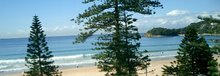
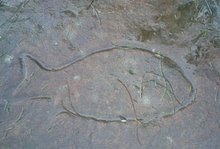
Fossil fuel machinery ensuring no beach stabilising vegetation takes hold of the eroding beach. The tractor-drawn beach rake destroys the endemic flora/habitat, but leaves most of the plastic and cement rubble behind. A tidy event space!
 Carpobrotus glaucescens, (Pigface)
See also
Anxious settlers awaiting tool supplies brought in by ships from the motherland 0611
Showing posts with label flora. Show all posts
Showing posts with label flora. Show all posts
17 June 2011
Fossil Fuel Beach Rake and Beach Vegetation

06 November 2010
Tweets on sharing the planet with other species
 Biodiversity or kicking others off the planet:
#Endangered #orchid - #Habitat loss due to #clearing for more highway for more cars http://tinyurl.com/2dtqf2u #biodiversity #NSW Bulahdelah 05222010 2
'#Biodiversity summit won't stop anyone trashing the #planet' http://tinyurl.com/2e2e6p6 #CBD #convention #diversity TEEB monetize #nature 04112010
'A mobile command centre for maiming #wildlife' http://tinyurl.com/26ufxhf combat #biodiversity aussie utes #militarization_of_civil_society 05112010
Thing happen where #hunting & #fishing enthusiasts #encroach on #wildlife #habitat http://tinyurl.com/265btjt #poaching #National #Park meat 03112010
It is spineless to kick many of the world's vertebrates off the planet http://tinyurl.com/2fjyjlo #biodiversity #monoculture species #legacy 27102010
'More species slide to #extinction' BBC 2010: http://tinyurl.com/2fsgr49 2006: http://tinyurl.com/2blorrl #biodiversity habitat #change poss 27102010
"Habitat loss overexploitation pollution disease & human induced climate change are the factors driving extinctions" http://tinyurl.com/2d6hwro 21102010
Mass #extinction as a strategy Obliteration of the planet's species at a rate at least 1,000 x faster than normal http://tinyurl.com/2csybv4 10202010
From failure to #failure #Copenhagen here, #biodiversity (#CBD) there http://tinyurl.com/3yfllaz stop #extinction stop #habitat grab dysfctn 19102010
The Nagoya Access & Benefit Sharing Protocol PDF http://tinyurl.com/2b3d3ur #biodiversity share cake #biopiracy #CBD #COP10 #ABS North-South 19102010
"We are about to reach a threshold beyond which #biodiversity loss will become irreversible” http://tinyurl.com/32oztpk mortgaging kids future 18102010
Wildlife Human Interface
Ranger rescues #crocodile from people http://tinyurl.com/2b2h3uo Sanctuary Lakes Palmerston #biodiversity baby freshie #wildlife crime au 19102010
#North Head #wildlife without a billboard for #roadkill: Squashed by #motorists today: 1 Ringtail Possum & 1 Bearded Dragon SydneyHarbNatPrk 05222010 2
Birds Rainbow #Lorikeets feeding on red Callistemons, Sulphur-crested #Cockatoos feeding on the seeds of Brush Box #birds urban #trees #Manly 28102010
Nice to hear the #koel overpower the roaring #traffic for a while audio: http://tinyurl.com/388a665 #birds #pollution #Manly Eudynamys 27102010
Sub-Antarctic #birds killed with #brodifacoum on #Macquarie Island http://tinyurl.com/2d6ajat do no harm #restoration human-introd predators 23102010
On the use of #poison to eradicate #pests: 400 native #birds killed, #Macquarie Island http://tinyurl.com/2awbxke oops #invasive sp Tas #Nps 23102010
#Shelly Beach tide is blooming red #HABs Four #mutton #birds dying on #Manly Beach - out of habitat in long #migratory journey 22102010
The many dead black #birds on #NSW beaches? Think about their lack of #habitat in their transequatorial #migration short-tailed #shearwaters 22102010
#Pelican swallowed three fishing hooks & got entangled in #fishing #debris http://tinyurl.com/29bxqx9 Ban fishing TAKE @ urban coasts #birds 10201020 3
The Butcherbird's song http://tinyurl.com/2fg6msw is drowned out by the ubiquitous debris blowers of Manly http://tinyurl.com/29fftlu #noise 19102010
#Pelican swallowed three fishing hooks & got entangled in #fishing #debris http://tinyurl.com/29bxqx9 Ban fishing TAKE @ urban coasts #birds 10201020 3
The Butcherbird's song http://tinyurl.com/2fg6msw is drowned out by the ubiquitous debris blowers of Manly http://tinyurl.com/29fftlu #noise 19102010
Manly Penguins
Nice image of a #Little #Penguin #swimming Hope no fossil fuel vessel will shred it apart http://tinyurl.com/2equq6t #Manly #boats #habitat 28102010
Forests - Habitat
Debt ? Just flog off the national ancient #forests http://tinyurl.com/349xz4j #privatisation #climate change #co2 #habitat #wildlife 25102010
Clearing the tropical #rain #forests, destroying the GBR #reef produces the BIG DRY http://tinyurl.com/2453xut RT @mongabay #Australia diy desert 16102010
Bio-diversity vs Mono-culture: Wildlife or exotic companions? Pets
Will Australians invest in #biodiversity or a mono-culture of dogs & cats? http://tinyurl.com/3733upu Extinction http://tinyurl.com/35asr2q 28102010
#Dogs - from #meat to status symbol http://tinyurl.com/2auffju #consuming #pet_owners #feces city #energy #dog_run #wildlife out #pets in 25102010
Invasive species
The #rabbits on #North #Head #NPs look like #pet bunnies & behave like lost family members #erosion #invasive #species #degraded vegetation 03112010 2
Conservation - Do no harm
Sub-Antarctic #birds killed with #brodifacoum on #Macquarie Island http://tinyurl.com/2d6ajat do no harm #restoration human-introd predators 23102010
On the use of #poison to eradicate #pests: 400 native #birds killed, #Macquarie Island http://tinyurl.com/2awbxke oops #invasive sp Tas #Nps 23102010
Only about 2% of the Kimberley state waters will be protected while 98% is still open to mining & fishing http://tinyurl.com/27vqt3n #marine 22102010
Palau can afford its waters to be a #marine mammal #sanctuary for the protection of #whales, #dolphins & #dugongs http://tinyurl.com/2d2l6eb 26102010
"The number of #marine protected areas fall far short of what’s needed 2 save the world’s #oceans" http://tinyurl.com/2uv4u9f CBD marine prk 20102010
Habitat for Flora & Fauna or rec area National Parks
1. they open up NSW #National Prks to bikes, then to hopping mountain bikes, next it'll be the landscape shredder http://tinyurl.com/2fgmyls 18102010
Vandalising the Enviroment - Crimes
"Many #environmental #crimes are dealt with by warning letters or infringement notices." http://tinyurl.com/26wepcu NSW Australia #wildlife 23102010
Images: Shark finning industry, Coffs Harbour, NSW
Healthy gulls with fresh filtered water at Manly
>>More
Tweets on the ocean marine ecosystem
21 August 2009
Perfumed Endemic Flora of Manly
 Perfume from endemic coastal flora:
Woollsia pungens, Snow wreath
Ricinocarpos pinifolius, Wedding bush image
Actinotus helianthi, Flannel flower
Pittosporum undulatum
In flower:
Xylomelum pyriforme, A tall Woody pear - stunning!
Styphelia triflora
Grevillea speciosa, Red spider flower
Eriostemon ssp
Xanthorrhoea, resinifera? Grass trees
Isopogon anethifolius
Caladenia alba and Caladenia carnea
Erythrorchis cassythoides unfurling
26 May 2009
Less Fig Trees at Manly Beach
 Large old endemic fig trees are dying mysteriously along Marine Parade. In the first image, the circled tree has been dropping its leaves for a long time now. The one around the corner at the sandstone sculpture (image 2, below) has just recently decided to shed most of its leaves and immature figs (image 3).
It appears that the cliff face is becoming increasingly tree-free. Instead weeds are spilling down and Indian Mynas are replacing the native dragons. Changes!
 More on Fig trees in Manly
Trees on Council Land
Images: Google Maps
03 May 2009
Fragrant Flowers and Frogs Chanting
 Perfumed air by flowering wetland heath (woollsia pungens), eucalyptus botryoides and most banksias. The audio-scape: Thousands of frogs vibrating the airwaves. A crisp crystal moon.
01 April 2009
Manly Beach Drift "wood" - April
A monthly summary of what has washed onto the shore or beach through the winds, tides, waves or human action. Marine debris, flora and fauna, dead or alive: A raging ocean today on Fossil Fools Day, most beaches are closed.
The unusual find today was as a small (17 cm) dead Leatherback Turtle (Dermochelyidae and plastic). A large Weedy Seadragon (Phyllopteryx taeniolatus) wrapped in plastics and kelp. Many tropical-looking fish. An unusual number of juvenile Snappers and many Porcupine fish of all sizes. A dead juvenile Australasian Gannet (approx. 55 cm). A lot of dead Cormorants and at least 14 living Crested Terns. Jellyfish in all colours and sizes, a thick layer of bluebottles all along the beach. Small flat disk-like 'bluebottles'. The usual transluscent giant blobs. Unusual was a large glassy Jellyfish with 4 corners! A large purple/mauve blob (20cm) consisted of many scale-like compartments and short tentacles. A large variety of big sponges and a lot of pumice. The foam appeared very colourful.
A couple of mollusc overgrown coconuts. And a generous amount of shared noxious weeds from garden clippings. Treated pampas grass, asparagus fern, prickly pear etc. The human Junkspace: Mostly plastic: 'party' balloons with looong strings, full 'throw' away lighters, dummies, fast food debris, fishing junk/hooks and a syringe A dumped (stolen?) bicycle.
A woman on the walkway walking her dog on a very long leash ON the beach. A pack of free range dogs on the beach in the afternoon as well. Wonder how many prosecutions there are in Manly for dogs on the beach? 010409
Sponges today of all shapes, sizes and colours. The endosymbiont animals do not have a nervous, digestive or circulatory systems, but are sure an indicator for the absence of a murky marine habitat. A Brushtail Possum carcass, possibly 'busted' by the dog-fanatic community that seems to eradicate anything Australian.
Unusual were the large fist-size red/purple jellyfish. They seem to have scale-like compartments on their bell and very short tentacles. They look as if one does not want to touch them. The usual transluscent, amorphous blob jellyfish and bluebottles. The 'party balloons' with entangle ribbons do not seem to end, in fact the clumps/knots seem to get larger and more plentiful. But then there is a lot to celebrate in an overcrowded world with diminishing resources. 020409
 Mystery fish, note the sharp teeth and leg-like fins?
Many washed up little nudibranch (Glaucilla marginata) again. Usually they float on top of the ocean eating Bluebottles and incorporating their stinging cells. A few stranded Velella, mingling with the odd Bluebottle/The Portuguese Man o' War (Physalia physalis). A few Ram's horn shell (Spirula spirula).

Two dead rats and a car tyre. 030409
A thick layer of kelp on the beach and in the surf today. Brown algae accumulates heavy metals such as copper, lead and zinc from sub-urban 'runoff' (pdf) , industrial activities and motorised watercraft. "In some parts of the harbour, lead levels in seaweed were six times higher than those off Hong Kong Island". The contaminated brown algae of Sydney Harbour is so toxic it makes the prawn (Epifaunal amphipods) feeding on it drop dead. Huge bits of Cunjevoi in between.
Junkspace: 2 more tyres, noise pollution from amplified events and glass around these areas. 2 dead rats by! the pool. 040409
>> Driftwood March, February, January 2009
19 September 2008
Little Penguins, Electrocuted Birds, Mauling Dogs, Bogong Moths, Spilled Oil and Artistic Inspiration
 A visit to the the Manly Art Gallery, where the current exhibition is by Bruce Goold. The designer/printmaker displays woodcuts/linocuts of iconic Australian objects. Nautical themes and Aussie flora and fauna get mingled with sub-urban culture jamming. The fragipani, banana and (unfortunately) bamboo convey that coastal holiday feeling.
Some thoughts on the following themes seen there, which are relevant for the northern beaches:
'Telegraph crows' 1995 depicts Australian Crows getting electrocuted in power lines. Think about it every time you flick on that convenient switch, how many birds and other fauna get killed and crippled by this underdeveloped landscape feature bringing power to you.
The design with Bogong moths was very timely as they will start their annual migration next month. This gets too messy for tidy-town then.

The few remaining little penguins in Manly get regularly mauled by off-the-leash dogs. One of their 'habitats' at the Manly Cove is a busy human infrastructure with fireworks, bands and other mass events. The little bird needs to live in a partial marine and partial terrestial territory. This is the space where human impact in Manly is most noticeable.
 Habitat for Manly's endangered Little Penguin population (pdf) , Manly Cove. More than a webcam needed here.
'Pasha Bulka' 2008 visualises the stranding of a huge cargo ship beached on a Newcastle surfing beach in 2007. 'Heavy fuel oil ' ran into the Pacific Ocean. Such scenarios are not unthinkable for the Manly region. For now, we get the sulphur particle emission from ships that are near Manly.
Outside the Art Gallery there were numerous very large motor bikes parked on the “pedestrian and bicycle path only”. Aerial garbage is a new thing here: Plastic kites in Manly Beach pines, a very long nylon fishing line dangling from a tall palm in front of the gallery, waiting for that next bird to entangle. Aqua-parking as far as the eye could see in Manly Cove, right along the penguin's feeding grouds. Wharf construction set the acoustic ambience.
See also Bogong migration incompatible with humans
Links:
- Endangered Population of Little Penguins (Eudyptula minor) at Manly, NP, pdf
- Caution: Electrocution! Suggested Practices for Bird Protection on Power Lines, BUND, pdf
Update: 0709 The slaughter of 11 Little Penguins by a dog/s in their last mainland habitat on mainland NSW.
05 October 2007
Dog-walking in Bushland Degrades Biodiversity
 “Operation suburban storm”
Australia's growing population sprawls into 'nature', not because they like the 'bush', but it is a cost-effective way 'to get away from it all'. They take their unsustainable cultural luggage with them to not miss out on that sub-urban feeling. The unpacking happens, but on a bigger scale. First they create tabula rasa in the 'wide open spaces'. After that, the packages of McMansions, hummers, pets and lawn monoculture gets unrolled. 'Operation suburban storm' is the annihilation of Australian animals and plants. Should any creature survive this invasion, then the next growing together of the frontier settlements would run them out of a home. In no time the human settlements take up all the land-scape and resources.  Destroying what is unique about Australia
The refuges for wildlife are fast disappearing in Australia. But even the 'protected' areas are being conquered and annexed for suburbia with a vengeance. From Manly to Byron Bay to all-over the wildland-urban interface is a battle zone where Australian wildlife is eradicated. One main cause for the ecological vandalism is the anti-social behaviour of dog owners, walking their foreign animals in the last reserves for Australian creatures. There is an abundance of signs, but very little enforcement is taking place all over NSW. It seems to be tolerated that the suburbs just annex 'their bush' as their dog loo.
Vested bestial Interests
Being one of the largest pet owning communities per capita with substantial commercial interests backing it, this is a veracious force. Americans spend $41 billion p.a. on their pets, “ more than the gross domestic product of all but 64 countries in the world.” One could only guess, that Australia is not far behind. Locals consuming their 'annexed' “wilderness” hits a 'blind spot' with its guardians.
Some consume all the land-scape
Dog owners consume and degrade parks & reserves and deprive others of their enjoyment. It would be interesting to quantify the economics of this 'local consumption only' and compare it to the loss of the eco-tourism industry, even locals and visitors who would also like to immerse themselves in a green space, rich in bio-diversity. The canine community lobbies to not be 'restricted' from areas, where in fact it is them that deny the existence of wildlife or of visitors enjoying what they came for - wildlife.The loss of biodiversity is price-less (so far). 
Study: Dog walkers degrade Australian Bush New research has found that “Dog-walking in bushland significantly reduces bird diversity and abundance...We show that dog walking in woodland leads to a 35% reduction in bird diversity and 41% reduction in abundance, both in areas where dog walking is common and where dogs are prohibited...The effect occurs even in areas where dog-walking is common and where they are prohibited, indicating that birds don’t become accustomed to continued disturbance by dogs. This evidence clearly supports the long-term prohibition of dog-walking from sensitive conservation areas...Ground-dwellings birds appeared most affected: 50 percent of bird species observed in control sites were absent in dog-walked sites. The effect of dog-walking was most pronounced in the area immediately adjacent to the site where dogs were walked...There were 76 fewer birds within 10 metres of the trail when dog-walking occurred compared to control sites, suggesting birds were seeking refuge away from the immediate vicinity of threat." (Peter Banks and Jessica Bryant, Four-legged friend or foe? Dog walking displaces native birds from natural areas.)
Unchecked dog epidemic in Manly threatens rich biodiversity
The overabundance of dogs in Manly and the anti-social behaviour of their owners degrades the refuges of native animals (and plants), but also robs bushwalkers of their rights to experience these places unhassled. Some of Manly's unique residents such as the Little Penguin, ground dwelling and flight-less, the Bandicoot and many others are too often killed by dogs.
Let's keep Manly special and unique, and effectively protect our rich green areas from irresponsible vandals.
Previous:
On the Annexation of National Parks on the Cheap
Extinction and a world full of poodles
Leave some of Manly as Penguin habitat
ASBO,Dogs allowed to savage
When Rangers knock off...
Links:
More interesting reading on Manly ecology by Dr. Banks et al
Do Australian small mammals respond to native and introduced predator odours? BENJAMIN G. RUSSELL, PETER B. BANKS (2007)
"Introduced predators such as foxes and cats are twice as deadly as native predators to Australia’s unique native animals."
03 October 2007
Sydney Harbour National Park - a Casino?
 A walk at North Head NATIONAL PARK today, Lady Fairfax walk. Despite the annual ticket to the N.P., access was very restricted and hazardous. Numerous large trucks and trades vehicles were driving/parking on the WALK-WAY. At the cliff look-out, within the NATIONAL PARK a huge structure was being erected, dangling 90 m off the North Head Cliff. How could such a monstrosity serve to conserve the flora and fauna of Sydney Harbour National Park? " Sydney Harbour National Park protects various islands and foreshore areas around one of the world's most famous harbours."
  Yes,the spectacle Las Vegas-style poker will be staged there. Gambling IN the N.P.? The refuge for animals and birds turned into an over-run CASINO?
Where will the visitors go, that came for the 'nature', the uniqueness Manly has to offer.What will be the impact of such an event(traffic) on the wild-life.  Six endangered Bandicoots have been recorded killed on the road so far. What will happen to the trampled vegetation and the generous garbage left behind? How was the community consulted? Is this a further privatisation and commercialisation of spaces in Manly?
26 September 2007
Ivanhoe Park/ Manly Oval as source of noise pollution
The privatisation and intensification of public spaces is racing ahead in most urban places. Industrial commercialisation seeks out urban places (with infrastructure) where people aggregate. It relieves them of their money and is a 'block-buster' for the adjoining residential community.
Popcorn -Yoo Hoo!
Manly already has lost a lot of public space to sectional interests. At this stage Manly Council “has given its provisional support” to allow late night open-air movies in Manly Oval/ Ivanhoe Park. This small 'green space' already hosts a variety of sport, childcare and alcohol-related activities.
The impact of such a 'movie', blasting advertisements and films over the block would constitute noise trespass for the adjacent residents. Parking and traffic congestion, light spill/glare, littering, garbage, smashed glass and increased vandalism are sure to follow. The pumping noises of the large inflatable screen would further add to the outdoor noise pollution.
24/7 open air entertainment
The issue of noise is a serious health concern for people who live in this area. The strategies are not to prevent noise, but to manage, “regulate” it to acceptable noise intrusions in homes. Initial 'recommendations' , 'restrictions' and practices will find their way to a 24/7 open air entertainment in the end.
Noise kills
Noise complaints already have risen dramatically in the last few years. People do need a place to recuperate and sleep. The suburbs are already very loud and noise simply kills. If you don't like it, you might resort to complain. You can ring till your fingers are numb, if there is a response, then be ready for a bungle of noise experts and the muddle of the decibel haggle and a lot of silent buck-passing. There is no shortage of laws, regulations etc.
Vibrant Manly – Luv it or...
With the degradation of an 'residential area' the most sensible thing is probably to pass on the rest-less 'home' to the “vibrant community” that never sleeps, needs commercial entertainment 24 hrs and only lives off alcohol (and other stimulants). Then Manly is THEIR place!.
What's a park good for anyway?
And there is the poor park, already so built over and ruined by foreign water-loving pansies. It was once renowned for its beautiful native flora. More and more birds and possums get flattend on busy Raglan St. Many people might have moved there, because of the 'quite green space'.The authorities will probably do a professional flora and fauna impact study before further developing the 'park'.
Links:
EPA, Noise Management, NSW
EPA, Noise Guide for Local Governmnt
WHO, Noise & Health, EU
Noise and Health Journal
Noise concerns expressed at North Sydney ,0507(pdf)
'Acoustic Management Strategy' example for “Open Air Entertainment” 0807 (pdf)
24 September 2007
Plants of Manly
 A rare climbing orchid, Erythrorchis cassythoides (image) is still in Manly, getting its carbon supply via root fungi.
Eucalyptus camfieldii also still there, a few older trees.
Helichrysum elatum (White Paper Daisy) at the end of the flowering season.
Who needs all this impoverished monoculture of lawn and pink pansies?
29 August 2007
On the Annexation of National Parks
 A walk through Sydney Harbour National Park at Grotto Point Reserve. A beautiful place, bursting in Phebalium dentatum, Eriostemons, Caladenias and Lomandras at the moment. Black Cockatoos singing for more rain.
The new way of utilising National Parks as one's backyards revealed itself as the relative short walk progressed:
- At dusk dog owners regularly bring their dogs there, off the leash of course. Today, one hunting dog was allowed to race freely though the bush at the time when wildlife starts its day. The other dog bathed at Castle Rock Beach and was then walked back through the National Park. I assume the 'user pays' principle is applied, if one does have to pay a small fine, maybe once a year, then it is like a cheap annual dog-pass to a beautiful dog loo.
- Many of the beautiful old Angophora costata were vandalised by deep cuts from knives.
- Somewhere, off the track 2 people were collecting many 'things' (under rocks?) and shoved them into plastic bags. Sad to see the N.P. so abused and native flora and fauna only being protected pro forma.
26 August 2007
Fire - The magic wand to create more habitat for people
 Various fires consumed Sydney's bush recently and created a smoggy dome. Primarily this form of land management “..is designed to help protect homes... from bushfire.” Especially the ones that moved to live IN the bush and then eliminated most Australian flora and fauna.
At the moment Greece is burning, large chunks of forests have burnt down and so far at least 50 people have been killed. Human beings deliberately set these fires in various places, as is also often the case in Australia. The well-to-do houses in the 'bush' have been saved. “Throughout the summer, Greece was full of rumors that many of the fires had been set by arsonists hired by developers looking to build on valuable land inconveniently covered by trees...Because there are no official maps indicating the boundaries of forests, though, once the trees have been reduced to ash, developers come in to claim land.” (Spiegel) The 'lungs' of that city have been eliminated, but there might be a housing boom...
Image: After incinerating various parts of Sydney bush the 'fog' was everywhere for days.
Update: 270807
- The 400 open tips started to smoulder with the high temperatures of global warming.
- The carelessness of smokers starts many fires the world over.
- Negligent private fires to incinerate garbage are also a cause of these fires.
- Real Estate speculation 'fuels the fire', houses are erected and all is sanctioned by council. Forests cannot vote. (The Standard at) Many of these practices are common here too.
A Greek journalist: "We had a beautiful country but we are increasingly losing it to fires, rubbish and the illegal buildings [built on land cleared by blazes]." (The Guardian)
19 August 2007
The Waratah - Gondwana plant and Wonga pigeon
 The Proteaceae (images, DB) emerged 118 million years on Gondwanaland. The Australian variety developed 40 milion years ago when the continent separated from Africa. This is the time of the emergence of the Australian Waratah. The local Eora people gave the plant its name. The New South Wales Waratah (Telopea speciosissima) is the emblem of NSW today. It is extremely rare in gardens, but there are still pockets in National Parks, provided they do not get 'harvested' for their spectacular large and red flowers. Depicted in woodcuts of Margaret Preston, they finds their purpose today in the floral industry.
In The Stories of the Dreaming, Barry Moore shares the 'Red Waratah' (also as rich media). A central player in the story is the Wonga pigeon, now rare as they used to shoot this pigeon in the 40's and land clearing reduced its habitat drastically. Both Waratah and Wonga might have co-existed in the Manly region once. Some of the Gondwana plants are still with us in the region (pdf).
Images: top, part of "Skygarden"
bottom, Strand Arcade window
09 August 2007
Lawn Transplants 'that cost the Earth' - Manly style
 Transplanting turf on an o.g. basis that requires noisy and polluting watering via two stroke pumps and o.g. petrol intensive mowing is unsustainable.
Council workers, residents and visitors are exposed to the polluting out-fall of these ineffective maintenance machines.
As part of their 'duty of care' council should also disclose to the stakeholders what chemicals are contained in the imported turf transplants (at the beach and in the suburbs).Toddlers and adults roll on it.
The 'Ethical Standards' of Manly Council aim at:
“Sustaining the environment - We will act with care and caution towards the environment, protecting the biosphere, its biodiversity, and using its resources sustainably for present and future generations.”
Although, they recommend native grasses, their practices set the example for a mono-culture of petrol and water intensive regime of foreign grasses (lawn), noise, air and soil pollution.
Chemicals in lawns and their health effects
National Toxic Network Australia
22 July 2007
Pines and birds at Manly Beach
 Manly Beach once had sand dunes and heath vegetation on it, but now it has rows of pines. These giant conifers (Araucaria) are living fossils originating from the Mesozoic (251 to 65 million years ago). The Norfolk Island Pine, (Araucaria heterophylla) endemic to that island has been planted along the beach promenade. For 40 years they appear symmetrical in form, then the 50-70m tall giants arrange their shape according to the environmental conditions. There are other tall gymnosperms growing throughout Manly, Bunya, Hoop, Kaurie and many more.
At dusk these 'trees of life' at the beach start to become alive with the screeching of the local Rainbow Lorikeets. The giant remaining figs sound with fig birds. Lorikeets fly in large swarms over Manly screeching as they go, which is unusual for bird swarms. Suburbia is still intent to feed these creatures to death. > Black Cockatoos calling the rain
The video captures some of the 'beach corridors', where Lorikeets, Wattlebirds, White Cockatoos can still mingle.
Thanks to DotAtelier for the video
08 June 2007
Videos of Manly environments
'The Animated Coast of (Manly) Sydney' - video uses a local sound-scape to capture various habitats and times. It leads us from Shelley beach, its Cabbage Tree Bay Aquatic Reserve fish and seastars. A rare visitor such as the Pied Oystercatcher is also 'in the picture'. The contested sandstone heathlands of North Head, Manly and the Pacific sky are depicted. Queenscliff with artifical lights looks iconic. Worth a watch to get the ambience of the place.
Thanks to dotAtelier for the permission to screen the video here.
Another video 'Manly, Sydney, Ferry, Hurry' is of Manly and a ferry trip. It shows the wharf (with the good old Cove restaurant), the Corso, the Harbour (trip) and of course Circular Quay. The animation by Viktor Hertz was composed from 2000 still pictures and also has its own audio composition.
28 May 2007
World Environment Day, Dee Why Lagoon
The usual surroundings for an environmental event on the Sydney Northern Beaches. A hot sunny paddock and the humm of generators. Cars, dogs and prams and the smell of burnt meat. Many environmental services and goods and a lot of dead-tree info material. Many volunteers caring for (injured) wildlife.
The longest queue of people was for incinerated meat.
The frog display wanted to help frogs and teach how to look after them. The little things were in the sun in plastic-containers, knocked by zoo-trained kids.
The Flying Foxes, most injured, were looked after by volunteer-carers. Out of a habitat they would like to share the city and its fruit with us now. Where are the flowering watercourses now?
Distributing native/endemic flora to plant should make the entire area a habitat for native animals.
More than 60 ducks died recently from the condition of the coastal lagoon.
There is also a video of the event on the Manly Coop blog
Update: 290507 On this environment day, a lobby group for dogs on beaches !! defied Council's ban and did take a dog to the beach.The leader was fined. (Manly Daily)
07 May 2006
Spraying flammable solvents over beach and bush
 Twirling and splattering flammable solvents on the white beach sand and near Shelley Head bushland is a regular activity in Manly now. Today there were various people (a class?) at Shelley beach fuming out the entire headland with a stenching smell from their fuel ( metho, (formaldehyde) kerosene, naptha, petroleum etc). Sparks fly close to the dried out bush, the high winds this evening made it all fly well over the headland. But there they twirled, hurling these toxic chemical solvents and drenching with it the white sand of the beach. An amazing tolerance of the Kiosk. The car park above was also shrouded with this foul smell. So much for 'fresh air in Manly'.
But then it is part of the culture to chuck a bit of metho on the BBQ and the absence of any enforcement will probably soon ignite the bush and all the bunkers encroaching upon it.
Pyromaniac
11 September 2005
Native conifers or expensive, toxic weeds?
Despite the down-turn of the horticultural industry the push factor for atrocious weeds continues. The latest seems to be Thuja in all varieties as hedges or feature plants. Most Thuja are so poisonous, that the mere touch causes irritation. Here we go with the new Australian weed, mass planted as hedges, in containers everywhere. The long term costs are already on the cards.
The most beautiful native conifers grow right here in Sydney. Callitris rhomboidea (Port Jackson Cypress) and many others are suitable for the local conditions and provide food and shelter for endemic fauna.
"Callitris species have outstanding qualities which place them far above the exotic Cupressus . . . whether for utility or for ornament there is a Native Cypress suitable for almost every purpose. They are of very great beauty, fast growing, remarkably free from disease, very hardy and mostly very drought and cold resistant." William de Beuzeville
More on Native Australian Cypress Pines (Callitris) and Port Jackson pine
Subscribe to:
Posts (Atom)