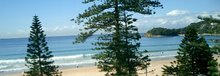
Pacific Black Ducks Anas superciliosa in Manly
Showing posts with label wildlife. Show all posts
Showing posts with label wildlife. Show all posts
16 September 2011

08 January 2011
Ban Fishing on Crowded Urban Beaches - Marine Reserves
 Each year there are fewer Crested Terns visiting Manly Beach.
 More and more fishermen line up along the urban beach. Booze-free zone. Stinking garbage, dead fish, dangerous hooks and plastic junk are left behind.
 A Crested Tern mother had a chick which she hid amongst the Seagulls. Returning from her feeding trip, she was in distress, trying unsuccessfully to regurgitate - a fishing hook and nylon string. Various phone calls were made to volunteer organisations with long waiting loops. Had it been a precious dog, there would have been a swift service. It is unknown if the dependent chick or the mother survived. But then it's all about beach as a tidy and profitable playground for humans. Wildlife, especially shorebirds, are not granted a habitat.
More birds killed by fishing hooks and fishing lines at Manly Beach
Ban fishing on urban beaches. Make Manly beach and the Northern beaches a marine park.
15 August 2009
Manly Wharf - Depriving the Public of Access?
 There are attempts to grab some of the public pedestrian space by private enterprise on Manly Wharf.
The wharf is in the middle of Manly Cove, which is framed by green National parks with the odd whale or dolphins visiting Sydney Harbour. It is also the gateway for people arriving in Manly by public transport. Some 6 million commuters pass through this point for work of leisure. The options are to walk through the enclosed middle in the inside, which is crowded and full of cooking fumes. Alternative paths are walks to the right and left on the open air, along pubs and eateries on one side and a natural habitat on the other. The actual Cove and the infrastructure under the wharf are a dense biotope for local wildlife. Unique Manly Little Penguins (Eudyptula minor) have their habitat in various locations. Walking along the wharf the lucky resident or visitor can catch a glimpse of what makes Manly unique. The plan to privatise some of the Wharf's walking paths on the West Esplanade side to monetize the "spectacular waterfront positions" for a few paying customers is myopic. Bursting suburbia is thirsty for public spaces, which are fast disappearing in Manly. Visitors come to be "seven miles from Sydney, and a thousand miles from care" and not to be 'in it' again. Encroaching with intensified commercial operations would not be beneficial for the wildlife.
The human footprint seeking constantly to enlarge in delicate environments, can trample an area. Already there are signs of visible pollution in the Cove water: dumped bikes, chucked shopping trolleys etc. With intensification the noise pollution would negatively impact on human and wildlife habitat.
Boat parking is proliferating and also a danger to swimmers and wildlife. Some just come to 'get tanked' in private racing boats, unload their dogs, have some alcohol, clutter up the cove and then race off again. A trend to be encouraged? Do not deprive the public of access to the Manly Wharf walkways
Do not accelerate rapid development and hence human disturbance to penguins and other wildlife.
Do not forget why people come here to live or visit
"Sprawling from land right out into the ocean as we clamber for more of its resources" Ocean Sprawl on Planet Green 0809
Update:
- Manly penguin wardens "will protest against what they say is the possible encroachment on penguin habitats by Hugo’s restaurant." Penguins already have lost habitat to the School of Artillery at North Head and "People living near the beach want to build pools on top of penguin nests". There will be a protest on September 13 via Manly Daily 180809
- Little Penguins, climate change, ongoing coastal development and habitat degradation. PDF Do not deprive the public of access to the Manly Wharf walkways
Do not accelerate rapid development and hence human disturbance to penguins and other wildlife.
Do not forget why people come here to live or visit
"Sprawling from land right out into the ocean as we clamber for more of its resources" Ocean Sprawl on Planet Green 0809
Update:
- Manly penguin wardens "will protest against what they say is the possible encroachment on penguin habitats by Hugo’s restaurant." Penguins already have lost habitat to the School of Artillery at North Head and "People living near the beach want to build pools on top of penguin nests". There will be a protest on September 13 via Manly Daily 180809
Image: 1 and 3 Google Maps
25 March 2009
Switch off the lights! Manly Light pollution


Click the image for a larger version of the glare bombs
Switch off the lights, join other places that refrain from light pollution. Keep some of the life-supporting climate for others to come. Do not trap wildlife with artificial lights. Flooding the environment, the beach and the night sky is an expensive hazard for human beings too. Stop the waste and fossil fuel burning. Some NSW councils turn off their "non-essential lights, computers and air conditioning at noon on Friday."> Reducing Light pollution
Light Pollution, Wikipedia
Neighbour friendly lighting
SydneyOutdoor Lighting Improvement Society
Update: Gimmick Day is over, cheap child amusement and attention focussing on 'tourist landmarks' in the MSM. After the dimming, 'business as usual' continues, now with a relieved conscience. Systemic failure stands in for lack of structural change. 300309
18 March 2009
Bird-Unfriendly Structures in Manly Aquatic Reserve
 Cormorants used to perch on this lamp pole in the day and owls used to sit there at night. Now it has bird-unfriendly spikes all along it. Adjoining the Fairy Bower Pool and Manly's Cabbage Tree Bay aquatic reserve the urban wildlife has been sitting there for years in the absence of large trees. These native shorebirds are being repelled from their habitat.
Possible arguments for the bird repellent structures could be the animal feaces.
On the same grounds one would have to act on:
The tonnes of untreated dog faeces running into the bay and beach.
The multiple decaying and smelling pipes draining Bower street onto Marine Parade and finally into the ocean.
The public health hazard of invasive species (Common Mynas) encrusting (Sydney Road/ Central Ave.) Manly CBD in their faeces. The tables and plates of eateries are densely visited by this species, leaving their traces.
The feeding of seagulls could be actively discouraged.
Urban wildlife could be encouraged by:
refraining from habitat destruction
controlling introduced pets
reducing glass surfaces in human dwellings
reducing nightglare
planting more trees
not exposing them to mobile tower radiation
Update: By November 09, Bird spikes get discovered by humans in Manly
17 March 2009
Sculpture disappearing, Wildlife snatched...

12 March 2009
Oil Spills, Ships and Readiness - The Moreton Island Case
The spill of toxins, explosives etc in Queensland is serious. More from the Moreton Bay Blog, Bayjournal
Australian Senator Discusses Oil Spill
Video via cheatah55
07 December 2008
Manly Ocean Care Day - A Green & Blue Network
 Manly Ocean Care Day Festival 2008 - Some impressions from along the beachfront:
The Maori community
was demonstrating their fibre and wood craft. Te Papa Wawata Ki Te Moana performed traditional songs. Using Native New Zealand flax (Phormium tenax and Phormium cookianum) women were demonstrating their weaving skills in a Pacific ambiance, that they had created in their hut. Beautiful handbags and backpacks with intricated patterns. Occasionally Pandanus and flax are also used.
There are some New Zealand flax plants in Manly delighting nectar-feeding birds, bats and possums. Of course there are many fibre plants, that the local Guringai population use/d. There are always weaving artefacts by Tjanpi, the Aboriginal women's basket weaving project from the Central Western Desert region of Australia available in Manly.
"Always was, always will be Aboriginal land"
Australians for Native Title and Reconcilitation (ANTaR ) was focussing on “ issues impacting on Aboriginal and Torres Strait Islander people”. Their Sea of Hands installation is well known.
The Aboriginal Heritage Office is caring for over 1000 sites of Aboriginal culture and heritage in the areas of Sydney known as North Sydney, Lane Cove, Willoughby, Manly, Warringah, Ku-ring-gai and Pittwater. They educate (pdfs) and one can volunteer to report back on the state of vandalism of the sites.
The Ocean & its wildlife
ORRCA is protecting and affording welfare of seals, sea lions, dolphins and dugongs.The rescue organisation trains people, gives advice on 1st aid for marine mammal rescue. They like to hear of any sightings 24/7 - Ph.: (02) 9415 3333
“The Nature Conservation Council works to conserve nature and protect the water we  drink, the air we breathe and the places we love.” It is “a non-profit, non-government organisation representing 120 community environment groups across NSW.” “Save Fluffy”, seemed so appropriate for Manly, with on average 2-3 dogs in harness. But they do mean the local Grey Nurse Shark which needs saving from exctinction.
NPA~Marine is the marine sector of NPA (National Parks Association of NSW), they are working with local communities, industries, scientists and government... to help create healthy oceans for the future of NSW.
Terrestial
The North Head Sanctuary will get its own nursery and propagate endemic flora.
Gardening
Great to hand out native Australian (endemic) plants.
Permaculture North is "Sharing Sustainable Solutions with Communities" They offer "an amazing array of skills in self reliance, energy & water conservation, qualified permaculture design and teaching". Rumour has it that there might be a community garden in the future and nature strips will be released from the terror of lawns and petrol 'gardening'.
Fauna WIRES is "helping injured, orphaned and displaced wildlife".
The stuffed variety of Australian wildlife was preferred as no one wanted to cuddle the poor creatures into discomfort. Leave them in THEIR habitat.
The cat cage was a good idea and should be compulsory.
A dog on the beach, as every day.
Draining Sub-urbia
Stormwater displays - where did all that coloured water go? Did they come in a cleaned car?
Public Spaces
People from Little Manly Beach want a public reserve zoned as Open Space not more real estate.
Edibles - Slow & Local Food
Slow Foods Sydney would like to “preserve and promote local culinary traditions and foods.” Go local-vore and organic, educate about junk food, agribusiness and factory foods. They do not like pesticides, but regional markets. Where were all the Manly chefs?
The Manly Food Coop, for that very local, low packaging organic food - of course.
Sustainable Seafoodies - Soon there will be an "an online guide to sustainable seafood in NSW" Again Manly chefs, do take note on your menues!
A lot on watertanks, solar equipment and light green commodities.
There were many more stalls and activities...
Ideas for future actions
It would be desirable to hand out less dead tree material and refer/put information/displays on the web. Additional networking could strengthen the causes and communities. There seemed to be a forest of resposibilities, eg if this creature is on the beach, in the ocean, on state territory or NPs etc. It is confusing. Too many boarder/ interests for the flux of life. An integrated ecological management plan would benefit the blue & green and all creatures in these biomes. Images:
1. Maori weaving
2. "Save Fluffy", Save the Grey Nurse Shark, nccnsw
3. Rigtail Possum, dazzled by the daylight
4. The Event along the Manly Beachfront
More:
Manly Beach Ocean Care Day Animation
Ocean Care - Of Albatrosses and Red Tides
Stuff at Manly Beach on November 2008 and December 2008
04 December 2008
Mutilated Green Sea Turtle and Fishing Debris
 Green sea turtle, O8R051 was found mutilated by fishing gear debris. It took zoo staff four months to rehabilitate the creature.:
"A fishing line had cut a flipper to the bone and X-rays showed she also had a fish hook lodged in her throat. Her face had been badly bruised when she thrashed out in panic with her flippers in vain attempts to escape the fishing line. The bruising triggered an eye discharge, leaving her almost blind....We see a lot of turtles here... estimating half have swallowed fishing lines or hooks, or have become entangled in lines. Many others have ingested garbage. Still others have been attacked by cats or dogs on beaches." SMH
Once a marine park is established, it would be desirable to prohibit this mutilation, by-kill and mindless sharing of marine debris. 'Recreational Taking & Chucking' is a threat to biodiversity. "We can't expect to have over 93 per cent of our waters open to fishing and be aware of the fact that our marine life is declining and our habitats are being degraded and not expect that trend to continue." (abc) The control of introduced canines assaulting Australian fauna would require a mind-set change.
02 November 2008
Manly Beach Drift "wood" - November
 A summary of what has washed onto the shore or beach through the winds, tides, waves or human action. Marine debris, flora and fauna, dead or alive:
Dead crickets (Gryllidae), along the entire beach, a thick layer 1 to 2 m wide of dead insects. Seagulls were feasting on some of them. There was talk of aerial spraying locust in Sth NSW/North Victoria. Bees in Victoria were protected from the pesticides. Any connection? A dead Petrel. Thick clumps of kelp. Some blue bottles 021108
Rabbit poisoning (sodium monofluoroacetate?) is taking place in the Mona Vale Beach area. An unusual amount of dead birds, fish and insects were observed there. (Manly Daily, 041108, p2) Just a reminder, there were unusual numbers of dead fish (moray eel) at Manly Beach (081008), a dead albatross (021008). There seems to be no monitoring body of these mass ecological occurrences or possible eutrophication. It will be a different 'silent night' without the chirping of the many crickets.
Today, many translucent jellyfish, (10-15 cm round), a nice large shark egg case, maturing kelp and sea gulls and their young all along the beach. 0411108
Many glass-like translucent jelly-blobs, one had rusty/ red tentacles. 5 dead black seabirds, more kelp, fresh large blue bottles. Many plastic lighters. At the rocks off Queenscliff Rockpool, one rock had been cleared of all the oysters. Right in the run off from all the houses and toxic Manly lagoon. Yum! 051108Post weekend frenzy: 8 dead shearwaters, possibly short-tailed shearwaters. No, it was not starvation and exhaustion' which kills them but 'fishing'. One had been trapped by a fishing hook of a human being, it had a long nylon string tangling out of it's beak. Is there any monitoring body for the eradication of wildlife in this biome? A marine wildlife annual database?
Fishing took place just there at Queenscliff Rockpools and at the weekend the ocean was full of boats in full take-mode. The multiple fishing rods on the busy beach are a hazard to people and wildlife. Busy urban coastal areas must be free of 'recreational taking' and sharing of their dangerous debris.
One dead Weedy Seadragon (Phyllopteryx taeniolatus), a lot of kelp, many sepia hulls and very large bluebottles. Full "disposable" nappies were generously left behind. The usual plastic 'convenience' food, drink and toys. Giant sand castles, are being built by large optimistic families, simulating rapid and extreme climate change. 101108 Image: Bird hanging by long nylon string out of its beak.
Polystyrene, the white crumbly plastic that does not biodegrade in various chunks and pebbles. Many plastic dummies and the usual plastic bottles and plastic tops galore. A lot of 'gift wrapping', long enough to entangle any marine creature. A lot of dead winged insects and lost mole crickets.
A lot of grey round pumice again and brownish foam that sits on the sand for a long time. The surf is lapping at the cement stairs.
There is light pollution emanating from new street lights, starting at North Steyne and continuing along half of the beach. One of the mega-lights even stays on all day. Turning the dark sky and the Pacific into an overpowering glare. So much spare energy, blasting emissions like there is no tomorrow. For beach/promenade users it is unpleasant, for birds and insects deadly. Residents living in this 'sport-light' ambiance must be blinded. 141108
A few Crested Terns (Sterna bergii) mingling amongst the Silver Gulls (Larus novaehollandiae), a sure sign for hotter days to come. A fluffy thing, called dog walked along the beach illegally in bright daylight.
The disappearance of the horizon - hardly a day goes by where there is an absence of toxic diesel spewing container ships hovering until they can enter the jammed harbour to spill their o.s. commodities on to hungry consumers. More frequent ships increase the risk of oil or chemical spills, as well as exotic marine pests. They are not just clutter on the horizon of a beautiful beach, but a health hazard to all coastal and harbour residents and wildlife. 171108
Another dead moray eel, large blue bottles and many dead bees and other winged insects. 181108
Large amounts of leaf litter, mostly Brush Box (Lophostemon confertus). Either the rain washed them in to the ocean or some considerate person blew them against the wind with their debis blower. A Magpie checked the litter out. Stunning rainbows. 201108
A cold and rainy day. Sub-urbia washed its load onto the beach, the run-off looked like a mix of dark dust, gum leaves, speckled with jacaranda and bougainvillea flowers. Contractors and residents blow the debris of the 'nature strip' into the common gutter. The unwanted of blandburbia is transported via a million noisy petrol powered machines into Manly Beach, the Pacific. There were also many cigarette butts. A chucked unwanted lobster head, full nappies again. A racing beach buggy did not improve the air.Floating in the water a bright plastic buoy, with a couple of long strong ropes and a heavy lead/metal weight attached to one of the ropes. The inscriptions read:'MANLY JLSC 'Nippers''. Turning the beach into an event zone and leaving potentially deadly junk floating for marine mammals to get entangled in can't be kid's fun or delight any sponsors. Floating plastic debris and the possiblility of entanglement does not seem to be in the spirit of "Ocean Care" or good PR for Manly beach. 231108
A fresh smell today of salt, fresh fish and kelp. Huge waves and golden sand. 241108
Many plastic bags, full nappies and a not so fresh smell 251108Grass stars (inflorescences of Spinifex sericeus) rolling along the beach looking for suitable real estate to bind the sand, stabilising against coming turbulences. Human stampedes limit this colonizing grass in its dune-binding function. A large variety of different kelps today.
Many non-biodegradable balloons sloshing along the beach. Balloons have become a popular way of advertising one's business, as well as staging events and parties. There they are - in all colours, maybe ending up in the intestines of a whale. Later to be found stranded and more than three square feet of plastic would have to be removed from it's bowl.
Many sharp and dangerous pieces of glass of all colours along the beach. Each bottle taking one million years to break down. The disposable diapers were still there - in 450 years they might be gone. The mono filament fishing line tangled around Queenscliff Rock Pool grids will take 600 years to disappear. Many plastic bags. There is a lot of polystyrene and garbage trapped in between the rocks at that location. So much for ocean dumping for one day 261108
> Drift "wood" December 2008


20 October 2008
Marine Conservation and The Use of Beaches
 Marine Parks - the only way to go
The battle over 'No Take' and 'Grab it all Now' is grinding along Australia's coastline. Moreton Bay Marine Park , rich in biodiversity is having 16 % of the Bay declared free from fishing and boats have to "go slow" to not continue injuring the dugongs and turtles. It is " home to 750 species of fish, 120 species of coral, an abundance of dolphins, migratory whales and the world's largest population of dugong next to a capital city.""Each year some 200 turtles are found dead, sick or injured in Moreton Bay Marine Park and an average of 15 dugongs die from human impacts." The Australian Marine Conservation Society says that at least 30 % of the bay should be protected. "It exposes actually a whopping 84 per cent of the marine park to intense fishing pressure".
Manly Cove, Sydney Harbour and the Pacific hugging the Northers Beaches should also go 'slow' and have an effective 'no take' Marine Park to conserve some of the biodiversity for the future.
An observant person on Bribie Island wanted to report a loggerhead turtle stranding. He rang the Environmental Protection Agency's hotline just to be diverted to a call centre in Indonesia. The stranding was never followed up. Sounds soo familiar... abc 201008
A whale sanctuary has been created off Chile's coast, ensuring save passage for the cetaceans migration over 3,400 miles (5,500 km). Here, news of entanglement, starvation etc is almost daily. Noisy obstacles, such as human infrastructure off shore probably do not aid the journey of the giants.
Taking the beach away to attract beach holiday seekers
It is interesting to see how far 'developers' in the tourism industry go: They carted their biggest asset away, 500 truck loads of beach sand to build a a $1 billion resort with it. In the absence of the key feature, the project is now on hold. It will take 100 years for the forces of nature to replace the stolen sand. BBC
Choking on the air and pulverised stuff
"Australia's asthma mortality rates are one of the highest in the world according to a new report by the Australian Institute of Health and Welfare." HealthInsit.au does not mention car pollution as a 'cause'. It all seems a matter of 'managing' it by medical professionals, not preventing it by involving urban planning. Elsewhere, they have found that tree-lined streets can make a difference.
Privatising public spaces
At dark, Manly's coach-led body-fitness customers are cluttering up the paths, dipping into the doggy lawn and punching into the night. All apparently unregulated. Most businesses have to pay the rent, events have to register and pay a fee, but feral businesses occupying public space with business activities seem to be exempt. "City of Yarra and several other municipalities are following the lead of five bayside councils, which recently moved to clamp down on boot camps that operate on beaches and foreshore parks.But Yarra has gone a step further and proposed a ban on commercial exercise groups of more than six people from 18 public parks in Fitzroy, Clifton Hill and Richmond. Fitness classes will also be prohibited from exercising within 10 metres of playgrounds or 15 metres of picnic sheds and park benches." It might be... "reasonable to pay a fee to conduct a business in a local park", but is it desirable to privatise public spaces?
10 October 2008
Banksy's "Village Pet Store and Charcoal Grill"
 “New Yorkers don’t care about art, they care about pets." One could paraphrase it as: Manly-siders also don't care about art or wildlife, they care about pets. Mass hysteria about submissive, privately owned 'pets' and captive creatures in shops, cages and tanks is good business in times of Black Friday, Halloween and Mega Extinction Rates. Something one CAN control.
Banksy's animatronics installation in NYC "Village Pet Store and Charcoal Grill" grasps attention on " our relationship with animals and the ethics and sustainability of factory farming, but it ended up as chicken nuggets singing." News about " the implications of animal cloning on food safety, animal health and welfare and the environment" seem to be sparse. Human cloning. au. pops up occasionally.
Good write-up at the Wooster Collective
Check out the videos on sausages and the sedated wild captive cats, the 'shop',
Good Flickr images
Image: Banksy? Berlin
Video via banscopetstore
02 October 2008
Manly Ocean Care Day - Of Albatrosses and Red Tides
 As another 'ocean care day festival' is approaching in Manly it is time to focus on the 'care' bit. In the holiday season the beach is specially subjected to a tidal wave of of unwanted 'convenience' packaging and 'recreational' plastic.
Out of the ordinary was a large Shy Albatross (image) (Diomedea cauta cauta, pdf, measuring some 95-100 cm, wingspan 240-260 ) found at the North Steyne end of the beach on 300908. 10 puffer fish were also rolling on the sand. This giant bird is still hunted for 'sports' and chokes on human plastics. As there is no habitat left for it in the Manly region, the next possible place could be just north of Sydney. Five albatrosses and pelicans have been found poisoned at Tuggerah Lakes. "It was believed the sudden outbreak of botulism was caused by rain washing chemicals and fertilisers into the stagnant water of the lake."
If it isn't run-off from human settlements that has killed the birds and polluted the water, then it is also possible, that it is the mix of high temperatures, due to human-caused emissions, as well as the flushing of unwanted wastes into the water bodies. The result is a warm brew encouraging the growth of toxic micro-organisms. Even if no red tide is visible, the toxins (brevetoxins) still lingering, damage the nervous system, just like the botulism bug. Maybe the shy giant made it out to sea and was overcome by the HABs, to finally get washed up at Manly. Does anyone care?
A red tide is at the moment hovering around the corner in Clontarf's Sandy Bay, (Manly Daily, 021008, image). Red tides love warmth + plenty of human caused run off. They then breed toxins which have the ability to kill life in the ocean/bay and on land. Although there is a fine of $ 1 million for dumping baddies into the water-ways, there seems to be none for doing it with a trickle (eutrophication) over time.
Clontarf / Bantry Bay Estuary Management Planning Process - Data preparation in 0807, (pdf) reveals a lot about the the Sydney Harbour Foreshores and Waterways Area, such as Castle  Rock and Bantry Bay and includes parts of the Balgowlah Heights, Clontarf and Seaforth suburbs.
65.5% of the space is for human habitat, 22.0% for their sealed roads and 10.2% for parks and public spaces. The 'storm water drainage network' is visualised in this document. The appropriation of freshwater is also accounted for. Giant lawns and pools spill into the 'bush', which is often cleared to see the marina (image). The foreshore appears transformed into a space for fossil fuel vessel parking. The estuary/bay is slowly looking like a large boat-parking area. Private dinghies clutter up the 'public' reserve. As in Manly, unleashed dogs are emptied of their untreated feces into the bay.
The environment- human interface is summed up as being in conflict:
The degradation of the environment does not only rob species of a habitat, but it also diminishes life quality for all living and to come. Running out of space and resources in an ever shrinking world
- "Seawalls for protection of properties versus its damaging impact on natural ecosystem
- Groundwater abstraction and possible saline water intrusion in aquifer
- Beach raking for safety versus its impact on invertebrates
- Dog walking off leash and impact on shore birds
- Powered and sailing boats and their wake impacting on seawalls and beach erosion
- Access to mooring versus their impact on sea grass beds, ability to spread caulerpa taxifolia
- Powered boats and the safety aspects for swimmers and kayakers
- Ad hoc boat storage and its impact on amenity and habitat:
- Ad hoc access ways to foreshore for convenience versus destruction of habitat." (pdf)
 is no fun. The diy cocktail of heat, plus draining liquid wastes equals red tides, or dead zones, that are void of life and toxic to ALL. Just breathing the mist is a hazard, eating the contaminated fish/seafood can be deadly. Jelly invasions ( the only creature thriving on this human-made environment ruin the beach- Beach closures, due to toxic blooms or jelly blooms are costly. 'Business as usual' in a risk-society could play it all away in just a generation.
The oceans are getting so hot, acid and degraded by us. Species are either fished out by us or their habitat is ruined. Lobsters, seals, whales, dolphins and crabs etc etc are affected by the red tide toxins and are wishing to leave their habitat, they thereby die.
It would be a sad world which leaves a
red ocean behind
no fish and life in it
no ocean and foreshore birds on the horizon
no beach or bay without a noisy smelly and dangerous motor
no beach or bay without human infrastructure cluttering up the landscape
Let's care!
Images:
1 & 2 Dead Shy Albatross on Manly Beach, 300908
3 Sandy Bay, Clontarf, Google Maps
4 Clontarf/Spit Bridge, Google Maps
Animation: Ocean care day animation, Manly Beach
Links:
Toxic Blooms: Understanding Red Tides, FATHOM
HABs, Harmful Algae and Red Tides, Woods Hole Oceanographic Institution
Sea Birds affected by red tide toxins, Florida conservation 2006
Entanglement in or ingestion of anthropogenic debris in marine and estuarine environments - key threatening process listing, DECC
Rock Snot, a hazardous algae in Tasmania, has had devastating effects on inland river catchments in New Zealand abc 270808
Update 101008
- The red tide at Clontarf mentioned above has been identified as Noctiluca scintillans (Manly Daily p3, 101008). The same type of algae bloom has also been found at Seaforth, west of the Spit Bridge and Woollloomooloo Bay. NSW Health recommends that people avoid contact with all blooms. This dinoflagellate is also linked to " anthropogenic eutrophication...along the southeast coast of Australia". In India, it has been implicated with "the decline of fisheries". At night Noctiluca glows in a bright blue bioluminescence, as viewed on Manly Beach before.
Suspected blooms should be reported to the Regional Algal Committee during business hours (02 4729 8138), or the Department of Environment and Climate Change’s Environment Line (131 555) after hours. Toll-Free Algal Information Line - 1800 999 457 according the the NSW Department of Water and Energy
Update 231008
- Brush et al. Historical Land Use, Nitrogen, and Coastal Eutrophication: A Paleoecological Perspective. Estuaries and Coasts, 2008; DOI: 10.1007/s12237-008-9106-z "During the past 300 years, many of the wetlands have been drained, and the landscape was converted to agricultural fields and urban and suburban development. Since precolonial time, the mesohaline estuary has become increasingly eutrophic and anoxic."
22 September 2008
Manly Beach 2048

 “Pungent brown sewage spews into the Pacific ocean. In the background, cranes put up hotels and beachfront apartments."
So runs an intro to another Pacific tourist spot where uncontrolled coastal tourism development kills the 'golden goose' for investors, residents and visitors. Pressures to intensify and commercialise the protected 'green and blue' leads to the degradation of all. Squeezing the proverbial 'goose' to death means a loss of human health, life quality and economic gain. Even more of the Australian species, plants and animals would lose their habitat, that is their right to life.
Imagine!
Manly in the 21st Century could be consumed in the same way, if there is no refraining from grabbing 'what's left'. Developing the trends would give the following constellation:
The pressure is already on (pdf) to convert 'nature' (Sydney Harbour National Park, North Head, Quarantine, Dobroyd, and Garigal National Park) into more of the same, a tide of 'accomodation' and sprawling sub-urban McMansions with their associated infrastructure.
Manly 'town' could become 24/7 neonlit buyosphere which customers could immerse themselves in. Alcohol merchants and casinos high-rise, Las Vegas style could frame the beach. Experiences and bodies could be organised via animators from the entertainment industry. Roofed domes would lessen the deadly uv radiation from scrambling the DNA. Organised 're-creation' is conducted on flood-light filled arenas. All are of course attending in respective plastic uniforms. Sports ovals, swimming pools and golf courses are also day & night air-conditioned and lit. Plastic lawns have long replaced water gobbling/toxic lawn transplants. Every inch of the Earth is paved over with coastal real estate: tourism development (hotels, resorts, restaurants, etc.), and the infrastructure supporting coastal development (e.g. marinas, beaches, recreational fishing facilities.) Breakneck developments turn the area into ear-piercing noise waves on every corner.
The sky is also filled with constant noise: Jumbo planes are seen 'spinning' over the beach, belching poisonous gases and consuming non-renewable energy while delivering more 'customers'. Helicopters and small plane 'joy-rides' are now so numerous that they are on a clear collision course with each other and the many UAVs. Brand names are 'written' into the clouds for all to see, that are not in-dome. Blimps urge all to accelerate the buying of anything now!
The ocean:
Surfing and swimming has long being abandoned, as the nutrient over-enriched coastal waters have turned into a permanent red tide. This anoxic "dead zone," is devoid of fish, but still very rich in stinging jelly blooms. The entire coastal marine ecosystems has been consumed. The sand is so e coli laden, that it is not to be touched. The 'ocean spray', full of HABs, is a health hazard. An industrialised ocean horizon:
Private boating also ceased, due to oil shortages and the unavailability of territory to give these motor-boats 'a good spin'. A dense network of aquaculture infrastructure clutters up the coastal waters. Further out, the ocean horizon is studded with chains of giant artifacts: Desalination factories (pdf), gas- and oil drilling and extraction structures and huge data platforms. No whale has been seen for years that could navigate this dense human ocean clutter.
More frequent violent storms, tornadoes, hurricanes and giant waves mince up the entire set-up due to human-caused climate change. The thick layer of human debris and waste floating on top of the Pacific also gets washed onto the shores. Various chemical spills and scrambled infrastructure do not make 'clean-up' operations easy.
Due to the many desalination factories, the water guzzling life style could be kept up. Visitors on the whole are consuming double the amounts of water via hotels, swimming pools, golf courses and personal use etc. But locals also all have their personal lap pool by the 'beach'. The exotic plants still are watered with petrol pumps as before.
The demand on energy leads from time to time to a crash into 'a candle economy'. Many suffer in their air-conditioning dependent dwellings in the long black-out periods. The nuclear option seems to keep this power-ful life-style alive.
Sewage, another plentiful anti-product which is a slight challenge to the aesthetic and olfactory appeal, could also pose a possible loss in revenue for tourism. The dead zone of the coastal waters is fueled by this waste-water contaminated with toxins and pharmaceuticals.
But all is not without life, people now have their dearest darlings cloned in multiples. One can see them, as before in cafes with up to 6 harnessed dogs.
Huge cats, as well as packs of dogs have gone 'feral' roaming gated estates. The only surviving bird is the Indian myna, seen in millions coating all with its feces. Many black rats are seen living on the garbage. Large swarms of flies, mosquito and ticks are still posing a challenge.
Australian animals can now be admired (for a fee of course) in an event space, previously known as a museum. There they are, the bandicoot, the little penguin and so many more - all stuffed, just like in the 19th Century. Most Australian plants are gone. Some invasive plants and pests are still about, despite the increased toxicity of the weapons used in aerial helicopter spraying.
Uncontrollable fires shroud the area in suffocating smog. Even though there are only weeds left to 'back-burn', the scarcity of water, threatens the 'real estate'.
Many argue that tourists were not drawn by all that 'environmental stuff', they didn't give a hoot about the unique ecology of Manly. They were seeking to spin their body around, often with the aid of petrol or ingestid toxins . This constituted 'fun' and sold well. Human generated 'attractions' have to be erected to offer a peep here or a spin there. Once contained, money could be collected in this Disney-like hybrid simulacra world. Neither locals nor visitors are remembering or missing that 'biodiversity and landscape attractiveness'. The problem is though, that the place has become indistinguishable from so many other (coastal) places in the world and that is a challenge. Like malls and airports, one doesn't know anymore where one is. Looking after the Country in the future:
Myopic objectives could gamble away 'nature' and 'uniqueness' that has no substitute. Unchecked developments and mobile destruction (mass tourism) degrade a place and its resources. 60 % of Australia already has been degraded by relative few people in a short time. 'Customers' flee the degraded tourist traps, locals desert the uninhabitable places seeking refuge in the remaining 40% 'new-found-land'.
Returning North Head, Sydney Harbour National Park, Quarantine Station, Dobroyd, and Garigal National Park to their owners might guarantee a halt to the tidal wave of destruction.The National Parks and reserves are an essential refuge for endemic plants and animals. They also are of great ecological and economic value in framing Manly as a desirable and unique place on the Earth.
Images:
1 North Head, Manly and the Northern Beaches, Google Earth
2 North Head, Dobroyd and part of Sydney Harbour National Park, Google Maps
3 Dobroyd, SHNP viewed from Manly Cove
4 The Pacific ( uncluttered) viewed from North Head
5 North Head cliffs and the Pacific Ocean
Links:
Manly Council Submission to Taskforce on Tourism in National Parks, PDF
Players:
The NSW Government
The Environmental Trust, The Department of Environment and Climate Change (DECC)
Manly Council
NSWALC, NSW Aboriginal Land Council, Land Rights Act
National Parks & Wildlife Act 1974
NCC/NPA Submission to Taskforce on Tourism and National Parks, Submission of The Nature Conservation Council of NSW and the National Parks Association of NSW and the Blue Mountains Conservation Society. 0808, pdf 1,2MB
Areas to 'exploit' and 'open up':
Sydney Harbour National Park (SHNP) North Head, Quarantine Station, Dobroyd, and Garigal National Park.
Coastal Recreation and Tourism:
- UN Atlas of the Oceans
- United Nations University (2008, June 4). Coastal Management Cooperation, Enforcement Key To Avoid Pending Crisis For Millions, UN Experts Report. Retrieved September 22, 2008, via Science Daily
- Mike Davis , House of Cards, Las Vegas: Too many people in the wrong place, celebrating waste as a way of life, Sierra Club
Footprint:
-"You can't have one species growing indefinitely on a planet that is finite." Prof. Bill Rees
Update:
" The vast majority of the Australian population is clinging to the east coast, running out of land and running out of water...2043, when 43 per cent of the Gold Coast has been abandoned to ever-rising sea levels. Australia's swelling population could be accommodated in desert cities." SMH 201209
Subscribe to:
Posts (Atom)