A compilation of posts on water. Ways of utilising water. As a tip: a cost-effective dump, as 'unintentional' 'run off' or as general human-caused eutrophication of water bodies. Taking risks with public health by polluting the elixir of wet for all life.
Water & public health:
On the use of water and on the creation of dead zones 28082007
The water bodies of the Earth are being used as a cost-effective way to dump the unwanted.
Drinking water and healthy water bodies Pt II 04090207
Sydney's drinking water, we are being told 'is no public health risk'. Some areas of Australian coasts are so polluted, that it “can cause selective inhibition of phytoplankton species”
Drinking water security sewage and emerging bugs Pt III 10092007
"Growing population centres and the inefficient use of water is “the greatest threat to waterways”. Urbanisation, norovirus, disease history
Drinking water, food & health:
Drinking water security, Sydney belly: Cryptosporidiosis, Giardia 17102007
Reducing risks when eating out 21092007
More on Sydney water, Health and Pollution 27092007
Manly restaurants and eateries - a wishlist 13112008
Draining Sub-urbia, 'run off' Eutrophication:
Water chemical mashup over suburbia 23082007
Shelly Beach palm gully creek 20102007
Impervious surfaces, spaces for cars and running toxins in urban heat islands:
The world as a car park - hot and oozing toxins running into our water streams 13092007
Lawns - water guzzling & toxic
Lawn transplants costing the Earth - Manly style 09082007
A mono-culture of petrol and water intensive regime of foreign grasses (lawn), noise, air and soil pollution.
Coastal lawns golf and pesticides 04082005
'Run-off' to Manly Beach, dog feces and chemical cocktails:
Water quality at the beach 09082007
Careless urban sprawl in coastal areas is devouring wetlands and other natural buffers such as dunes and beach grass that would otherwise help filter out dangerous pollution.“ Local beaches are ranked here for both faecal coliforms and enterococci. Some of the waterborne illnesses like gastroenteritis, dysentery, hepatitis, respiratory ailments etc. probably hit people 'out of the blue'. Toxic waste such as heavy metals etc also show their effects only after some time.
Suburbs draining toxins into Manly Beach and Lagoon 16012006  Suburbs drain toxins and feces to Manly beach and Manly lagoon as a way of disposing of these unwanted substances cheaply. All the everyday actions of the everyday people are then drained into the non 'my space'. Socialise externalities" Mr Galloway found that concentrations of nitrogen, phosphorus, copper, lead and zinc in Manly's stormwater exceed ANZECC guidelines for pollutant concentrations in waterways by between two and 168 times."
Draining Manly suburbs pipe at the beach 20102005
Can Manly afford not to share North Head with Penguins? 19102008
Red Tides in the making...
Preventing red tides at Shelly beach, Manly 06102008
Proud to waste water
Wasting water as a life-style 25032007
Desalination mega projects - Water as a commodity
Water and Desalination Factories by M. Barlow 08102008
Privatising water, offshore factories sludge in the ocean
Desalination - A mega project or water conservation and whales 13082008
Mnly tag: water
Blog Action Day 2010 Water, Twitter: blogactionday, #BAD2010
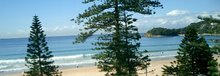
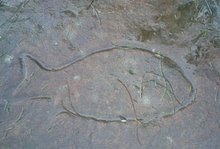
Images: 1. Water sculpture for gathering clouds by the Eora people of the Sydney sandstone region. 2. Ancient drinking trough (for horses ?) in a town square, Lake Constance
16 October 2010
Water on MNLY Blog

04 August 2009
Manly Beach Drift 'wood' - August
A monthly summary of what has washed onto the shore or beach through the winds, tides, waves or human action. Marine debris, flora and fauna, dead or alive:
 Crested Terns are back. Unusual footprints of a large shorebird. Unfortunately beach-nesting or just visiting Manly Beach for Australian birds is not on. We only share the beach with dogs. Daily, there are dogs ON the beach illegally. Today a large pony-like thing and a shrunken dwarf.
There were unusual shells along the beach.
 Old wood-based media blowing along the beach.
Rich in glass chips, probably the remains of causing 'facial injuries' in Manly's nightlife, just washed down to the beach to glass beach users as well.
Three helicopters swooping in on the beach/surfers, adding noise pollution.
At the Queenscliff end of the beach one wonders about getting into contact with the toxic Manly Lagoon mouth. Is it safe to swim there? Too poor to decontaminate?
The southern end still has eroded stairs and is fenced off.
 050809
Erosion: The large stairs at the southern end are still undermined and various debris is scattered at that end of the beach.
Noise: Ear-bursting building sites all along the beach front.
Glass, but a relative absence of the usual fast food packaging.
Daily illegal dogs: one white fluffy thing at Queenscliff and a large one on Manly Beach. A lot of council staff with a focus on parking revenue. Pity, they do not take advantage of collecting from dog owners that do not abide by the law.
060809
A small pod of dark dolphins swimming orderly behind the surfline. A large juvenile Australasian Gannet (Morus serrator) diving for fish.
The horizon cluttered with boats and ships, but free of that brown haze from yesterday.
The beach is free of visible pollution, shells and sand.
Along the beach a cacophony of building sites and road building/cleaning machinery. Noise pollution.
07080
A few plastic bits appearing again. Surfers Against Sewage just return the plastic garbage to the offender/sponsor. Better would be to charge for the removal of the anti-product from beaches. The ocean is to dear to be treated like a cheap tip.
 A lot of large ships hovering for days on the horizon now. Tinnies whizzing, doing their best to scare any marine mammal away.
Noise pollution all along South and North Steyne, building sites, road building and the usual gas-guzzling vehicles. Manly on permanent beta.
Impervious Surfaces and Coastal Water Quality
A mobile factory has settled in at around 135 Steyne with various large machines along the beach. The asphalt truck/ machinery indicates, that they are 'paving a bit more of paradise'. Most sealcoating of roads/pavements contains toxic PAH which finally finds its way into the stormwater runoff or is blown away in the form of dust particles. PAH is toxic to mammals and the aquatic ecological system, it is also accumulative.
100809
Two Humpback Whales swimming slowly and in constant touch along Manly Beach. Following the curve of Manly and then Shelly Beach, they leave, hugging the coastline. Mother  and calf logging? There was an unusual absence of combustion engines in the air and aqua-space.
The post-weekend beach-scape: A black plastic bag full of untreated dog feces ON the beach.
Plastic toys, balloons and polystyrene chips.
110809
With post rain and that tsunami feeling many birds behaved in unusual patterns:
Some Sulphur-crested Cockatoo, (Cacatua galerita),(audio) flew very high along the beach.
A Pelican (Pelecanus conspicillatus) left the lagoon end to head north.
A Laughing Kookaburra (Dacelo novaeguineae), (audio) was chased by a smart Australian Raven ( Corvus coronoides )(audio).
Welcome Swallows (Hirundo neoxena) surfed the sand dunes
Willie Wagtails (Rhipidura leucophrys), (audio) investigated the beach
Magpie-larks (Grallina cyanoleuca) pierced the air with their 'pee-wee' (audio)
Masked Lapwing (Vanellus miles) joined in (audio)
In the pines a faint Red Wattlebird (Anthochaera carnunculata), (audio)
High in the sky: Rainbow Lorikeets (Trichoglossus haematodus), (audio)
 The surf had a thick greenish foam, that lingered and stained the beach sand in a slimy, bubbly green.
Strange media attention to people hassling aquatic wildlife at Shelly Beach Aquatic Reserve and killing a Wobbegong shark. One person's conservation efforts to save the Spotted Wobbegong (Orectolobus maculatus) are another's 'sports trophy' in spear fishing.
"The day you fail to find sharks cruising your favourite beach is the day you should really start to worry."
120809
An epidemic of 'convenient' 'one-mouthful-wrappers' and take-away & chuck coffee plastic garbage. There are definitely waves of usage, bound to fashion,'must do', 'must have'. Before it was the plastic water bottle one carries around jogging to look cool. Now it is the cup. Either way, the  absence of mindful food and drink does not entice social responsibility. It is incorporated in the product/consumer mind: quick, convenient stuff for me, I, myself - the rest, the anti-product belongs to the public sphere. Chuck!
More green slime and frothy foam.
Garden clippings, mostly sawn wood washed onto the beach. Beach as cheap tip?
130809
A whale swam slowly along Manly beach towards Shelly beach. (Video) Both marine mammals and internal combustion vehicles take, unfortunately the same path along the shore. Boats usually 'park' ON Cabbage Tree Aquatic Reserve and then race off. The whales hug the shoreline going south now.
 A very noisy chopper hovered over Manly Beach, vibrating all living beings. Deafening for all mammals, terrestial or aquatic. So much for acoustic comfort.
Along the Esplanade, pneumatic drills undoing the last jobs. Audible at the beach.
More of the convenient one-mouthful plastic wrappers left along the beach.
The daily illegal dog ON the beach.
At Queenscliff beach front the garages to house the CO2 intensive life-saving gear are apparently doubled. More habitat for combustion engines, less green space, more impervious surface and a new building on the sand dunes in times of 'planned retreat'.
180809
F o u r illegal dogs AND their owners ON Manly beach  today. Two dogs at Queenscliff were allowed to freely urinate all over the sand. Think about it next time you roll on it, play with it or even eat it. Approaching the offending dog owners leads to verbal assaults and often physical threats. Emotional beasts defying the human law. Together with the feces draining from the walkway on to Manly Beach it poses a serious health hazard. There seems to be no enforcement of the law and an absence of a concerned community.
200809
Just like in August 2007, the 'green slime' (120809, above) of the day turns in to glowing waves of bioluminescence at night. (Video)
210809
Two school girls walking two rats on a leash ON the beach and around the pool. Doing their best to mingle with the wild rodent populations, facilitating a pathogen ecology for salmonella and typhus.
But why not, if cats are walked around Manly town to harrass the endemic bird population and dogs do IT ON the beach, then anything seems to go lacking effective regulation.
Divine swimmers doing the Queenscliff to Shelly Beach loop. Jet ski speeding further off. Incompatible ocean activities.
 More plastic turning up as it gets warmer. All the plastic in the ocean and on the beach decompose, releasing hazardous chemicals (toxic bisphenol A (BPA) and PS oligomer ) to ALL life. Treating the beach or the Pacific as a cheap tip/externality will reveal itself as a toxic legacy for all to come.
Glass on the beach.
With great confidence they are building more at the low-lying 'sanddune/path' at Queenscliff. It appears to be doubling built habitat for CO2 gear (garages). Rising sea levels denial? No retreat, no deserting coastal strips.
Retrograde amnesia forgot the eroded volleyball posts just a short time ago. A new turf is quickly staked out and 'pay & play' can continue. Privatisation of the beach? Only the ocean and the sky pose a limit.
240809
Jelly stingers are back at Manly Beach with 11 degrees above average today. The cycle starts again: nutrient enriched hot ocean, glowing at night with bioluminescent dinoflagellates , then jelly fish and algea bloom. The ocean and atmosphere as a tip are being 'cooked up'.
 Flies are also back after the weekend stampede. 900 million people are presently sprawling around the globe, 'seeking to get away from it all'. Fast food anti-products all along the beach.
An extra large oil tanker hovering at the horizon. The white sand could contain more than green slime and dog poo...
Toddlers baking at the beach in full sun for hours.
250809
Washed up right in front of the Corso a Rakali (Hydromys chrysogaster). The endemic 'water-rat' lives on Manly's rocky foreshore. It has a dense, water-repelling fur, partly webbed hind feet and a tapering tail with a white tip. It lives on aquatic invertebrates which it dissects with its specialised molars, it is a good swimmer. "It is reported to leave bigger ones out in the sun. As the bivalve heats up and dies, its valves gape, allowing the rat access to the interior." In mythology it features as a spouse of Moon.
As the unrestrained dogs and cats are allowed to freely enter its habitat it can be assumed, that this Australian local will soon vanish, just like the little Penguins. People choose to exchange rich biodiversity, which makes this place unique, for an impoverished monoculture.
 A lot of post-event garbage and glass along the beach. The junkspace left behind these events should be a cost factor to the organisers.
At the Queenscliff end the diesel fumes from various buidling sites were so dense, that the beach could not be utilised.
The eroded large stairs at the southern end still have their foundations exposed. Rusty iron jarring amongst the rock and various mysterious mats are sloshed in the surf.
There was a large array of small shells.
260809
A very large pod of dolphins swimming along Manly Beach today. When they came closer to the shallow waters a yellow kayak raced too close to them, interfering with their route. A swooping helicopter finally put an end to the marine mammals visiting the beach.
 Junkspace:
Noisy polluting sand-moving equipment at the Queenscliff end, 'doing the lagoon'.
At the horizon, an oil tanker emitting black plumes of pollution.
A lot of 'one mouthful' wrappers, a lot of sharp broken glass
Light pollution IN the ocean at Cabbage tree aquatic reserve & the Bower. A hassle for nocturnal marine life. Looks like the aquatic peeping and grabbing industry needs regulation.
On the Esplanade: Dog owners allow their beasts on extra long leashes to chase the Sulphur-crested Cockatoos which are picking up the pine seeds of the ground. The lawn is littered in dog turds. The leashes of careless dog-owners seem to get ever longer to the extend that even people get entangled in them now.
270809
Around the Queenscliff Rock Pool, many black flippers in the ocean close to the beach. Unfortunately they were not marine mammals, but many humans with lethal weapons. The scale of the operation was more akin to a professional Take and Go. The weapons seemed taller than the guys and a safety hazard for swimmers and walkers at Manly Beach. Armed 'sports' activities are not appropriate at a busy urban beach. It is just a matter of time before an 'accident' happens.
Where is the Manly Beach Watch, monitoring violations and pollution and collecting data on species?
Junkspace:
An unusual amount of very sharp glass all along the beach. Post event by-product. Soon signs should be erected: 'Danger! Do not go barefoot on Manly Beach. You carry all risks, ok! ' The usual amount of take-away garbage, left there by beach users. It is actually relatively rare that garbage gets washed in. Busy boat-days can lead to float-in junk. Unusual weather conditions bring minced plastic from the BIG Pacific tip.
Unusual large dead fish at the beach.

At the North Steyne Beach Club, the toilets on the beach side are being renovated. Could that be white paint tossed on to the beach sand?
Oil tanker at the horizon. The same as the days before? The uncluttered horizon will be a historical phenomenon.
At the Esplanade:
Large Red Wattlebirds (Anthochaera carnunculata) in pairs are very daring in the pines. They even clean the many garbage bins of insects.
Walking along the parade people devoting their lives tending to live-stock (dogs). Driven (CO2) to the beach, often three in harness, to empty all the 'meat' (CO2) at Manly Beach. How are these people prepared for emergency evacuations? Three 'calves' in the hummer and off to greener pastures?
Others in the stay at home nation, prefer to push multiples of their own species along, drowning out the screems with digital gear.
What a giant footprint!
280809
Three illegal dogs on Manly Beach today within a short time span. One dogowner allowed their two white inbred bull terriers to freely roam along the beach. This bully-behaviour had obvious effects on other beach users that felt uncomfortable. Potentially a dangerous situation
 At North Steyne Beach, a dog owner sun-baking with a dog. As the beach seems to be a law-free arena, 'accidents' are about to happen. Will tourists really want to come to Manly to 'discover packs of dogs' and be harangued defenceless at the beach?
At this stage some risk factors at Manly Beach are dogs, glass, weapons (spearguns), fishing junk, kites and speeding vessels in the ocean.
Driftwood: July, June, May, April, March, February, January, 2009
25 May 2009
Plastic Pellets and Erosion at Manly Beach
 Wild weather events have brought forth two unusual phenomena at Manly Beach: erosion and plastic pellet pollution.
Erosion: At the south end , especially near the Life Saving Club the sand has dropped by 110 cm. Large chunks of cement, rusty iron pipes and sandstone are exposed. The stairs' foundations and the old infrastructural stumps have been exposed.
Plastic Pellets: Nurdle (pre-production plastic pellet or plastic resin pellet) are approximately 5mm in diameter, white or discoloured. All of it 'gets lost' in the industrial production and transportation of plastic products. Once in the ocean they become 'mermaid tears'. Many animals at the ocean become sick or die from them. In the end they enter the entire food chain. Additionally they leach plasticizers. They are also a transport medium of toxic chemicals (PCBs, DDE) in the marine environment. In the Great Pacific Garbage Patch giant amounts are in a vortex till the next  gyre hurls them in any direction.
The plastic pellets have in the memory of Manly blog never been seen on the beach. There is also a lot of general plastic debris as well all along the beach.
Is there a marine science body responsible to monitor such occurences, or is it all up to the expertise of life savers? Links:
International Pellet Watch, Global Monitoring of Persistent Organic Pollutants (POPs) using Beached Plastic Resin Pellets.
Plastic Debris, Manly Beach
Coasts eroding, tag, abc
24 May 2009
Herbicide Use in Manly


Herbicides kill unwanted plants
Biocides "have been designed to disrupt biological systems, causing death to target organisms, such as insects or plants"
They have been used in warfare to make the leaves fall off the trees in the rainforest(Agent Orange). The damage was great on all life and some victims fought a class action lawsuit about the poisoning.
These chemicals are not just used in warfare for eradicating life, they can also be put to use as chemical weapons to remove unwanted plants for example.
Once a place industrialises, that is it relies on fossil fuel machinery and chemicals for 'vegetation control' then the costly “rapid knockdown ability” of these toxins saves the labourer from bending down and picking up a weed.
Lately there have been many signs of the use of such substances in public areas that are highly frequented by people, pets and wildlife.
At the end of Bower St at the Shelly Headland Loookout where some Bitou weed (Chrysanthemoides monilifera*ssp) needed to be 'managed' a whole swath of native plants are dead or dying: Mangrove Boobialla (Myoporum ssp.), NZ spinach (Tetragonia tetragonioides) and Saltbush (Enchylaena). All of the endemic flora provided habitat for native marsupials and birds. It appears to be a very inefficient 'by-kill'. The location is on the cliff's edge so runoff is an issue. Why the remaining woody shrubs and trees are butchered is another question.
Around immersive Manly Town many poles have that iconic Australian 'one grass' sprouting at the bottom. The same signs of herbicide death. Even at the beach, the vegetation at the sandstone wall also shows the same signs. A sign of surface runoff?
Who knows what the turf along the pines contains which children and dogs are rolling in. Both toddlers and dogs are low to the ground and stand to be in closer contact.
Council's website was last updated in 2007 on the matter and reads:
"The aim of this plan is to meet the community’s general right to know about pesticide applications made to outdoor public places that are owned or controlled by Manly Council. The plan allows members of the community to take action to avoid contact with pesticides if they wish. Manly Council aims to ensure that pesticides are applied to public places in a safe, responsible and humane manner, minimising harm to the community and the environment."
In a more current document council mentions that "70 litres or less of herbicide is to be used annually".
- How is the public informed?
- How is information made available?
- How can residents/visitors/pets reduce exposure to land or beach where hazardous chemicals have been applied or have run to?
- Why aren' t there any signs?
A community of users might have certainty at the moment, but history has taught that the Precautionary Principle is always a good guide. The impacts on peoples' health, the well-being of pets or the environmental impacts will, as usual come years later.
Images:
1 & 2, Poles with dead grass in Manly town, close to Manly Beach
3 Dead vegetation at the beach stairs. Run off?
4 Various Mangrove Boobialla at Shelly Headland Loookout dying.
Links
Endocrine Disruptors
Some Reasons to not use Herbicides
Glyphosate
Update:
040509
North Head , Lady Fairfax walk and lookouts also seem to be befallen by the great 'browning'. Weeds especially along the fences are doing well. Endemic plants are hit. Eutrophication down the cliff from the lookout.
260609
" Weed killer kills human cell... Used in yards, farms and parks throughout the world, Roundup has long been a top-selling weed killer. But now researchers have found that one of Roundup’s inert ingredients can kill human cells, particularly embryonic, placental and umbilical cord cells." Environmental Health News, 220609
Nora Benachour and Gilles-Eric Sralini, Glyphosate Formulations Induce Apoptosis and Necrosis in Human Umbilical, Embryonic, and Placental Cells, Chem. Res. Toxicol., 2009, 22 (1), pp 97–105 DOI: 10.1021/tx800218n Publication Date (Web): December 23, 2008
02 October 2008
Manly Ocean Care Day - Of Albatrosses and Red Tides
 As another 'ocean care day festival' is approaching in Manly it is time to focus on the 'care' bit. In the holiday season the beach is specially subjected to a tidal wave of of unwanted 'convenience' packaging and 'recreational' plastic.
Out of the ordinary was a large Shy Albatross (image) (Diomedea cauta cauta, pdf, measuring some 95-100 cm, wingspan 240-260 ) found at the North Steyne end of the beach on 300908. 10 puffer fish were also rolling on the sand. This giant bird is still hunted for 'sports' and chokes on human plastics. As there is no habitat left for it in the Manly region, the next possible place could be just north of Sydney. Five albatrosses and pelicans have been found poisoned at Tuggerah Lakes. "It was believed the sudden outbreak of botulism was caused by rain washing chemicals and fertilisers into the stagnant water of the lake."
If it isn't run-off from human settlements that has killed the birds and polluted the water, then it is also possible, that it is the mix of high temperatures, due to human-caused emissions, as well as the flushing of unwanted wastes into the water bodies. The result is a warm brew encouraging the growth of toxic micro-organisms. Even if no red tide is visible, the toxins (brevetoxins) still lingering, damage the nervous system, just like the botulism bug. Maybe the shy giant made it out to sea and was overcome by the HABs, to finally get washed up at Manly. Does anyone care?
A red tide is at the moment hovering around the corner in Clontarf's Sandy Bay, (Manly Daily, 021008, image). Red tides love warmth + plenty of human caused run off. They then breed toxins which have the ability to kill life in the ocean/bay and on land. Although there is a fine of $ 1 million for dumping baddies into the water-ways, there seems to be none for doing it with a trickle (eutrophication) over time.
Clontarf / Bantry Bay Estuary Management Planning Process - Data preparation in 0807, (pdf) reveals a lot about the the Sydney Harbour Foreshores and Waterways Area, such as Castle  Rock and Bantry Bay and includes parts of the Balgowlah Heights, Clontarf and Seaforth suburbs.
65.5% of the space is for human habitat, 22.0% for their sealed roads and 10.2% for parks and public spaces. The 'storm water drainage network' is visualised in this document. The appropriation of freshwater is also accounted for. Giant lawns and pools spill into the 'bush', which is often cleared to see the marina (image). The foreshore appears transformed into a space for fossil fuel vessel parking. The estuary/bay is slowly looking like a large boat-parking area. Private dinghies clutter up the 'public' reserve. As in Manly, unleashed dogs are emptied of their untreated feces into the bay.
The environment- human interface is summed up as being in conflict:
The degradation of the environment does not only rob species of a habitat, but it also diminishes life quality for all living and to come. Running out of space and resources in an ever shrinking world
- "Seawalls for protection of properties versus its damaging impact on natural ecosystem
- Groundwater abstraction and possible saline water intrusion in aquifer
- Beach raking for safety versus its impact on invertebrates
- Dog walking off leash and impact on shore birds
- Powered and sailing boats and their wake impacting on seawalls and beach erosion
- Access to mooring versus their impact on sea grass beds, ability to spread caulerpa taxifolia
- Powered boats and the safety aspects for swimmers and kayakers
- Ad hoc boat storage and its impact on amenity and habitat:
- Ad hoc access ways to foreshore for convenience versus destruction of habitat." (pdf)
 is no fun. The diy cocktail of heat, plus draining liquid wastes equals red tides, or dead zones, that are void of life and toxic to ALL. Just breathing the mist is a hazard, eating the contaminated fish/seafood can be deadly. Jelly invasions ( the only creature thriving on this human-made environment ruin the beach- Beach closures, due to toxic blooms or jelly blooms are costly. 'Business as usual' in a risk-society could play it all away in just a generation.
The oceans are getting so hot, acid and degraded by us. Species are either fished out by us or their habitat is ruined. Lobsters, seals, whales, dolphins and crabs etc etc are affected by the red tide toxins and are wishing to leave their habitat, they thereby die.
It would be a sad world which leaves a
red ocean behind
no fish and life in it
no ocean and foreshore birds on the horizon
no beach or bay without a noisy smelly and dangerous motor
no beach or bay without human infrastructure cluttering up the landscape
Let's care!
Images:
1 & 2 Dead Shy Albatross on Manly Beach, 300908
3 Sandy Bay, Clontarf, Google Maps
4 Clontarf/Spit Bridge, Google Maps
Animation: Ocean care day animation, Manly Beach
Links:
Toxic Blooms: Understanding Red Tides, FATHOM
HABs, Harmful Algae and Red Tides, Woods Hole Oceanographic Institution
Sea Birds affected by red tide toxins, Florida conservation 2006
Entanglement in or ingestion of anthropogenic debris in marine and estuarine environments - key threatening process listing, DECC
Rock Snot, a hazardous algae in Tasmania, has had devastating effects on inland river catchments in New Zealand abc 270808
Update 101008
- The red tide at Clontarf mentioned above has been identified as Noctiluca scintillans (Manly Daily p3, 101008). The same type of algae bloom has also been found at Seaforth, west of the Spit Bridge and Woollloomooloo Bay. NSW Health recommends that people avoid contact with all blooms. This dinoflagellate is also linked to " anthropogenic eutrophication...along the southeast coast of Australia". In India, it has been implicated with "the decline of fisheries". At night Noctiluca glows in a bright blue bioluminescence, as viewed on Manly Beach before.
Suspected blooms should be reported to the Regional Algal Committee during business hours (02 4729 8138), or the Department of Environment and Climate Change’s Environment Line (131 555) after hours. Toll-Free Algal Information Line - 1800 999 457 according the the NSW Department of Water and Energy
Update 231008
- Brush et al. Historical Land Use, Nitrogen, and Coastal Eutrophication: A Paleoecological Perspective. Estuaries and Coasts, 2008; DOI: 10.1007/s12237-008-9106-z "During the past 300 years, many of the wetlands have been drained, and the landscape was converted to agricultural fields and urban and suburban development. Since precolonial time, the mesohaline estuary has become increasingly eutrophic and anoxic."
11 September 2008
Smoking and its socialised effects in Manly
 Secondhand smoke exposure in Manly's public places, such as the beach, the streets, lanes and out-door eateries is causing direct physical injury to people wishing to share these public spaces. Lunch-time would be a prime time to enforce the law in these places. The no-smoke signs are a prefered smoking location.
After the big rain, the beach was thick with butts, causing the leaching of toxins into the environment. The paved environments are also carpeted with this toxic anti-product.
Mega litter and toxic run-off into beaches and waterways:
- 7 billion cigarette butts are littered by Australia's 3.7 million smokers every year.
- Cigarette butt litter still accounts for around 50% of all the litter in Australia
Cause of dangerous and costly fires:
- "..for every 1,000 smouldering butts that are discarded, 40 fires could result."
- 7% of Australia's bushfires are caused by discarded cigarettes - that's over 4,500 fires a year caused by cigarettes and smoking materials.

17 October 2007
Drinking Water Security
 Sydney Belly
“Sydney Belly”, gastrointestinal illness and diarrhoea is probably as old as Sydney. As long as water and feces are being mashed up the winners are the pathogens. At the moment care facilities for the young and old are being hit by a norovirus (stomach cramps, diarrhoea and vomiting) again.
Crypto in the drinking water
Bugs (“low levels of cryptosporidium”) found in Sydney's water supply it was reported yesterday are “not posing any threat to the city's drinking water supply“. A boggling check at Sydney Drinking Water Quality report claims that there are NO Cryptosporidium and Giardia found in the crystal clear water. Going a few days back, this seems to have been the case too.
Cryptosporidiosis
Cryptosporidium is a parasite resistant to most disinfectants. It is “ spread through feces of infected hosts and causes sometimes severe diarrhea in humans and animals.” Once it gets into the body via water, food or unhygienic practices, the symptoms are usually gastrointestinal illness, diarrhoea and sometimes vomiting. "...It is the most common non-viral cause of diarrhoea worldwide... People can literally die of diarrhoea: they can lose over 13 litres of fluid a day.“
Some Crypto cases: Rapidly growing populations outstrip infrastructure
Galway, the fastest growing city in Ireland is the prototype “where rapid expansion of housing developments has not been matched by infrastructure upgrades...236 laboratory confirmed cases of Cryptosporidium infection had been identified, with at least 40 resulting in hospitalisation...sewage is the major source of contamination.” Many in the tourist industry have “installed their own water filtration systems to reassure guests.”
The cause of the Milwaukee Cryptosporidium epidemic in 1993 was "found to be sewage that passed through the filtration system of one of the city's drinking water plants.” “ 400,000 people became infected and 60 people" (or 100) "died as a result of drinking infected water”.
The 1998 Sydney Water Crisis requiring 3 million residents to 'boil water ' was memorable for residents and visitors. Two small bugs, Cryptosporidium and Giardia led to changes in Sydney Water Corporation. Years on in 2007 the two pathogens are still causing “severe gastrointestinal illness”. In SA too there were “ 228 cases of cryptosporidiosis this year, compared to 52 for the same period last year.” Sewage and water mix in Australia, South Africa and many other places. How many is ok?
In Milwaukee there are no more than one Cryptosporidium oocyst per 10 litres allowed. It is “now a criminal offence in the UK to supply drinking-water that has more than one Cryptosporidium oocyst per 10 litres”. The 1998 Sydney incident "has shown no evidence of any illness that could be attributed to drinking water contamination. Accordingly, law suits claiming for illness among consumers have recently been withdrawn from Australia's high court.“
Wait- there is more than Crypto and Giardia
There are other pathogens, but there are chemicals that could have very adverse health effects on humans and animals. “Disinfection by-products (DBPs), endocrine disrupting chemicals, antibiotics, polymers and pesticides”. The question is no longer in a risk-society to aim for not having any harmful substances in the drinking water, but the “Acceptable Daily Intake (ADI) ..which can be ingested for an entire lifetime (70 years) without appreciable health risk” Health and the possible cancer are a matter for probability/statistics. (Micropollutants, pdf)
“Balancing burgeoning public needs for safe drinking water with dwindling supplies will be a major challenge for public works managers and regulators in the years to come.”
Previous:
More on Sydney Water, Health and Pollution
Drinking water security and sewage
Reducing Risks when eating out
Reading:
The Sydney Water Crisis, Another Lesson in Health Risk Communication Failure, Dr. Steve E.Hrudey (Professor of Environmental Health Sciences in the Department of Public Health Sciences)
Organic Micropollutants in Water, pdf (www.waterquality.crc.org.au)
Galway Cryptosporidium Outbreak, Health Stream Article - Issue 46 - June 2007
Critical processes affecting Cryptosporidium oocyst survival in the environment, King, B.J. and Monis, P.T. (2007) Parasitology, 134 (Pt 3); 309-23.Health Stream Literature Summary - Issue 46 - June 2007
Waterquality, CRC, au
"Cryptosporidium"- tag, ABC
Image: Water sculpture for gathering clouds by Eora