Showing posts sorted by relevance for query whale. Sort by date Show all posts

20 August 2008

Whale Calf Rescue, Sydney, Pt. II

An abundance of vessels and a new abundance of whales in the "least concern" category set the scene in this inter-species competition. The infant 'Moby Dick' seeks protection in the sheltered bay of the Sydney Basin.

Speculation has it, that it was "abandoned". As the bay of Pittwater is synonymous with yacht racing the Humpback calf t
urns into a 5 tonne 'problem'. Coaxed out into the deep Pacific, it would have been unclear whether the 5 m mammal was the responsibility of Zoo vets, NSW Parks and Wildlife Service, international agencies or even marine experts. The lone infant returned for the sheltered bay, seeking out what is most plentiful there, namely boats. Voices say that it would "have to be put down", "destroyed" or "euthanized".

Options of feeding it krill outside of captivity are dismissed, despite the 1997 baby whale rescue in the U.S."...The whale was hand-reared back to health before being released into the wild 14 months later. Our veterinarians and our animal care teams immediately went to work to try and save the animal" Such a rescue of a fellow mammal infant would only t
ake a fraction of the budget of dog food or imported seafoods.

Human caused stressors to whales:


Share the habitat!
  • Effectively protect these highly migratory marine mammals in their habitat.
  • Impose (seasonal) speed restrictions in areas frequented by whales and other protected fauna.
  • Create a protected crucial habitat as an Area to be Avoided (ATBA).
  • Divert some of the attention and budget bestowed on pets to unique marine mammal protection.
  • Reconsider mining and dredging Megaprojects on the coastline

Previous:
Humpback whale calf lost in Sydney's buzz, Pt I
Desalination, a Megaproject or Water Conservation and Whales

Links:
-Melville, Herman, 1819-1891. Moby-Dick
- "Vessel Collisions with Whales: The Probability of Lethal Injury Based on Vessel Speed," (PDF) by Ms. Vanderlaan and Dr. Taggart,MARINE MAMMAL SCIENCE, 23(1): 144–156 (January 2007), C# 2006 by the Society for Marine Mammalogy, DOI: 10.1111/j.1748-7692.2006.00098.x
- IUCN, the International Union for Conservation of Nature
Images:
1.
Humpback whale, Brehm, Alfred, Brehms Thierleben, via Zeno
2."The Large Fish eating the Little ones", Bruegel d. Ä., Pieter, via Zeno

Updates 210808
- Now the military has been approached about towing it out to sea again. Imagine the smelly giant carcass in the middle of a yachting bay! abc 210808
- One person was attempting to feed the whale, but authorities stepped in.
- Event hungry people are moving in on the starving whale, keeping authorities busy to enforce the required exclusion zone, Manly Daily 210808
- Image:" The baby whale with wounds on its back thought to be from swimming under the yachts" SMH Blog 210808
- Meetings are on: tow out 'with the sharks' again or euthanise. Feeding option, a 'can't do'. SMH 210808
- A carcass in the Pitwater Bay would be smelly, an obstacle for yachts and would attract sharks.
- The death penalty has been pronounced by the the National Park and Wildlife Service: ".. the calf would be killed by lethal injection overnight or in the morning... Aboriginal "whale whisperer" Bunna Lawrie, who spent time with the whale this afternoon, patting the calf and singing to it..He heard me singing and came over. I looked at him and he was full of life. He had a few scratches and cuts on him and I was a bit worried about his eyes...All we have to do is get it out to sea, nurse it out there and guard and wait for pod of whales. Let the whales figure out if they can accept it. A mother may think it can feed two." SMH 210808

Update 220808:
- Euthanasia for the lost whale calf. A cost-effective and widely used chemical club on Australian wildlife. New experts will seek the truth in the entrails of the mammal and the remaining bones will serve “research” (sounds familiar!). So much for the human wildlife interface. via SMH 220808

MORE Starving Whales:
- Another starving humpback whale is in the overfished Baltic sea. It " is getting critical ... the whale is having trouble nourishing itself." Greenpeace " is now prepared to intervene to stop the whale from beaching itself." Spiegel 200808

Update 110908:
An application has been lodged for a licence to explore for gas in a 6,000 kilometre zone between Sydney's and Port Stephens, north of Newcastle. Seismic tests could interfere with whale migration. In Alaska the whale watching industry it taking mining operators to court. Gas exploration on the coastline has the potential to devastate the beaches and ruin the whale habitat. abc 110908

Update 180908
- "The International Fund for Animal Welfare (Ifaw) says undersea noise blocks animals' communication and disrupts feeding. Levels of noise in the world's oceans are causing serious problems for whales, dolphins and other marine mammals. Humanity is literally drowning out marine mammals" BBC 150908

Update 111008
- Speed limits for large commercial ships travelling coastal waters populated by whales migrating have been applied by the U.S. government.Ships must now go below 10 knots in specified coastal regions. 091008 The NEW YORK TIMES

Update 171008
Autopsy results: The male calf "was suffering from acute pneumonia, serious body and pancreas emaciation, acute intestinal erosion and ulcers in the stomach and there were a number of infected shark bites as well" abc 171008 But why did he get so ill in the ocean?

Update 211008
"NOAA officials today issued a regulation that will implement new measures to protect endangered North Atlantic right whales. The regulation will, for the first time, require large ships to reduce speeds to ten knots in areas where the whales feed and reproduce, as well as along migratory routes in between. The goal of the regulation is to reduce the risk of ship collision with the whales." But it would also lessen the possibility of separating the mother and calf in busy traffic! More on
ship strike noaa news 211008

Update 061208
More on disruptive noise in the oceans for marine mammals:
"Ocean Noise: Turn it Down", pdf
Noise from vessels, increased seismic surveys for oil and gas, off-shore construction and recreation, and a new generation of military sonars can interfere with whales. "The United Nations Environment Programme's Convention on Migratory Species conference in Rome, are urging governments and industry to adopt quieter engines for ships, tighter rules on the use of seismic surveys, and new, less intrusive sonar technologies by navies...Ship noise in the Pacific Ocean has doubled every decade over the past 40 years and the global shipping fleet is expected to double in size by 2025, after doubling between 1965 and 2003.There is now evidence linking loud underwater noises with some major strandings of marine mammals.
By 2050 the chemistry of seawater could increase in acidity by 0.3 pH units... this change in ocean acidity would allow sounds to travel up to 70 percent farther underwater." Environmental News Service 031208

28 July 2005

Whales


A whale was sighted today at 4.15 pm leaving the Heads and racing north. It stayed closely hugged to North Head cliffs and seemed in a big hurry. The buzzing helicopter continuously encircling the headland might have contributed to the mammal' s exit.
At first a large long shade was visible in the water, then the plume from time to time and then it hurried along the cliff face and I heard a loud exhaling sound once. The back was very arched while it sped out to the open ocean.

These big-brained, breathing mammals, giving birth to live young, might have be on their traditional migration routes for the last 15 - 36 million years.

In some of the last thousands of years the aquatic mammal to land mammal relationship is well documented. Various engravings in the region of whales and tales by the saltwater people speak of custodianship. The first encounters of British and Saltwater people also involved a whale at North Head (Car-rang-gel) (The tale of a whale: significant Aboriginal landscapes of the Northern Beaches, Lee, Emma, 1973)

The utilisation of the animals as cheap oil led settlers to resort to whaling over a long time. The Right Whale was named the 'right' whale, because it was easy to hunt. The animal was not just reduced to tonnes of blubber, but also served as an icon in the Western mind. Moby Dick (here the book) presented the (white) whale as the "metaphor for the elements of life that are out of our control". A big job in colonial empires, terrestrial or aquatic.

Now there is a 'scientific' need for the cetaceans which this time round turns them not into oil, but kebabs. The spectacle-hungry audiences in powerful boats also are impinging on the whale's habitat. The whale industry is re-born: 'whale-watching'.

For eons the whales have undertaken one of the longest journeys of any animal in the world. After feeding in the Antarctic waters, they migrate along the coast of Australia between June and August to meet up. 8 hours sleep, harbours and bays would provide a good rest, specifically when young ones are in the pod.

Engaging in playful behaviour, such as breaching, spyhopping or tail slapping is typical for them. They are vivid
communicators. They sing songs to each other, The Humpback Whale song is reminiscent of human singing. The Killer Whale still has that bit of wolf-sound left.

Collaborative food acquisition such as 'bubblenet feeding' is a specialty of the Humpback.

Well, today's whale had the double plume of a Southern Right Whale, but the dorsal fin of a Humpback and it vocalized and I'm happy IT is there.

So, do not hassle them on the water, or trample the bush to bits and say NO to whaling. They are wonderful giants and they are still here….


15 October 2010

Tweets on the Ocean - The Marine Ecosystem

Ocean industrialisation
16,000 tonnes of #high-risk waste will be on the #ocean from #Sydney to Denmark http://tinyurl.com/2wywb6h #hexachlorobenzene #plastic risk 03112010

Ecological #footprint of factory farming #oceans http://tinyurl.com/22s4za5 unsustainable #fish #marine #seafood #aquaculture #GAPI #slow 28102010

Have #marinas - have #spills http://tinyurl.com/2atsotv #coast #boats #eutrophication #ocean as #fossil fuel #parking #shore line #habitat 25102010

563 km of offshore #wind factories http://tinyurl.com/2572o9o #coast #ocean #habitat #noise #migratory routes #wildlife energy visual impact 20102010

Industrialising the #ocean, shipping lanes & industrial parks. How much #noise can marine mammals take? tinyurl.com/22qwvmm co2 #whale 14102010

6,000 tonnes of solvent off France's #Atlantic #coast. Colliding #ships http://tinyurl.com/29d2nq6 #toxins #ocean neurotoxin #pollution 08102010


Marine Mammals
140 years old #whale stranded, no place to die in peace http://tinyurl.com/2byjxdn bystanders Vejlefjord Copenhagen #marine #mammal #habitat 03112010

Motor #boats shooting in the migratory paths of the #Humpback #whales at #Manly #Beach #habitat #marine #mammals #fossil_fuel 'recreation' 29102010

Where the #boats slowing down & keeping their distance for the #humpback #whales at #North Head ? http://tinyurl.com/25rvyx3 #habitat Manly 28102010

#Whales and #dolphins at the horizon of #Manly Beach. Beach vegetation not run over by terraforming machinery in flower. pigface scaevola 21102010

#Fishing gear traps baby #whale http://tinyurl.com/25xg5aj #humpback #entanglement #ocean junkspace #habitat #marine mammals RT @WhaleLikeMe 10202010

War games in #dugong & #dolphin #habitat http://tinyurl.com/27htec8 #marine mammals #Shoalwater Bay #Great Barrier Reef Marine Park #GBR au 19102010

Two #Humpback #whales slowly passing #Manly beach, threshing their flippers - and no one notices. #marine mammals 18102010

The #Humpback #whale' s #migratory journey is the longest documented movement by a mammal http://tinyurl.com/2dfjrtw #habitat #ocean clutter 19102010

A record number of #humpback #whales have been found dead on the Brazilian coast in 2010 alone http://tinyurl.com/26rafgt #ocean #habitat 15102010

Glue webcam on #seals and let them fetch data in the deep-sea tinyurl.com/28mz7uz Australian invasive #marine science gas oil #ocean 14102010

Ocean clutter and the marine mammals' habitat
Are #ocean vessels, #drilling rigs, desal factories & ROVs cluttering up the #Humpbacks #migratory routes? tinyurl.com/2f2od3e #whales 13102010

#Dugongs out of a habitat Marinas, #boats, fishing entanglement poaching hunting & pollution http://tinyurl.com/2dxv6r2 UNEP/CMS #Australia 09102010

Accelerated fossil fuel traffic in #whale #habitat does not mix tinyurl.com/2epv9xo #Marine Sanctuary #boats wildlife RT @WhaleLikeMe 12102010

The #ocean as a tip #Whale starving stuffed with our junk in it's stomach http://tinyurl.com/348molu junkspace plastic mammal RT @Earth_News about 05012010

Preview of what an #offshore #wind turbine factory looks like on the horizon.. http://tinyurl.com/3akpuqe #ocean clutter #birds #noise coast 29042010

'Design Flaw Causes Hundreds of Offshore #Wind Turbines to Slide on Their Foundation' http://tinyurl.com/3x8fsnj ocean clutter RT @TreeHugger 29042010

Ocean as a cost-effective dump
In a world of the private motor car train carriages are being #dumped into the #Pacific #Moreton Bay http://tinyurl.com/24ujt5g #ocean #reef Orient Express 16102010

The #ocean as a tip #Whale starving stuffed with our junk in it's stomach http://tinyurl.com/348molu junkspace plastic mammal RT @Earth_News 05052010

Washed Up Whale Found with Gallons of Our Garbage In Its Gut http://bit.ly/csQsdv 21042010 RT @Tree Hugger


Ocean TAKE & dump
Stop trashing the #ocean http://tinyurl.com/386mssv #marine mammals #fishing #junkspace #plastic #Manly #run_off party PR #balloons #boats 06112010

Only about 2% of the Kimberley state waters will be protected while 98% is still open to mining & fishing http://tinyurl.com/27vqt3n #marin conservation rec fishing 22102010

Even when it is declared an #Aquatic #Reserve it still gets #plundered http://tinyurl.com/ybl2edn RT @bondimermaids #CabbageTreeBay #Manly rec take 22102010

#Pelican swallowed three fishing hooks & got entangled in #fishing #debris http://tinyurl.com/29bxqx9 Ban fishing TAKE @ urban coasts #birds 10201020

#Fishing gear traps baby #whale http://tinyurl.com/25xg5aj #humpback #entanglement #ocean junkspace #habitat #marine mammals RT @WhaleLikeMe 10202010

Spills & Toxic Disasters Deepwater drilling
#Deep-sea mineral #mining of hydrothermal vents, Papua New Guinea http://tinyurl.com/35u4d6s #marine #ocean #ecology #PNG #peak #rare-earth 22102010

Spraying #toxins (chemical #dispersants) on #oil spilled into the #oceans? http://tinyurl.com/2a8acsq wildlife aquatic ecosystems PAH GBR au 04052010

Coastal "refuges": Delta Nat. Wildlife Refuge http://www.fws.gov/delta/ & Breton National #Wildlife Refuge http://www.fws.gov/breton/ #spill 30042010

Stop offshore #oil #drilling! http://tinyurl.com/2c4uacq #ocean #clutter #spill #eutrophication #wildlife risks #deepwater #habitat #co2 30042010

Nagging doubt: Should there be a full ban on #off-shore #drilling? http://tinyurl.com/38fhmyu #deepwater #oil rig coast risks ocean ecology 29042010

3rd leak, 5 x as much oil as previously thought gushing into Gulf of Mexico http://tinyurl.com/2adn484 #deepwater #eutrophication #oil rig 29042010

Oil in deep water and safety rules http://tinyurl.com/2924rh3 #offshore drilling #spill #regulation OHS #ocean eutrophication au habitat 28042010

42,000 gallons of #oil per day are polluting the ocean & sloshing towards the wildlife refuge http://tinyurl.com/2uptosm #offshore rig spill 27042010

The deepest oil well in history on fire http://tinyurl.com/33o5kho #oil rig #energy #ocean #eutrophication risk society offshore Australia 240402010

"We have to look honestly at the hidden costs of our oil economy." http://tinyurl.com/2fvs3wy #BPoildisaster #offshore drilling #spill #cars 06052010

Telling infographics Oil #spill #disaster http://tinyurl.com/3xoy3gh #eutrophication STOP #oil rig risks #deepwater #wildlife RT @TreeHugger 01052010

"Outstanding drilling operations" and top safety award for Transocean, Deepwater Horizon Operator http://tinyurl.com/3yqfd8e #BPoildisaster 06052110

#Oil #spill in Gulf of Mexico will be ignited http://tinyurl.com/3ygtzsy #coast #drilling rig #deepwater wildlife #pollution #DrillBabydrill 29042010

Wildlife still exposed to crude oil spill disaster after 20 years http://tinyurl.com/y3g5u26 Exxon Valdez Australia reef toxin contamination 21042010

Ocean Pollution
#Shelly Beach tide is blooming red #HABs Four #mutton #birds dying on #Manly Beach - out of habitat in long #migratory journey 22102010

Looks as if there could be a #bioluminescent display at #Manly beach tonight - again http://tinyurl.com/27cq7dm #eutrophication runoff HABs 20102010


Ocean 'sci'
Glue webcam on #seals and let them fetch data in the deep-sea tinyurl.com/28mz7uz Australian invasive #marine science gas oil #ocean 14102010


Marine Conservation
Blue #gropers & #wobbegong sharks tracking http://tinyurl.com/24qnm9r #tagging #Cabbage Tree Aquatic Reserve NoTake BBQ RT @bondibluegroper 08102010


Coastal Marine Reserves Conservation Marine Parks
Palau can afford its waters to be a #marine mammal #sanctuary for the protection of #whales, #dolphins & #dugongs http://tinyurl.com/2d2l6eb 26102010

More #marine parks, no #offshore #drilling, #no-take #sanctuary zones http://tinyurl.com/288z8dw #ocean #conservation WA #humpback #whale 22102010

Dear Eastern Subs #Coastal #Marine Reserve, Wish you can get a NO Take, No boat-parking area soon #habitat #conservation RT @bondibluegroper 12102010

More>>
Tweets on sharing the planet with other species Biodiversity or kicking others off the planet

19 August 2008

Humpback whale calf lost in Sydney's buzz

Imagine a baby and its carer get separated at a busy freeway node – impossible to find each other again, the weakened child mistakes a parked SUV for its mother and attempts, in vain, to get nourishment. Helpful creatures manoeuvre it out into the 'wide and open spaces' where it might be hopefully reunited with its mother.

Humpback calf lost in Pittwater
Such is the story (sad video) of a v
ery young humpback calf found in isolation from its mother in busy Pittwater bay, north of Sydney. These slow-moving marine mammals, with their offspring in tow are on age-old journeys across the globe. For eons they have traversed their same marine territories. First, they were massacred by Australian whalers, now the whale watching industry has to lure the tourist dollar. Their habitat has also changed rapidly: The sheltered bays and the open ocean are more like the terrestial world's car-parks, oozing repair workshops, endless wider roads to shoot private mobility capsules along. The largest obstacle to their efficient flow are soft-bodied, slow-moving organisms, known as pedestrians and wildlife.
Boating Habitat
Aqua motoring in the Pittwater region (or anywhere else) operates according to t
he same mind-set. One look at Google Maps reveals the area is criss-crossed with boats racing and most of the shores are more akin to "car-parks". Industrialising and commercialising the water-bodies and the marine habitat brings about many "externalities" for the environment. Eutrophication from combustion powered boats, from sprawling sub-urbs and the associated 'shared debris' turns the beautiful Pacific and its bays progressively into dead zones. Not just for seasonal visiting whales - but for all living creatures. If they do not get entangled by anthropogenic debris or get infected, human business also robs them of their habitat, the open ocean.
Mega fauna is in the way

The intensification is a take-over by the terrestial mammals of the habitat of the whales, that do not have any other habitat to survive in. On the open oceans, whales are simply in the way of busy shipping lanes and other boats.. "In places where marine traffic is heavy, vessels fast and whale numbers expanding, violent encounters are increasingly common.” As on our roads - many cetacean and other marine animals are being maimed or killed by the 'collisions'. The wildlife of the oceans is becoming a "a hazard to sea craft" in their own habitat. In some areas the International Maritime Organization has designated an "Area to Be Avoided" for container ships to avoid killing them.
Noise

Even when not assaulted by aqua motoring the noise and vibration caused by the human racket will diminish their life or even kill them: "The throb of mighty engines and the thrash of propellers as 60,000 huge vessels plough the world’s sea lanes; the hammer of diesels and scream of outboards as 4 million fishing boats and more than 10 million ferries and pleasure craft surge to and fro; the thump and ping of military and fishing sonars; the deafening crash of seismic ships seeking oil and gas; the blare of acoustic harassment devices; the grinding of drills and dredges; the low-frequency growl of scientific experiments designed to monitor global warming."

Could it be, that in such a hostile habitat the whale and its calf became seperated though a degraded habitat and many missiles interjecting their journey?
> > Part II, Whale calf rescue, Sydney Basin

See also:
Desalination, Drilling rigs Sth of Sydney & Whale migration
More on Whales
MSM Updates:
- '
Out with the sharks', abc news, 190808
- Three weeks old calf "abandoned" and "doomed to die" speculations, SMH, 190808
- "The baby has further injured himself from its attempts to rub up on boats, with clearly visible sores on its back. In a last-ditch effort they convinced the whale to follow their boat out to sea, and it disappeared from view about 1km off Barrenjoey headland. It wasn't in good condition." Manly Daily, 190808
Images:
1. Part of Warren Langley's, Manly Visions, glass art at Manly Library
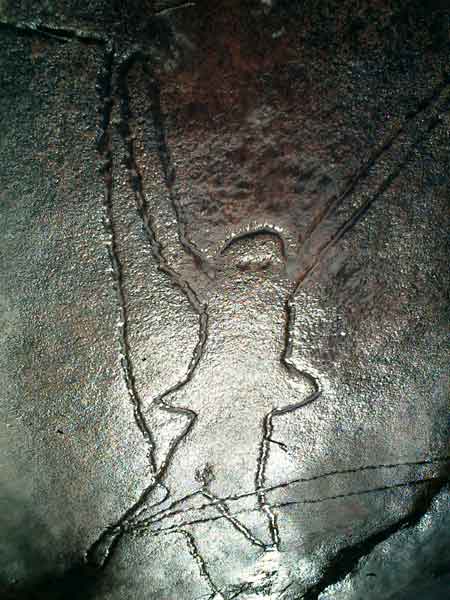
2. & 3. dotAtelier, inspired by Eora Rockengravings of the Pittwater region.

31 May 2007

Whales visiting Manly - still

Whales are passing again on their long journey. Wednesday two Humpbacks were sighted. Today at around 5 pm two were sighted from North Head. As it was already dusk, it was too hard to distinguish if it was a Humpback or a Pilot Whale. Many of the motorised speeding boats did not seem to notice anything. At least there was no marina developer 'buzzing a humpback whale in a speedboat'.
These mammals have been doing their routes for 15-36 million years of their evolution and can become some 200 years old and have a language/dialect. Like a lot of other species they are being forced out of their habitat by us.This giant megafauna 'cloggs up' the shipping routes. Good news for human beings is, it is cheap meat with low production costs and 'advances science'. Additionally they can also be monetarised 'as a resource for tourism'. Paying audiences can have a good commercialised look from a noisy motorboat.

Just like in our motorised traffic it becomes near impossible to communicate to each other over motor noise. So with the whales, the noisy motors shred the syntax and block any of their cool remix mating songs. "A blue whale, which lives 100 years, that was born in 1940, today has had his acoustic bubble shrunken from 1,000 miles to 100 miles because of noise pollution".
Sonar military communication...”Causes hemorrhaging in their brains and lungs. They've found them bleeding from their ears, bleeding from their eyes...It kills them." Planned oil and gas mining in the ocean “Would expose whales to noise pollution, oil spills, chemical pollution, vessel collisions and entanglement with or ingestion of marine debris

About whalewatching, NSW
Leaving some personal space for them if you have to go near them
Learn more about marine mammals
Greenpeace
Video: Destruction of 3000 whales p.a.
Whalesong
Update: 010607, 11:30 am Humpbacks of different sizes passing North Head/Manly.

27 October 2005

'Ocean toll' - 130 whales

'Navy used sonar near whale beaching' in Tasmania. The 130 killed long-finned pilot whales had been near the Navy using active sonar. This military technology is using 'sound burst to "floodlight" undersea areas.' (SMH) The search was for a 'historical anchor'. Seismic testing by the oil industry, also in the area is also a known cause for whale stranding. (SMH, ABC News Online)
'Both species are killed in their hundreds or perhaps thousands in longline and gillnets each year.' (Wikipedia)

15 July 2005

Land and Ocean report

Nearly got run over today in Manly by a yob-mobile, cars parked all over the curb as well. The Pedestrian Council of Australia shows some stunning images how motorists are ignoring the law. Please update site!!

At North Head (Car-rang-gel) today yachts and tin-cans hassled whales on their ancient migration routes. 85 bucks a ride at high speed to chase whale and offspring. The whale (watching) industry is almost as lucrative as in colonial times.

On the sub-urban frontier the British box hedges are grown with the help of the horticultural industry. Rip out these flouring Callistemons, in with wood chips and hedges from Elsewhere.
90% of Manly's sustainably cultured environment is now degraded by settler activities.
There are many native plants that could be planted or encouraged. Endemic plants (PDF) are of course the most appropriate fauna for the area. Many more food and habitat plants could be grown for the endemic fauna. Fruit for the Grey-headed Flying Fox, flowers for the Lorikeets, large trees for the many possums.
For human beings too urban agriculture could could co-exist with the 'bush'. A mapped fruit alert directs the communities' attention to appreciate the abundance of urban activism.

21 August 2008

Watching Whales and Dolphins in their habitat

WATCH the beauty of these free whales and dolphins in the ocean, unencumbered by human artefacts and not harassed by human noises. Great work by Okeanos – Foundation for the Sea which is concerned with whale welfare. More resources on the impacts of human noises and their blog.

05 February 2013

The Ocean - Manly Beach Blog Tweets

Tweets from @MnlyBeach 01.2013
OCEAN, BEACH & SHORES
"Everyone gets this preconception that the ocean and beaches are backyard swimming pools"
via @BeachwatchNSW marine wildlife habitat ocean @MnlyBeach, source

Of tidy pools, chlorine, algicide and dead marine life Sydney toxins pesticide ocean  @MnlyBeach, source

Immersing in foam of sewage and toxins on Australia's eastern beaches? ocean eutrophication @MnlyBeach, source

Turf wars for the seashore: Sprawling people, their fossil fuel vessels and dogs OR marine wildlife  RT @WHALES_org #habitat,@MnlyBeachsource


INDUSTRIALISING THE OCEAN
New maps detail excessive shipping noise in Puget Sound, BC #whales @MnlyBeach ,source

Particles emitted by ships on the Pacific #Ocean CO2 fossil fuel exhaust marine habitat clouds @MnlyBeach, source

Warship ran aground on the world heritage Tubbataha Reef, Philippines. UNESCO World Heritage ocean @MnlyBeach, source

Giant sperm whale checking out its newly industrialised landscape. habitat ocean clutter ROV tethered underwater vehicle @MnlyBeach, source

Offshore oil and gas structures in marine habitat  #ocean clutter wildlife @MnlyBeach, source

When will Australia's coast look like this? ocean habitat wildlife oil/gas infrastructure Pacific industrialisation @MnlyBeach, source

Record high radiation level found in fish  Fukushima radioactive contamination #ocean atmosphere @MnlyBeach, source

Bob Pressey @jcu explains why Australia's new marine parks network won't work   @MnlyBeach, source


OCEAN AS A TIP - THE PLASTIC LIFE STYLE
The #ocean as tip for #plastic garbage toxins legacy toys consuming beach wildlife food   @MnlyBeach, source

Fish have a gutful of plastic food marine debris throw-away culture synthetic polymers microplastics @MnlyBeach, source

Plastics Suck Up Other Toxins: Double Whammy for Marine Life, Gross for Seafood RT ‏@MotherJones, source

 Unilever bans plastic microbeads from facial scrubs RT @Earth_News, source

20 October 2008

Marine Conservation and The Use of Beaches

Marine Parks - the only way to go
The battle over 'No Take' and 'Grab it all Now' is grinding along Australia's coastline. Moreton Bay Marine Park , rich in biodiversity is having 16 % of the Bay declared free from fishing and boats have to "go slow" to not continue injuring the dugongs and turtles. It is " home to 750 species of fish, 120 species of coral, an abundance of dolphins, migratory whales and the world's largest population of dugong next to a capital city.""Each year some 200 turtles are found dead, sick or injured in Moreton Bay Marine Park and an average of 15 dugongs die from human impacts." The Australian Marine Conservation Society says that at least 30 % of the bay should be protected. "It exposes actually a whopping 84 per cent of the marine park to intense fishing pressure".
Manly Cove, Sydney Harbour and the Pacific hugging the Northers Beaches should also go 'slow' and have an effective 'no take' Marine Park to conserve some of the biodiversity for the future.

An observant person on Bribie Island wanted to report a loggerhead turtle stranding. He rang the Environmental Protection Agency's hotline just to be diverted to a call centre in Indonesia. The stranding was never followed up. Sounds soo familiar... abc 201008

A whale sanctuary has been created off Chile's coast, ensuring save passage for the cetaceans migration over 3,400 miles (5,500 km). Here, news of entanglement, starvation etc is almost daily. Noisy obstacles, such as human infrastructure off shore probably do not aid the journey of the giants.

Taking the beach away to attract beach holiday seekers
It is interesting to see how far 'developers' in the tourism industry go: They carted their biggest asset away, 500 truck loads of beach sand to build a a $1 billion resort with it. In the absence of the key feature, the project is now on hold. It will take 100 years for the forces of nature to replace the stolen sand. BBC

Choking on the air and pulverised stuff
"Australia's asthma mortality rates are one of the highest in the world according to a new report by the Australian Institute of Health and Welfare." HealthInsit.au does not mention car pollution as a 'cause'. It all seems a matter of 'managing' it by medical professionals, not preventing it by involving urban planning. Elsewhere, they have found that tree-lined streets can make a difference.

Privatising public spaces
At dark, Manly's coach-led body-fitness customers are cluttering up the paths, dipping into the doggy lawn and punching into the night. All apparently unregulated. Most businesses have to pay the rent, events have to register and pay a fee, but feral businesses occupying public space with business activities seem to be exempt. "City of Yarra and several other municipalities are following the lead of five bayside councils, which recently moved to clamp down on boot camps that operate on beaches and foreshore parks.But Yarra has gone a step further and proposed a ban on commercial exercise groups of more than six people from 18 public parks in Fitzroy, Clifton Hill and Richmond. Fitness classes will also be prohibited from exercising within 10 metres of playgrounds or 15 metres of picnic sheds and park benches." It might be... "reasonable to pay a fee to conduct a business in a local park", but is it desirable to privatise public spaces?

22 September 2008

Manly Beach 2048

“Pungent brown sewage spews into the Pacific ocean. In the background, cranes put up hotels and beachfront apartments."
So runs an intro to another Pacific tourist spot where uncontrolled coastal tourism development kills the 'golden goose' for investors, residents and visitors. Pressures to intensify and commercialise the protected 'green and blue' leads to the degradation of all. Squeezing the proverbial 'goose' to death means a loss of human health, life quality and economic gain. Even more of the Australian species, plants and animals would lose their habitat, that is their right to life.

Imagine!
Manly in the 21st Century could be consumed in the same way, if there is no refraining from grabbing 'what's left'. Developing the trends would give the following constellation:

The pressure is already on (pdf) to convert 'nature' (Sydney Harbour National Park, North Head, Quarantine, Dobroyd, and Garigal National Park) into more of the same, a tide of 'accomodation' and sprawling sub-urban McMansions with their associated infrastructure.

Manly 'town' could become 24/7 neonlit buyosphere which customers could immerse themselves in. Alcohol merchants and casinos high-rise, Las Vegas style could frame the beach. Experiences and bodies could be organised via animators from the entertainment industry. Roofed domes would lessen the deadly uv radiation from scrambling the DNA. Organised 're-creation' is conducted on flood-light filled arenas. All are of course attending in respective plastic uniforms. Sports ovals, swimming pools and golf courses are also day & night air-conditioned and lit. Plastic lawns have long replaced water gobbling/toxic lawn transplants.Every inch of the Earth is paved over with coastal real estate: tourism development (hotels, resorts, restaurants, etc.), and the infrastructure supporting coastal development (e.g. marinas, beaches, recreational fishing facilities.) Breakneck developments turn the area into ear-piercing noise waves on every corner.

The sky is also filled with constant noise: Jumbo planes are seen 'spinning' over the beach, belching poisonous gases and consuming non-renewable energy while delivering more 'customers'. Helicopters and small plane 'joy-rides' are now so numerous that they are on a clear collision course with each other and the many UAVs. Brand names are 'written' into the clouds for all to see, that are not in-dome. Blimps urge all to accelerate the buying of anything now!

The ocean:
Surfing and swimming has long being abandoned, as the nutrient over-enriched coastal waters have turned into a permanent red tide. This anoxic "dead zone," is devoid of fish, but still very rich in stinging jelly blooms. The entire coastal marine ecosystems has been consumed. The sand is so e coli laden, that it is not to be touched. The 'ocean spray', full of HABs, is a health hazard.An industrialised ocean horizon:
Private boating also ceased, due to oil shortages and the unavailability of territory to give these motor-boats 'a good spin'. A dense network of aquaculture infrastructure clutters up the coastal waters. Further out, the ocean horizon is studded with chains of giant artifacts: Desalination factories (pdf), gas- and oil drilling and extraction structures and huge data platforms. No whale has been seen for years that could navigate this dense human ocean clutter.

More frequent violent storms, tornadoes, hurricanes and giant waves mince up the entire set-up due to human-caused climate change. The thick layer of human debris and waste floating on top of the Pacific also gets washed onto the shores. Various chemical spills and scrambled infrastructure do not make 'clean-up' operations easy.

Due to the many desalination factories, the water guzzling life style could be kept up. Visitors on the whole are consuming double the amounts of water via hotels, swimming pools, golf courses and personal use etc. But locals also all have their personal lap pool by the 'beach'. The exotic plants still are watered with petrol pumps as before.

The demand on energy leads from time to time to a crash into 'a candle economy'. Many suffer in their air-conditioning dependent dwellings in the long black-out periods. The nuclear option seems to keep this power-ful life-style alive.

Sewage, another plentiful anti-product which is a slight challenge to the aesthetic and olfactory appeal, could also pose a possible loss in revenue for tourism. The dead zone of the coastal waters is fueled by this waste-water contaminated with toxins and pharmaceuticals.

But all is not without life, people now have their dearest darlings cloned in multiples. One can see them, as before in cafes with up to 6 harnessed dogs.
Huge cats, as well as packs of dogs have gone 'feral' roaming gated estates. The only surviving bird is the Indian myna, seen in millions coating all with its feces. Many black rats are seen living on the garbage. Large swarms of flies, mosquito and ticks are still posing a challenge.

Australian animals can now be admired (for a fee of course) in an event space, previously known as a museum. There they are, the bandicoot, the little penguin and so many more - all stuffed, just like in the 19th Century. Most Australian plants are gone. Some invasive plants and pests are still about, despite the increased toxicity of the weapons used in aerial helicopter spraying.

Uncontrollable fires shroud the area in suffocating smog. Even though there are only weeds left to 'back-burn', the scarcity of water, threatens the 'real estate'.

Many argue that tourists were not drawn by all that 'environmental stuff', they didn't give a hoot about the unique ecology of Manly. They were seeking to spin their body around, often with the aid of petrol or ingestid toxins . This constituted 'fun' and sold well. Human generated 'attractions' have to be erected to offer a peep here or a spin there. Once contained, money could be collected in this Disney-like hybrid simulacra world. Neither locals nor visitors are remembering or missing that 'biodiversity and landscape attractiveness'. The problem is though, that the place has become indistinguishable from so many other (coastal) places in the world and that is a challenge. Like malls and airports, one doesn't know anymore where one is.
Looking after the Country in the future:
Myopic objectives could gamble away 'nature' and 'uniqueness' that has no substitute. Unchecked developments and mobile destruction (mass tourism) degrade a place and its resources. 60 % of Australia already has been degraded by relative few people in a short time. 'Customers' flee the degraded tourist traps, locals desert the uninhabitable places seeking refuge in the remaining 40% 'new-found-land'.

Returning North Head, Sydney Harbour National Park, Quarantine Station, Dobroyd, and Garigal National Park to their owners
might guarantee a halt to the tidal wave of destruction.The National Parks and reserves are an essential refuge for endemic plants and animals. They also are of great ecological and economic value in framing Manly as a desirable and unique place on the Earth.
Images:
1 North Head, Manly and the Northern Beaches, Google Earth
2 North Head, Dobroyd and part of Sydney Harbour National Park, Google Maps
3 Dobroyd, SHNP viewed from Manly Cove
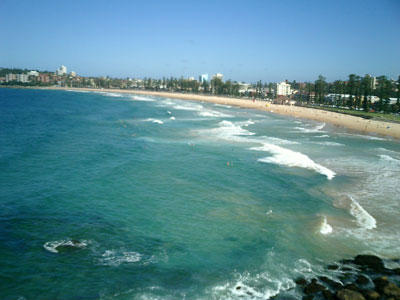
4 The Pacific ( uncluttered) viewed from North Head
5 North Head cliffs and the Pacific Ocean


Links:
Manly Council Submission to Taskforce on Tourism in National Parks, PDF
Players:
The NSW Government
The Environmental Trust, The Department of Environment and Climate Change (DECC)
Manly Council
NSWALC, NSW Aboriginal Land Council, Land Rights Act
National Parks & Wildlife Act 1974
NCC/NPA Submission to Taskforce on Tourism and National Parks, Submission of The Nature Conservation Council of NSW and the National Parks Association of NSW and the Blue Mountains Conservation Society. 0808, pdf 1,2MB

Areas to 'exploit' and 'open up':
Sydney Harbour National Park (SHNP) North Head, Quarantine Station, Dobroyd, and Garigal National Park.
Coastal Recreation and Tourism:
- UN Atlas of the Oceans
- United Nations University (2008, June 4). Coastal Management Cooperation, Enforcement Key To Avoid Pending Crisis For Millions, UN Experts Report. Retrieved September 22, 2008, via Science Daily
- Mike Davis , House of Cards, Las Vegas: Too many people in the wrong place, celebrating waste as a way of life, Sierra Club
Footprint:
-"You can't have one species growing indefinitely on a planet that is finite." Prof. Bill Rees

Update:
" The vast majority of the Australian population is clinging to the east coast, running out of land and running out of water...2043, when 43 per cent of the Gold Coast has been abandoned to ever-rising sea levels. Australia's swelling population could be accommodated in desert cities." SMH 201209

26 May 2006

Signed land of Manly

Some of the remaining Kay-ye-my Aboriginal 'sites' on the Manly walk (from Spit Bridge) are documented by Creative Spirits. Images and a map of the walk can be found there too.

There is also interesting and updated reading on sustainability by the CSIRO Sustainability Network.
(Image: petrography 'woman in whale' by the Eora people)

21 July 2005

Fauna report

Yesterday was the first sighting of a Blue-tongue in the garden and a large whale spout out from North Head. The lorikeets have young, calling all day. At the same time the industrialised gardening armies swing into action. Blade wielding they are a great danger to the the Eastern Blue-tongue (Tiliqua scincoides scincoides). The Blue-tongue likes hot sandstone and native tussocky grasses and leaf litter (untidy!). Industrial landscapes, such as lawns do not allow for both and additionally cut up a lot of lizards. Many are also killed by cars as they take the hot road to be a nice hot sandstone. Snail bait and cats & dogs are the other dangers to this ancient reptile.