Manly Council is attempting to facilitate 'community' top down. The chosen event this time is Halloween. “Make your Street Spookier” goes the postcard-blurb. We should engage in a “creepy” orgy of consuming and line the streets with debris (plastics): “fake cobwebs, bats" etc., streamers and sugar/coloured lollies and spend big on costumes. Strange ideas for a council that purports minimising waste and has a sustainability statement. The promise is that the road will be closed, but no mention is made where the many spectators will park and what the increased traffic hazard means for wildlife and adjoining streets capes.
Halloween has its origin in the agricultural rites of death and renewal for a new sustainable year. Part of the produce had to be sacrificed to the land spirits and shared within the community. Dark forces had to be soothed with gifts and bonfires held darkness and death at bay. This renewal festival has long been co-opted and commercialised to flog off (mainly plastic) merchandise. Australia has just recently hopped on to this bandwagon.  The are a lot of spooky skeletons in the Australian closet. The plastic bats, spiders, owls, crows, skeletons, the cats, werewolves, haunted houses and zombies might be contemporary props to ward off the the inevitable hot dry future created by mischief-making adults. The horror is ususally projected onto the living native spiders and bats etc - till the ritual spray or habitat destruction puts an end to the spook. The defense mechanism must lay the blame on a sacrificial being, to heal the denial, the anxious state of being. Halloween is a welcomed purging as well as an economic healer now.
Children are very anxious about the future. A world without water and food , but permanent engulfing “bonfires” does not fuel much optimism. Responsible elders not looking after our only common home make the decisions to heat it up unbearable for all, make the sea rise and melt the ice. Daily, many members of this common household have to go forever. The land, waterways and air are used as rubbish tips and all loose their health. Degraded land and toxic landscapes are part of the inheritance. This 'house of horrors' might well be less inhabitable than what their parents inherited and squandered. The disruptive nature of economic and ecological inter generational equity is creepy.  Apart from these many “natural disasters” of a turbulent future, children go through horror scenarios of neglect and child abuse in Australia. Irresponsible use of cars, guns and dogs also sacrifices many young lives. Haunted human relationships propagate in a spooky Zombie culture. It is bewitched how young people are denied independence and maybe a future too.
Till then, put on the big magical denial party and celebrate...
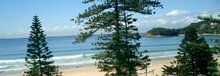
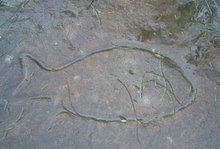
Images: 1. Children at Manly Beach, 2 & 3 Street art Berlin
16 October 2007
Halloween – it's kinda spooky

21 June 2007
Attracting more motorised vehicles to Manly beach
 Some cities aiming for sustainability introduce 'pay as you drive' schemes. Transportation in Sydney is 'going nowhere', killing many, endangering health and hotting up the Earth for all to come.
But Manly is going the other way, parking out the beach will become even cheaper. Beachfront parking already increases traffic and the associated noise and air pollution. Foul smells and deafening noises enter the eateries and cafes at the beach and the CBD. Hot bombs fly along unrestricted. Even on the beach promenade the negative impacts can be heard and smelled. Sometimes even there are motorised vehicles on the pedestrian path. The stated goal of 'maximise (car) parking' seems contrary to any proclaimed goals of sustainability.
Just one look at the many parked bikes and walkers and one can see that residents and visitors want bikeability and walkability in a unique place. Yes they do shop too and spend money in restaurants. But in the absence of 'a chambre of non-motorised residents and visitors', no one seems to consult these stakeholders. Lets not consume the uniqueness of Manly beach in one gulp.
Consider a car-free beach, even a walkable, cyclable town.
A world for cars