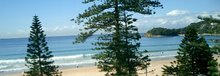
Illegal fishing, take & chuck Watch Phone Line at Cabbage Tree Bay ‘No-Take’ Aquatic Reserve
 Unlawful fishing activities can be reported 24/7 on the hotline
Showing posts with label conservation. Show all posts
Showing posts with label conservation. Show all posts
25 October 2011
Report illegal fishing at Cabbage Tree Bay Aquatic Reserve, Manly

08 January 2011
Ban Fishing on Crowded Urban Beaches - Marine Reserves
 Each year there are fewer Crested Terns visiting Manly Beach.
 More and more fishermen line up along the urban beach. Booze-free zone. Stinking garbage, dead fish, dangerous hooks and plastic junk are left behind.
 A Crested Tern mother had a chick which she hid amongst the Seagulls. Returning from her feeding trip, she was in distress, trying unsuccessfully to regurgitate - a fishing hook and nylon string. Various phone calls were made to volunteer organisations with long waiting loops. Had it been a precious dog, there would have been a swift service. It is unknown if the dependent chick or the mother survived. But then it's all about beach as a tidy and profitable playground for humans. Wildlife, especially shorebirds, are not granted a habitat.
More birds killed by fishing hooks and fishing lines at Manly Beach
Ban fishing on urban beaches. Make Manly beach and the Northern beaches a marine park.
20 March 2009
Landmark Figs of North Head and Sealed Soil
 North Head - a visit
Along North Head Scenic Drive, as the title suggests, there is no walking or cycling path to visit the National Park of the unique northern headland of Sydney. Joggers, walking visitors and cyclists dodge the speeding cars to get to THE view. This year one bandicoot has been recorded as killed.
Increased urban structures: light pollution and eutrophication
On the right of the roundabout a new carpark has been built, converting the bushland into an impermeable surface. The run off from the hill would run straight to Collins Beach. From tall poles mega-watts bellow down on the surface and adjoining bushland. For the endemic fauna the artificial lighting has severe consequences. The CO2 emission is another matter.
Butchering natural heritage:
Further, opposite the Artillery more 'scorched earth' carparks. On the right side of the Artillery are four giant ancient fig trees framing a cafe as the main landmark. All four have been severely cut back with no apparent reason. Hard to believe council would approve such unaesthetic butchery of the natural heritage of Manly. The limbs missing did not seem to be in the way of any human mobility. At the Fairfax Walkway
Again the cemented walkway is impeding all natural drainage and erosion gullies dig deep. Encouraging large tourist coaches and not providing sanitary facilities, leaves the landscape littered in paper tissues flying in the wind and more. Apparently blind or illiterate dogwalkers bring their pets into the National park despite it all.
Images: 1 Google Earth, North Head Scenic Drive, roundabout an carpark before being sealed and light flooded. Collins Beach 'down the hill' .
2. Two of the figs to the right side of the cafe/Artillery
26 November 2008
Managing Busy Beach Environments
 Benidorm in Spain went from a small fishing village "formed by two crescents of fine golden sand" to a 2.6 million tourists a year high-rise beach - "the Dubai of Europe". Intensifying alcohol- fuelled festivities in a mass tourism location distracted visitors that might have sought the uniqueness of a place.
Benidorm now wants to turn around and secure just this one-off status by seeking to protect and promote its world cultural and natural heritage. To become a Unesco World Heritage Site one has to clean up their act, so they drafted a 73-article code of conduct for beach users:
€1,000 ( 2,011.50 AUD) Bathing under "red flag" conditions
€750 Fishing (€1,100 with a harpoon)
€1,100 For Bonfires
€250 Bringing glass containers on the beach (€750 if that container breaks)
€250 Taking animals on the beach
€300 Drinking alcohol, selling merchandise (conducting outdoor businesses)
€150 Urinating or defecating in sea or sand
€120 (£102) Playing ball and paddle games outside authorised areas
€150 Early staking-out of a prime spot on the beach for later use
€750 Using the beach (for a party, sex, stroll) from midnight to 7am
Source: The Independent
20 October 2008
Marine Conservation and The Use of Beaches
 Marine Parks - the only way to go
The battle over 'No Take' and 'Grab it all Now' is grinding along Australia's coastline. Moreton Bay Marine Park , rich in biodiversity is having 16 % of the Bay declared free from fishing and boats have to "go slow" to not continue injuring the dugongs and turtles. It is " home to 750 species of fish, 120 species of coral, an abundance of dolphins, migratory whales and the world's largest population of dugong next to a capital city.""Each year some 200 turtles are found dead, sick or injured in Moreton Bay Marine Park and an average of 15 dugongs die from human impacts." The Australian Marine Conservation Society says that at least 30 % of the bay should be protected. "It exposes actually a whopping 84 per cent of the marine park to intense fishing pressure".
Manly Cove, Sydney Harbour and the Pacific hugging the Northers Beaches should also go 'slow' and have an effective 'no take' Marine Park to conserve some of the biodiversity for the future.
An observant person on Bribie Island wanted to report a loggerhead turtle stranding. He rang the Environmental Protection Agency's hotline just to be diverted to a call centre in Indonesia. The stranding was never followed up. Sounds soo familiar... abc 201008
A whale sanctuary has been created off Chile's coast, ensuring save passage for the cetaceans migration over 3,400 miles (5,500 km). Here, news of entanglement, starvation etc is almost daily. Noisy obstacles, such as human infrastructure off shore probably do not aid the journey of the giants.
Taking the beach away to attract beach holiday seekers
It is interesting to see how far 'developers' in the tourism industry go: They carted their biggest asset away, 500 truck loads of beach sand to build a a $1 billion resort with it. In the absence of the key feature, the project is now on hold. It will take 100 years for the forces of nature to replace the stolen sand. BBC
Choking on the air and pulverised stuff
"Australia's asthma mortality rates are one of the highest in the world according to a new report by the Australian Institute of Health and Welfare." HealthInsit.au does not mention car pollution as a 'cause'. It all seems a matter of 'managing' it by medical professionals, not preventing it by involving urban planning. Elsewhere, they have found that tree-lined streets can make a difference.
Privatising public spaces
At dark, Manly's coach-led body-fitness customers are cluttering up the paths, dipping into the doggy lawn and punching into the night. All apparently unregulated. Most businesses have to pay the rent, events have to register and pay a fee, but feral businesses occupying public space with business activities seem to be exempt. "City of Yarra and several other municipalities are following the lead of five bayside councils, which recently moved to clamp down on boot camps that operate on beaches and foreshore parks.But Yarra has gone a step further and proposed a ban on commercial exercise groups of more than six people from 18 public parks in Fitzroy, Clifton Hill and Richmond. Fitness classes will also be prohibited from exercising within 10 metres of playgrounds or 15 metres of picnic sheds and park benches." It might be... "reasonable to pay a fee to conduct a business in a local park", but is it desirable to privatise public spaces?
12 October 2008
Channel-billed Cuckoos and Fig Trees of Manly
 A couple of Channel-billed cuckoos ( Scythrops novaehollandiae) are back in town again, seeking to outsource their child-rearing to the local Crows, Pied Currawongs, Butcherbirds and Australian Magpies. The up to 65 cm long bird with a large (horn-like) bill and a red eye can be heard (audio) at different times of the day. Its call is much louder than that of the Common Koel (Eudynamys scolopacea) (audio). They love eating native figs and fruit. Around Feb./March they fly back to a rapidly cleared PNG.
 Here too in lawny bland-burbia intolerance to trees fills the air with the sound of daily chainsaws and other petrol powered machines. The Fig trees Manly has to offer the visiting bats and birds, such as in Darley Rd and Wenthworth St have no protective devices (cages) to prevent vehicles constantly crunching into them. They are very scarred, most of the bottom branches
  had to make way to the 'wheels of industry'.
Many large, old trees/figs are mysteriously dying at the moment, revealing a 'view'.
At the library plaza of Market Place a pet fanatic even brings in an unleashed cat and locals get amused how it chases the local native birds.
Trees and birds are one of the big assets of Manly -let's look after them.. Trees on Council Land, Manly Council
Images: Figs in Darley Rd. Manly, dead old Fig, Marine Pde
More and image here 0109
08 October 2008
Plundering the Cabbage Tree Bay Marine Reserve again

Again, the "no take" Cabbage Tree Bay Aquatic Reserve has been vandalised in broad daylight with many people present. 'Protected' fish such as the Blue Gropers and many more were speared. It is sad, that apparently only one person stood up to these people carrying potentially deadly weapons on a busy beach. Regularly, MNLY confronts people taking buckets full, spearfishing, filling big nets of colourful 'protected' fish. Some carers just let their kids collect as much shellfish as they wish. Most of the plunderers know about the illegality of their actions and become very aggressive. It is sad, that the enforcement of a "no take" zone is left up to the arbitrary citizen willing to risk their life.

Via Manly Daily 'How can anyone be so bone-headed?' 071008 (Maybe it is has not fallen out of the archives, as the 'red tide' 021008 has.
Images:
Portrait of a male Eastern Blue Groper (Achoerodus viridis) with escorts. Shelly Beach, Manly, NSW, Flickr
Eastern Blue Groper (Achoerodus viridis). Fairy Bower, Manly, NSW, Flickr
Report all illegal taking and vandalising in protected aquatic habitats: Ph: 1800 043 536
- Manly Council Rangers Ph.:9976 1630
- Sydney North Fisheries Office Ph.: 8437 4983
Update: The 'Spearoz' community is also discussing the matter here
02 October 2008
Manly Ocean Care Day - Of Albatrosses and Red Tides
 As another 'ocean care day festival' is approaching in Manly it is time to focus on the 'care' bit. In the holiday season the beach is specially subjected to a tidal wave of of unwanted 'convenience' packaging and 'recreational' plastic.
Out of the ordinary was a large Shy Albatross (image) (Diomedea cauta cauta, pdf, measuring some 95-100 cm, wingspan 240-260 ) found at the North Steyne end of the beach on 300908. 10 puffer fish were also rolling on the sand. This giant bird is still hunted for 'sports' and chokes on human plastics. As there is no habitat left for it in the Manly region, the next possible place could be just north of Sydney. Five albatrosses and pelicans have been found poisoned at Tuggerah Lakes. "It was believed the sudden outbreak of botulism was caused by rain washing chemicals and fertilisers into the stagnant water of the lake."
If it isn't run-off from human settlements that has killed the birds and polluted the water, then it is also possible, that it is the mix of high temperatures, due to human-caused emissions, as well as the flushing of unwanted wastes into the water bodies. The result is a warm brew encouraging the growth of toxic micro-organisms. Even if no red tide is visible, the toxins (brevetoxins) still lingering, damage the nervous system, just like the botulism bug. Maybe the shy giant made it out to sea and was overcome by the HABs, to finally get washed up at Manly. Does anyone care?
A red tide is at the moment hovering around the corner in Clontarf's Sandy Bay, (Manly Daily, 021008, image). Red tides love warmth + plenty of human caused run off. They then breed toxins which have the ability to kill life in the ocean/bay and on land. Although there is a fine of $ 1 million for dumping baddies into the water-ways, there seems to be none for doing it with a trickle (eutrophication) over time.
Clontarf / Bantry Bay Estuary Management Planning Process - Data preparation in 0807, (pdf) reveals a lot about the the Sydney Harbour Foreshores and Waterways Area, such as Castle  Rock and Bantry Bay and includes parts of the Balgowlah Heights, Clontarf and Seaforth suburbs.
65.5% of the space is for human habitat, 22.0% for their sealed roads and 10.2% for parks and public spaces. The 'storm water drainage network' is visualised in this document. The appropriation of freshwater is also accounted for. Giant lawns and pools spill into the 'bush', which is often cleared to see the marina (image). The foreshore appears transformed into a space for fossil fuel vessel parking. The estuary/bay is slowly looking like a large boat-parking area. Private dinghies clutter up the 'public' reserve. As in Manly, unleashed dogs are emptied of their untreated feces into the bay.
The environment- human interface is summed up as being in conflict:
The degradation of the environment does not only rob species of a habitat, but it also diminishes life quality for all living and to come. Running out of space and resources in an ever shrinking world
- "Seawalls for protection of properties versus its damaging impact on natural ecosystem
- Groundwater abstraction and possible saline water intrusion in aquifer
- Beach raking for safety versus its impact on invertebrates
- Dog walking off leash and impact on shore birds
- Powered and sailing boats and their wake impacting on seawalls and beach erosion
- Access to mooring versus their impact on sea grass beds, ability to spread caulerpa taxifolia
- Powered boats and the safety aspects for swimmers and kayakers
- Ad hoc boat storage and its impact on amenity and habitat:
- Ad hoc access ways to foreshore for convenience versus destruction of habitat." (pdf)
 is no fun. The diy cocktail of heat, plus draining liquid wastes equals red tides, or dead zones, that are void of life and toxic to ALL. Just breathing the mist is a hazard, eating the contaminated fish/seafood can be deadly. Jelly invasions ( the only creature thriving on this human-made environment ruin the beach- Beach closures, due to toxic blooms or jelly blooms are costly. 'Business as usual' in a risk-society could play it all away in just a generation.
The oceans are getting so hot, acid and degraded by us. Species are either fished out by us or their habitat is ruined. Lobsters, seals, whales, dolphins and crabs etc etc are affected by the red tide toxins and are wishing to leave their habitat, they thereby die.
It would be a sad world which leaves a
red ocean behind
no fish and life in it
no ocean and foreshore birds on the horizon
no beach or bay without a noisy smelly and dangerous motor
no beach or bay without human infrastructure cluttering up the landscape
Let's care!
Images:
1 & 2 Dead Shy Albatross on Manly Beach, 300908
3 Sandy Bay, Clontarf, Google Maps
4 Clontarf/Spit Bridge, Google Maps
Animation: Ocean care day animation, Manly Beach
Links:
Toxic Blooms: Understanding Red Tides, FATHOM
HABs, Harmful Algae and Red Tides, Woods Hole Oceanographic Institution
Sea Birds affected by red tide toxins, Florida conservation 2006
Entanglement in or ingestion of anthropogenic debris in marine and estuarine environments - key threatening process listing, DECC
Rock Snot, a hazardous algae in Tasmania, has had devastating effects on inland river catchments in New Zealand abc 270808
Update 101008
- The red tide at Clontarf mentioned above has been identified as Noctiluca scintillans (Manly Daily p3, 101008). The same type of algae bloom has also been found at Seaforth, west of the Spit Bridge and Woollloomooloo Bay. NSW Health recommends that people avoid contact with all blooms. This dinoflagellate is also linked to " anthropogenic eutrophication...along the southeast coast of Australia". In India, it has been implicated with "the decline of fisheries". At night Noctiluca glows in a bright blue bioluminescence, as viewed on Manly Beach before.
Suspected blooms should be reported to the Regional Algal Committee during business hours (02 4729 8138), or the Department of Environment and Climate Change’s Environment Line (131 555) after hours. Toll-Free Algal Information Line - 1800 999 457 according the the NSW Department of Water and Energy
Update 231008
- Brush et al. Historical Land Use, Nitrogen, and Coastal Eutrophication: A Paleoecological Perspective. Estuaries and Coasts, 2008; DOI: 10.1007/s12237-008-9106-z "During the past 300 years, many of the wetlands have been drained, and the landscape was converted to agricultural fields and urban and suburban development. Since precolonial time, the mesohaline estuary has become increasingly eutrophic and anoxic."
24 September 2008
North Head NP Occupied - More Toxic Diesel in Wildlife Habitat
 North Head, Lady Fairfax walk today. Toilet litter all over on the ground from mass-tourism (without the facilities). The National Parks sign is a sure indicator for what is to be expected: dogs, bikes, litter. The rare Banksia vegetation had been damaged on the 'walkway' by cars. Although there were no black plumes (soot) visible from ocean-going vessels, the entire air around the walk seemed saturated in diesel fumes. And then there it was again - another giant infrastructure development IN the national park, placed on the main 'tourist-attracting' look-out, directly on the cliff of North Head.
Diesel-belching clutter IN the wildlife refuge (NP)
A huge diesel-belching, humming demountable, with a large spinning radar antenna had been placed in the middle of the Sydney Harbour National Park's territory. Seeking to “add value to all aspects of Sydneys port operations... (and) protect the environment and have regard to the interests of the community “, the Sydney Ports Corporation planted this air-conditioned, video and radar surveillance object into a wildlife refuge. This 'state-of-the art' technology (pdf) is to aid in the intensification of trade and logistics from Botany Bay to Sydney Harbour (North Head). Intensify - more for more, 'exploit & open up NPs'
The “Vessel Traffic Service (VTS) provides active monitoring and navigational advice for vessels in particularly confined and busy waterways with complex traffic movements...Sydney’s ports alone handle over $50 billion of international and domestic trade annually. Total trade through Sydney’s ports was 29.2 million mass tonnes, 5.0 per cent higher than last year.” Obtaining ROI in a harbour full of tinnies is not easy. Infrastructure is likely to be erected in various harbour sites and widening the bays (dredging) is already starting in Botany Bay and elsewhere.
Deadly trade
As in colonial times, the growing population (pdf) is still dependent on the boats coming in, bringing the essentials. Only this time, the huge diesel-powered vessels (container ships, tankers, bunk carriers, tugboats and cruise ships) are costing lives and health. Most diesel powered ocean-going vessels are significant contributers to air pollution in the heads, the harbour, ports and cities. Ports, handling the bulk of imports, are among the biggest sources of air pollution and greenhouse gas emission. “Each step of the goods movement process is powered by diesel fuel, which releases greenhouse gases and toxic, smog-forming air contaminants...ports pose "grave health risks" to millions of people living in metropolitan coastal areas, especially those living nearest the ports." In 2002 "60,000 people living in coastal communities along major shipping routes died from lung and heart complaints as a result of high sulfate emissions from ships". Particulate matter from ocean-going ship causes asthma, heart attacks, hospital admissions, and premature mortality. “Particle pollution from shipping to tens of thousands of premature deaths each year, most of them along coastlines in Europe, East Asia, and South Asia." This dirty trade is causing harm to public health and to the environment. The ocean, its life and the atmosphere becoming degraded
"Ships use the tar-like, sulfur-concentrated remains of petroleum left once the gasoline, oil and all other products have been extracted. This high-sulfur fuel is responsible for the significant environmental impacts of ship sulfur emissions. Regionally, sulfur emissions contribute to acid rain, which can pollute freshwater lakes and rivers, and damage vegetation." Even cloud formation over the Pacific is influenced by trade-carrying cargo ships powered by diesel engines."The annual costs of sea traffic’s contribution to air pollution, climate change and marine pollution are estimated to amount to 260 billion euro for the world fleet and 57 billion euro for the EU fleet." These 'externalities' are probably not lower for the Asian/Pacific region.
Intensifying diesel-powered traffic that 'costs the Earth' and has negative impacts on the marine foreshore and protected wildlife refuges is unsustainable.
Links:
- International Maritime Organization
- "In accordance with the Australian Government's responsibilities and policies, Australia's obligations under IMO Conventions and AMSA's functions specified in Section 6(1)(a) of the Australian Maritime Safety Authority Act 1990, AMSA coordinates a national pollution prevention and response strategy to protect Australia's marine environment from pollution caused by shipping and related activities. This document lists the prevention components of this strategy, based largely on several IMO Conventions given effect by domestic legislation, implemented and enforced by Commonwealth and State/NT Governments." Protection of the Sea - Conventions and Legislation in Australia, AMSA, Australian Government
- Protection of the Sea (Prevention of Pollution from Ships) Act 1983, NSW
- The National Parks and Wildlife Service, DECC
- National Parks & Wildlife Act 1974
- NCC/NPA Submission to Taskforce on Tourism and National Parks, Submission of The Nature Conservation Council of NSW and the National Parks Association of NSW and the Blue Mountains Conservation Society. 0808, pdf 1,2MB
Update 111008
"The International Maritime Organization on Thursday adopted stringent new controls on airborne pollution from the world’s 300,000 oceangoing vessels. Emissions from ships steaming into ports from Rotterdam to Shanghai to Long Beach, are blamed for about 60,000 premature deaths around the world annually. Sulfur emissions are a major source of airborne fine particulates, which have been associated with pulmonary and cardiovascular disease. In some ports in Europe and in the United States, environmental groups, using the courts, and local governmental bodies have required ships to shut off their engines and plug in to the local electrical grid to keep ship operations functioning while in port." NYT 101008
10 September 2008
Manly's Bandicoot & Wildlife Code
Replacing the unique with the ever-same
The unique Manly treasures, such as bandicoots (little penguins etc) and the sprawl of human urbanisation make for a predictable outcome. Wildlife habitat and sprawling sub-urbia are incompatible. Attempts to limit the negative impacts by "best practice" recommendations and "awareness education" are dubious. We are assured that the owners of the St Patrick's Estate townhouses were given their bandicoot awareness education. "The houses themselves also had to be bandicoot-friendly.."
Manly's surging dog (cat etc) population is making a practical statement to replace the unique Australian biodiversity with a monoculture of foreign animals. The interface between wildlife refuge and human infrastructure and their destructive packs is the killer-zone.
Effective protection of threatened Australian wildlife
Manly’s North Head developments are said to be contingent on " keeping their dog in at night and never letting their cat outdoors unless it is in a sealed cat run." But there are dogs ON the beach (illegally) every morning and night, sometimes even defecating ON the beach on a busy Sunday. They are un-leashed most of the time, hunting little penguins or hunting bandicoots at night in Shelly Beach bushland. With a lack of enforcement and a population wanting to expand the ever-same, the diverse uniqueness of the Manly ecology is sacrificed.
via Pets curfew in building code, Manly Daily 100908
See also:
Bandicoot Habitat I
More on Bandicoots in MNLY
Images: 0808 all via Google Maps
1. - 3. National Park, St Patrick's Estate townhouses developments
4. End of Osborne Rd
5. Montpelier Pl./ Bower St. development


21 August 2008
Watching Whales and Dolphins in their habitat
WATCH the beauty of these free whales and dolphins in the ocean, unencumbered by human artefacts and not harassed by human noises. Great work by Okeanos – Foundation for the Sea which is concerned with whale welfare. More resources on the impacts of human noises and their blog.
16 October 2007
Halloween – it's kinda spooky
 Manly Council is attempting to facilitate 'community' top down. The chosen event this time is Halloween. “Make your Street Spookier” goes the postcard-blurb. We should engage in a “creepy” orgy of consuming and line the streets with debris (plastics): “fake cobwebs, bats" etc., streamers and sugar/coloured lollies and spend big on costumes. Strange ideas for a council that purports minimising waste and has a sustainability statement. The promise is that the road will be closed, but no mention is made where the many spectators will park and what the increased traffic hazard means for wildlife and adjoining streets capes.
Halloween has its origin in the agricultural rites of death and renewal for a new sustainable year. Part of the produce had to be sacrificed to the land spirits and shared within the community. Dark forces had to be soothed with gifts and bonfires held darkness and death at bay. This renewal festival has long been co-opted and commercialised to flog off (mainly plastic) merchandise. Australia has just recently hopped on to this bandwagon.  The are a lot of spooky skeletons in the Australian closet. The plastic bats, spiders, owls, crows, skeletons, the cats, werewolves, haunted houses and zombies might be contemporary props to ward off the the inevitable hot dry future created by mischief-making adults. The horror is ususally projected onto the living native spiders and bats etc - till the ritual spray or habitat destruction puts an end to the spook. The defense mechanism must lay the blame on a sacrificial being, to heal the denial, the anxious state of being. Halloween is a welcomed purging as well as an economic healer now.
Children are very anxious about the future. A world without water and food , but permanent engulfing “bonfires” does not fuel much optimism. Responsible elders not looking after our only common home make the decisions to heat it up unbearable for all, make the sea rise and melt the ice. Daily, many members of this common household have to go forever. The land, waterways and air are used as rubbish tips and all loose their health. Degraded land and toxic landscapes are part of the inheritance. This 'house of horrors' might well be less inhabitable than what their parents inherited and squandered. The disruptive nature of economic and ecological inter generational equity is creepy.  Apart from these many “natural disasters” of a turbulent future, children go through horror scenarios of neglect and child abuse in Australia. Irresponsible use of cars, guns and dogs also sacrifices many young lives. Haunted human relationships propagate in a spooky Zombie culture. It is bewitched how young people are denied independence and maybe a future too.
Till then, put on the big magical denial party and celebrate...
Images: 1. Children at Manly Beach, 2 & 3 Street art Berlin
03 October 2007
Sydney Harbour National Park - a Casino?
 A walk at North Head NATIONAL PARK today, Lady Fairfax walk. Despite the annual ticket to the N.P., access was very restricted and hazardous. Numerous large trucks and trades vehicles were driving/parking on the WALK-WAY. At the cliff look-out, within the NATIONAL PARK a huge structure was being erected, dangling 90 m off the North Head Cliff. How could such a monstrosity serve to conserve the flora and fauna of Sydney Harbour National Park? " Sydney Harbour National Park protects various islands and foreshore areas around one of the world's most famous harbours."
  Yes,the spectacle Las Vegas-style poker will be staged there. Gambling IN the N.P.? The refuge for animals and birds turned into an over-run CASINO?
Where will the visitors go, that came for the 'nature', the uniqueness Manly has to offer.What will be the impact of such an event(traffic) on the wild-life.  Six endangered Bandicoots have been recorded killed on the road so far. What will happen to the trampled vegetation and the generous garbage left behind? How was the community consulted? Is this a further privatisation and commercialisation of spaces in Manly?
Subscribe to:
Posts (Atom)