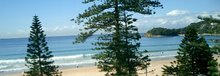
A monthly summary of what has washed onto the shore or beach through the winds, tides, waves or human action. Marine debris, flora and fauna, dead or alive: 010609
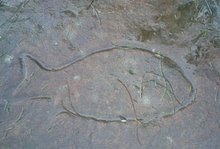
A large reef fish, bluebottles, coconuts
Willy Wagtails surfing the kelp heaps. A very large Pelican/Gannet feather full of parasites.
JUNKSPACE:
Two people with plastic bags collected things, wood? unseen before.
Fumes at the beach: cars, eateries and smokers
- There are Life Guards for the aquatic zone, but where are they for the terrestrial slow lingering toxins?
Noise: Building sites all along
020609
Cat fish, bivalves, sponges, shells
Swallows and Willy Wagtails surfing the kelp
Kelp holding the beach in place, if no one interferes
Junk space:
Plastic junk, a lot of bottles and plastic pellets seemed to be accumulating in front of the 'litter free' beach club. More surfing plastic bits.
What can't be 'cleaned' with the aid of petrol at the beach doesn't get done. It is impossible - the blind spot.
Glass, sharp and in all colours and sizes.
Industrialised cleaning of the promenade at prime visitor time repels users. High pressure hosing exposes people nearby to aerosol pollution. It ruins the ambiance for hours.
030609
Kelp heaped up at the northern end
Sponges of many shapes and sizes, many pink/red
Coconuts, Sea urchins, dead fish
Junk Space:
Plastic, especially bottles. Countless light blue tops
Glass, bumper crop, sharp, many bottlenecks
Food wrappers, the one mouthful type, now also for dogs!
- Can't industry take full life cycle responsibility for their (anti-) products?
Fishing junk: plastic ropes, fishing string all tools to entangle wildlife.
Light pollution in daylight
040609:
Bird scape: Four very agile Gannets (Morus serrator) were busy diving. Willy Wagtails were patrolling the kelp. Large swarms of magpies fight over the tips of pines. Sulphur Crested Cockatoos are still into pine seeds.
Kelp at the northern end is grabbing the sand back, Cunjevoi and Sea tulips mingle with the plastic bottles.
Most of the 'drift'wood is of anthropogenic origin, sawn-off and dumped. A lot of garden rejects.
JUNK SPACE: Fishing Junk: Floaters, long nylon strings, plastic ropes, a car tyre with intricate entangled ropes tied to plastic container.
The plastic pellets still linger, especially in front of the 'litter free' Surf Club/beach. There seems to be an unusual amount of plastic bottles, tops and fast food wrappers/cutlery of a throw-away society.
Glass, not much today.
Odor scape: Fumes from idling diesel tourist buses and unpleasant fat from some eateries at the beach.
090609
Dead fish, nice large sponges,
At the Sth Steyne end the pine roots are exposed on the beach by the erosion, caused by the climate- change accelerating behaviour of fossil fools.
Junk space:
A record amount of broken glass, all over the beach. Post-event glass.
Black plastic bags for dog feces blowing along the beach.
Ga rbage: Take away packaging and drink tins.
The Pigface (Carpobrotus glaucescens) planted around the base of the pines squashed into pulp by a stampede of feet. Post event damage.
120609
Styropore in all shapes and sizes along all of Manly Beach. The petroleum product, used for some many fast food throwaway items, does leach into the products. Everlasting plastic rubbish.
150609
A great variety of shells and coral pieces all along the beach.
Two Pelicans flying towards the polluted Manly Lagoon
Junk space: Glass, a huge crop of all colours and sizes. All freshly cracked scattered all over Manly Beach. Let's call it the post-weekend crop.
170609
Kelp all roots up is doing its best to hold the sand.
Bird Audiospace:
A couple of Gannets (Morus serrator) dive directly at Manly Beach, Sth Steyne, neatly between the flags.
35+ Sulphur-crested Cockatoo, (Cacatua galerita) travel through the pine arcade. Both at rest and in flight emitting their distinctive raucous call. Feeding together on the pine cones, trimming the odd branches, hanging upside down.
The dogaholics walking their packs underneath seem to be blind to such an event. How could anyone think of confining such a powerful social bird in a cage? Why are so many inviting them with junkfood to their balconies in Manly, culturing dependence and inviting the demolition of their houses? In many places they still shoot and poison the protected animal.
Two Masked Lapwings (Vanellus miles) fly over at the Queenscliff end emitting their characteristic day and night call during flight. The Plovers' habitat is reduced to dirty puddles near roads where they are killed by cars, dogs and cats. Some sub-urban birds have given up breeding all together and leave it all up to the human species and their canines.
A White-faced Heron (Egretta novaehollandiae) was seeking refuge on top of a tall building, as the wet slopes of Queenscliff were crowded with dogs. Engraved into local sandstone rocks by the indigenous people of Manly, the birds lived in this area for eons.
A Pied Currawong (Strepera graculina) hunted in the lower levels of the pines, filling its 'larder'. 190609
A very large spiky Porcupinefish together with a toxic looking spray can. Is the zoo imitating toxic 'reality'?
Plastic lighters, 'party' baloons with long entanglement ribbons for wildlife. Dog feces plastic bags, that claim to be 'biodegradable'.
Glass, a lot of it, especially in front of 'Manly's litter-free beach'.
220609
A fresh delivery of plastic pellets. Shredded styropore. Rejected broken surfboards. Many plastic 'throw-away' lighters.
The smell of miasma in front of the 'litter-free' beach club, emanating from the 'run-off' pipe.
The horizon cluttered by a cruise liner billowing pollution into the blue sky and Pacific.
Unusual severe beach erosion all along the beach.
230609 Severe erosion of Manly beach. Even if all autoholics kicked the habit, a 25 m sea level rise is a "can do" for coming generations.
A new large amount of plastic resin pellets (nurdles, mermaid tears) along the southern 'run-off' pipe. This is the raw material for the plastic industry to make the many plastic goods. "Over 250 billion pounds of nurdles are shipped around the world to plastic processing factories every year." A lot gets lost due to inefficiencies and ends up on beaches and in wildlife. All the other plastic junk at the beach, drink bottles, tops, lighters etc are made from these pellets. Today there were some extra large pellets, all mingling with styropore.
School group launching various 'message in a bottle'. Hope they took the glass.
240609
Erosion gnawing at beachfront. Rocks at North Steyne Beach now exposed as well. Manly Beach is fenced off at the parade end. The beach is closed. Earth-moving equipment at work to manufacture a beach at high costs. Sisyphus rolling boulders in the anthropocene? A new delivery of plastic pellets, together with a lot of minced plastic junk. It has the appearance of a cost-effective tip rather than a beach.
On the invisible side of ocean dumping: All the dumping of e-waste at the kerbside, containing "toxic chemicals, including lead, mercury, cadmium, beryllium, polyvinyl chloride (PVC), chromium, arsenic, antimony and bromide" will no longer be possible by 2010.
A brown haze lingering at the horizon.
250609
A Little Pied Cormorant (Phalacrocorax melanoleucos) out of a habitat, searching for a spot to dry its wings.
Erosion. Human labour and earth-moving equipment r olling rocks at the beach. Daily, more and more rocks and fibrous matting is being exposed. Beach and promenade are fenced off.
Despite a forest of signs, families are magically attracted to the sand cliffs and 'rockeries'. One carer by-passed the fence at the beach and swung his toddler at the edge of a 1.7 m sandcliff, rocks underneath. Hungry for adventure.
A very large amount of sharp glass all along the beach.
The usual plastic mince, car tyres more often lately.
Dogs, like every day at Queenscliff beach. Was there ever one conviction?
300609
A large assortment of shells, corals and sponges all along Manly Beach.
Again, an unusual amount of freshly cracked glass of all colours.
The erosion of the beach, especially at the southern end reveals a lot of junkspace: Cement rubble with rusty iron bars jarring out of the ground. Large amounts of fibrous white sheets that used to cover up the 'foundation rocks'.
Council's fences and barriers get broken by the public forcing their 'right to access'. Families seem to be drawn to the rubble as a funfair. Sandy beaches never seem to attract that many minors. Check out the detailed 'erosion' slideshow here.
See also Driftwood of:
May, April, March, February, January, 2009
04 June 2009
Manly Beach Drift "wood" - June

02 October 2008
Manly Ocean Care Day - Of Albatrosses and Red Tides
 As another 'ocean care day festival' is approaching in Manly it is time to focus on the 'care' bit. In the holiday season the beach is specially subjected to a tidal wave of of unwanted 'convenience' packaging and 'recreational' plastic.
Out of the ordinary was a large Shy Albatross (image) (Diomedea cauta cauta, pdf, measuring some 95-100 cm, wingspan 240-260 ) found at the North Steyne end of the beach on 300908. 10 puffer fish were also rolling on the sand. This giant bird is still hunted for 'sports' and chokes on human plastics. As there is no habitat left for it in the Manly region, the next possible place could be just north of Sydney. Five albatrosses and pelicans have been found poisoned at Tuggerah Lakes. "It was believed the sudden outbreak of botulism was caused by rain washing chemicals and fertilisers into the stagnant water of the lake."
If it isn't run-off from human settlements that has killed the birds and polluted the water, then it is also possible, that it is the mix of high temperatures, due to human-caused emissions, as well as the flushing of unwanted wastes into the water bodies. The result is a warm brew encouraging the growth of toxic micro-organisms. Even if no red tide is visible, the toxins (brevetoxins) still lingering, damage the nervous system, just like the botulism bug. Maybe the shy giant made it out to sea and was overcome by the HABs, to finally get washed up at Manly. Does anyone care?
A red tide is at the moment hovering around the corner in Clontarf's Sandy Bay, (Manly Daily, 021008, image). Red tides love warmth + plenty of human caused run off. They then breed toxins which have the ability to kill life in the ocean/bay and on land. Although there is a fine of $ 1 million for dumping baddies into the water-ways, there seems to be none for doing it with a trickle (eutrophication) over time.
Clontarf / Bantry Bay Estuary Management Planning Process - Data preparation in 0807, (pdf) reveals a lot about the the Sydney Harbour Foreshores and Waterways Area, such as Castle  Rock and Bantry Bay and includes parts of the Balgowlah Heights, Clontarf and Seaforth suburbs.
65.5% of the space is for human habitat, 22.0% for their sealed roads and 10.2% for parks and public spaces. The 'storm water drainage network' is visualised in this document. The appropriation of freshwater is also accounted for. Giant lawns and pools spill into the 'bush', which is often cleared to see the marina (image). The foreshore appears transformed into a space for fossil fuel vessel parking. The estuary/bay is slowly looking like a large boat-parking area. Private dinghies clutter up the 'public' reserve. As in Manly, unleashed dogs are emptied of their untreated feces into the bay.
The environment- human interface is summed up as being in conflict:
The degradation of the environment does not only rob species of a habitat, but it also diminishes life quality for all living and to come. Running out of space and resources in an ever shrinking world
- "Seawalls for protection of properties versus its damaging impact on natural ecosystem
- Groundwater abstraction and possible saline water intrusion in aquifer
- Beach raking for safety versus its impact on invertebrates
- Dog walking off leash and impact on shore birds
- Powered and sailing boats and their wake impacting on seawalls and beach erosion
- Access to mooring versus their impact on sea grass beds, ability to spread caulerpa taxifolia
- Powered boats and the safety aspects for swimmers and kayakers
- Ad hoc boat storage and its impact on amenity and habitat:
- Ad hoc access ways to foreshore for convenience versus destruction of habitat." (pdf)
 is no fun. The diy cocktail of heat, plus draining liquid wastes equals red tides, or dead zones, that are void of life and toxic to ALL. Just breathing the mist is a hazard, eating the contaminated fish/seafood can be deadly. Jelly invasions ( the only creature thriving on this human-made environment ruin the beach- Beach closures, due to toxic blooms or jelly blooms are costly. 'Business as usual' in a risk-society could play it all away in just a generation.
The oceans are getting so hot, acid and degraded by us. Species are either fished out by us or their habitat is ruined. Lobsters, seals, whales, dolphins and crabs etc etc are affected by the red tide toxins and are wishing to leave their habitat, they thereby die.
It would be a sad world which leaves a
red ocean behind
no fish and life in it
no ocean and foreshore birds on the horizon
no beach or bay without a noisy smelly and dangerous motor
no beach or bay without human infrastructure cluttering up the landscape
Let's care!
Images:
1 & 2 Dead Shy Albatross on Manly Beach, 300908
3 Sandy Bay, Clontarf, Google Maps
4 Clontarf/Spit Bridge, Google Maps
Animation: Ocean care day animation, Manly Beach
Links:
Toxic Blooms: Understanding Red Tides, FATHOM
HABs, Harmful Algae and Red Tides, Woods Hole Oceanographic Institution
Sea Birds affected by red tide toxins, Florida conservation 2006
Entanglement in or ingestion of anthropogenic debris in marine and estuarine environments - key threatening process listing, DECC
Rock Snot, a hazardous algae in Tasmania, has had devastating effects on inland river catchments in New Zealand abc 270808
Update 101008
- The red tide at Clontarf mentioned above has been identified as Noctiluca scintillans (Manly Daily p3, 101008). The same type of algae bloom has also been found at Seaforth, west of the Spit Bridge and Woollloomooloo Bay. NSW Health recommends that people avoid contact with all blooms. This dinoflagellate is also linked to " anthropogenic eutrophication...along the southeast coast of Australia". In India, it has been implicated with "the decline of fisheries". At night Noctiluca glows in a bright blue bioluminescence, as viewed on Manly Beach before.
Suspected blooms should be reported to the Regional Algal Committee during business hours (02 4729 8138), or the Department of Environment and Climate Change’s Environment Line (131 555) after hours. Toll-Free Algal Information Line - 1800 999 457 according the the NSW Department of Water and Energy
Update 231008
- Brush et al. Historical Land Use, Nitrogen, and Coastal Eutrophication: A Paleoecological Perspective. Estuaries and Coasts, 2008; DOI: 10.1007/s12237-008-9106-z "During the past 300 years, many of the wetlands have been drained, and the landscape was converted to agricultural fields and urban and suburban development. Since precolonial time, the mesohaline estuary has become increasingly eutrophic and anoxic."
16 September 2008
Manly's Plastic Legacy - From Plastic Toy to Fish
 Time has come to pack the urban tank with plenty of plastic gear and drive to the beach. Unpack the bikes, prams, pack of dogs and convienence food and drink. At the end of the day, the full plastic-poo bags are left, leaking silently. The plastic wrapping for each mouth-full are 'blowin in the wind'. A large range of plastic toys, fast-food containers and lighters are being moved by the waves. The industrial beach cleaning machinery cannot keep up.
Finally, the Pacific becomes the tip full of trash. It is thought t hat 80 % of marine garbage originates from the shores. Most of the inferior plastic toys are broken by frustrated kids seeking non-plastic stimulation. The plastic that does not end up in the ocean, gets heaped up in the streets, awaiting petrol-transport to the 'land-fill'-tip, which is next to a national park. Some have started to recycle this plastic deluge in to art.
In the end, the terrestial tip leaches into the groundwater and the 'marine tip' grinds up all the plastic into tiny little pellets, leaching toxins. These in turn enter the food chain. An inheritance for all the off-spring and the remaining ecology from a plastic world. Map showing where people are most desperate to keep developing human beings entertained via (mostly plastic) toys.
Map: Toys Import, map no. 58 via WorldMapper, © Copyright 2006 SASI Group (University of Sheffield) and Mark Newman (University of Michigan)
"Is there a present that a child or family member just has to have and you can't find it in any store?" Kidsource, 2000
- Keep the Sea plastic free
11 September 2008
Smoking and its socialised effects in Manly
 Secondhand smoke exposure in Manly's public places, such as the beach, the streets, lanes and out-door eateries is causing direct physical injury to people wishing to share these public spaces. Lunch-time would be a prime time to enforce the law in these places. The no-smoke signs are a prefered smoking location.
After the big rain, the beach was thick with butts, causing the leaching of toxins into the environment. The paved environments are also carpeted with this toxic anti-product.
Mega litter and toxic run-off into beaches and waterways:
- 7 billion cigarette butts are littered by Australia's 3.7 million smokers every year.
- Cigarette butt litter still accounts for around 50% of all the litter in Australia
Cause of dangerous and costly fires:
- "..for every 1,000 smouldering butts that are discarded, 40 fires could result."
- 7% of Australia's bushfires are caused by discarded cigarettes - that's over 4,500 fires a year caused by cigarettes and smoking materials.