2010 8 killed, May 2011 7 known bandicoots killed
Vehicles rush in 'to get a view' on North Head 'Scenic Drive'. They park for free or take their dogs for walks. Pet rabbits are also being 'freed' and mingle with the giant rabbit population denuding the National Park. Free range pets, motor vehicles and urban intensification contribute to the declining populations of this endangered species.
Showing posts with label North_Head. Show all posts
Showing posts with label North_Head. Show all posts
11 May 2011
Long-nosed Bandicoots of North Head Manly

20 March 2009
Landmark Figs of North Head and Sealed Soil
 North Head - a visit
Along North Head Scenic Drive, as the title suggests, there is no walking or cycling path to visit the National Park of the unique northern headland of Sydney. Joggers, walking visitors and cyclists dodge the speeding cars to get to THE view. This year one bandicoot has been recorded as killed.
Increased urban structures: light pollution and eutrophication
On the right of the roundabout a new carpark has been built, converting the bushland into an impermeable surface. The run off from the hill would run straight to Collins Beach. From tall poles mega-watts bellow down on the surface and adjoining bushland. For the endemic fauna the artificial lighting has severe consequences. The CO2 emission is another matter.
Butchering natural heritage:
Further, opposite the Artillery more 'scorched earth' carparks. On the right side of the Artillery are four giant ancient fig trees framing a cafe as the main landmark. All four have been severely cut back with no apparent reason. Hard to believe council would approve such unaesthetic butchery of the natural heritage of Manly. The limbs missing did not seem to be in the way of any human mobility. At the Fairfax Walkway
Again the cemented walkway is impeding all natural drainage and erosion gullies dig deep. Encouraging large tourist coaches and not providing sanitary facilities, leaves the landscape littered in paper tissues flying in the wind and more. Apparently blind or illiterate dogwalkers bring their pets into the National park despite it all.
Images: 1 Google Earth, North Head Scenic Drive, roundabout an carpark before being sealed and light flooded. Collins Beach 'down the hill' .
2. Two of the figs to the right side of the cafe/Artillery
24 September 2008
North Head NP Occupied - More Toxic Diesel in Wildlife Habitat
 North Head, Lady Fairfax walk today. Toilet litter all over on the ground from mass-tourism (without the facilities). The National Parks sign is a sure indicator for what is to be expected: dogs, bikes, litter. The rare Banksia vegetation had been damaged on the 'walkway' by cars. Although there were no black plumes (soot) visible from ocean-going vessels, the entire air around the walk seemed saturated in diesel fumes. And then there it was again - another giant infrastructure development IN the national park, placed on the main 'tourist-attracting' look-out, directly on the cliff of North Head.
Diesel-belching clutter IN the wildlife refuge (NP)
A huge diesel-belching, humming demountable, with a large spinning radar antenna had been placed in the middle of the Sydney Harbour National Park's territory. Seeking to “add value to all aspects of Sydneys port operations... (and) protect the environment and have regard to the interests of the community “, the Sydney Ports Corporation planted this air-conditioned, video and radar surveillance object into a wildlife refuge. This 'state-of-the art' technology (pdf) is to aid in the intensification of trade and logistics from Botany Bay to Sydney Harbour (North Head). Intensify - more for more, 'exploit & open up NPs'
The “Vessel Traffic Service (VTS) provides active monitoring and navigational advice for vessels in particularly confined and busy waterways with complex traffic movements...Sydney’s ports alone handle over $50 billion of international and domestic trade annually. Total trade through Sydney’s ports was 29.2 million mass tonnes, 5.0 per cent higher than last year.” Obtaining ROI in a harbour full of tinnies is not easy. Infrastructure is likely to be erected in various harbour sites and widening the bays (dredging) is already starting in Botany Bay and elsewhere.
Deadly trade
As in colonial times, the growing population (pdf) is still dependent on the boats coming in, bringing the essentials. Only this time, the huge diesel-powered vessels (container ships, tankers, bunk carriers, tugboats and cruise ships) are costing lives and health. Most diesel powered ocean-going vessels are significant contributers to air pollution in the heads, the harbour, ports and cities. Ports, handling the bulk of imports, are among the biggest sources of air pollution and greenhouse gas emission. “Each step of the goods movement process is powered by diesel fuel, which releases greenhouse gases and toxic, smog-forming air contaminants...ports pose "grave health risks" to millions of people living in metropolitan coastal areas, especially those living nearest the ports." In 2002 "60,000 people living in coastal communities along major shipping routes died from lung and heart complaints as a result of high sulfate emissions from ships". Particulate matter from ocean-going ship causes asthma, heart attacks, hospital admissions, and premature mortality. “Particle pollution from shipping to tens of thousands of premature deaths each year, most of them along coastlines in Europe, East Asia, and South Asia." This dirty trade is causing harm to public health and to the environment. The ocean, its life and the atmosphere becoming degraded
"Ships use the tar-like, sulfur-concentrated remains of petroleum left once the gasoline, oil and all other products have been extracted. This high-sulfur fuel is responsible for the significant environmental impacts of ship sulfur emissions. Regionally, sulfur emissions contribute to acid rain, which can pollute freshwater lakes and rivers, and damage vegetation." Even cloud formation over the Pacific is influenced by trade-carrying cargo ships powered by diesel engines."The annual costs of sea traffic’s contribution to air pollution, climate change and marine pollution are estimated to amount to 260 billion euro for the world fleet and 57 billion euro for the EU fleet." These 'externalities' are probably not lower for the Asian/Pacific region.
Intensifying diesel-powered traffic that 'costs the Earth' and has negative impacts on the marine foreshore and protected wildlife refuges is unsustainable.
Links:
- International Maritime Organization
- "In accordance with the Australian Government's responsibilities and policies, Australia's obligations under IMO Conventions and AMSA's functions specified in Section 6(1)(a) of the Australian Maritime Safety Authority Act 1990, AMSA coordinates a national pollution prevention and response strategy to protect Australia's marine environment from pollution caused by shipping and related activities. This document lists the prevention components of this strategy, based largely on several IMO Conventions given effect by domestic legislation, implemented and enforced by Commonwealth and State/NT Governments." Protection of the Sea - Conventions and Legislation in Australia, AMSA, Australian Government
- Protection of the Sea (Prevention of Pollution from Ships) Act 1983, NSW
- The National Parks and Wildlife Service, DECC
- National Parks & Wildlife Act 1974
- NCC/NPA Submission to Taskforce on Tourism and National Parks, Submission of The Nature Conservation Council of NSW and the National Parks Association of NSW and the Blue Mountains Conservation Society. 0808, pdf 1,2MB
Update 111008
"The International Maritime Organization on Thursday adopted stringent new controls on airborne pollution from the world’s 300,000 oceangoing vessels. Emissions from ships steaming into ports from Rotterdam to Shanghai to Long Beach, are blamed for about 60,000 premature deaths around the world annually. Sulfur emissions are a major source of airborne fine particulates, which have been associated with pulmonary and cardiovascular disease. In some ports in Europe and in the United States, environmental groups, using the courts, and local governmental bodies have required ships to shut off their engines and plug in to the local electrical grid to keep ship operations functioning while in port." NYT 101008
10 September 2008
Manly's Bandicoot & Wildlife Code
Replacing the unique with the ever-same
The unique Manly treasures, such as bandicoots (little penguins etc) and the sprawl of human urbanisation make for a predictable outcome. Wildlife habitat and sprawling sub-urbia are incompatible. Attempts to limit the negative impacts by "best practice" recommendations and "awareness education" are dubious. We are assured that the owners of the St Patrick's Estate townhouses were given their bandicoot awareness education. "The houses themselves also had to be bandicoot-friendly.."
Manly's surging dog (cat etc) population is making a practical statement to replace the unique Australian biodiversity with a monoculture of foreign animals. The interface between wildlife refuge and human infrastructure and their destructive packs is the killer-zone.
Effective protection of threatened Australian wildlife
Manly’s North Head developments are said to be contingent on " keeping their dog in at night and never letting their cat outdoors unless it is in a sealed cat run." But there are dogs ON the beach (illegally) every morning and night, sometimes even defecating ON the beach on a busy Sunday. They are un-leashed most of the time, hunting little penguins or hunting bandicoots at night in Shelly Beach bushland. With a lack of enforcement and a population wanting to expand the ever-same, the diverse uniqueness of the Manly ecology is sacrificed.
via Pets curfew in building code, Manly Daily 100908
See also:
Bandicoot Habitat I
More on Bandicoots in MNLY
Images: 0808 all via Google Maps
1. - 3. National Park, St Patrick's Estate townhouses developments
4. End of Osborne Rd
5. Montpelier Pl./ Bower St. development


19 October 2007
Can Manly afford not to share North Head with Penguins?
 Manly is fortunate to still have a population of the endangered Little Penguins. The 30 cm tall flightless seabird only weighs between 1000 and 1200 g . They are very social and like to live in some foreshore shelters, when they are not in the ocean/harbour hunting for fish and squid.
Humans are deciding at the moment whether they should have a right to a home or even a life. Habitat destruction/robbery, polluted water quality and unleashed dogs are the main threats to the existence of these little Fairy Penguins.
Some humans have already built a big building on top of a penguin colony in the National Park. That is not enough, they now would like to make it bigger and bring many more people to the place. They are willing to spend $21 million to turn the nice bush-land into an “eyesore”. There will be more cars, bright lights, noises and dogs – all of which the little fellows get scared of.  Other people think, that they should build the big buildings and roads where there is already infrastructure. They also would like their hunting ground, the water, protected and made into a Marine Reserve. That would mean, no more dirty runoff, noisy stinking boats, throwing fish corpses and plastic debris around, or even turning little penguins into bait. It is a tough struggle to give these unique creatures a right to exist.
Elsewhere the government has realised how these Penguins contribute to the economy and attract many visitors. They decided to invest many million dollars and buy them a big home: foreshore and ocean where they can live happily for a long time. No noisy, yucky building sites or dogs on the loose will threaten them in their new home there.
In such a place they can do what they naturally like doing, stay with their mates (cohorts), walk together in a ‘synchronized parade’, hunt for food and spend most of their time and life in that little in-group. Only disturbance, mostly from humans and dogs, makes them give up their normal social life.
Previous:
North Head Developments, before and after
Penguins or dogs
Leave some of Manly as Penguin Habitat
Links:
Penguin Images
Poisonous plankton blooms killing Fairy Penguins
Video animation: The plight of the Little Penguin, Animation Oz, Act now!
Images: 1. Street art Manly, 2. Sign on gutter, urging not to pour pollutants down the drain, then to the ocean, then to the fish, then in to penguins or humans.
10 October 2007
Immersing in Manly's smells, sounds and...
 Olfactory ambience: sewage stench, at Shelley Beach, at Manly Beach and North Head. Dense plumes of nicotine at every doorway and corner.
Auditory ambience: A frenzy of buildings noises overpowering the surf all along the beach and walkway. Have a nice holiday!
Walkability: All “pedestrian zones” were parked out with numerous vehicles all over. Air-pollution in your face when they throw the motors on to “warm er up”.
Bathing: Shelly Beach is a shit and water mash-up. What a waste for such a nice beach. Too poor to keep up infrastructure with population growth?
Garbage and Plastics pollution: Convenience food and drinks encouraged and the anti-products socialised. Image 2: Surfers against sewage
Previous:
On the use of water and the creation of dead zones
Drinking water, sewage and emerging bugs
Daily beach reports
03 October 2007
Sydney Harbour National Park - a Casino?
 A walk at North Head NATIONAL PARK today, Lady Fairfax walk. Despite the annual ticket to the N.P., access was very restricted and hazardous. Numerous large trucks and trades vehicles were driving/parking on the WALK-WAY. At the cliff look-out, within the NATIONAL PARK a huge structure was being erected, dangling 90 m off the North Head Cliff. How could such a monstrosity serve to conserve the flora and fauna of Sydney Harbour National Park? " Sydney Harbour National Park protects various islands and foreshore areas around one of the world's most famous harbours."
  Yes,the spectacle Las Vegas-style poker will be staged there. Gambling IN the N.P.? The refuge for animals and birds turned into an over-run CASINO?
Where will the visitors go, that came for the 'nature', the uniqueness Manly has to offer.What will be the impact of such an event(traffic) on the wild-life.  Six endangered Bandicoots have been recorded killed on the road so far. What will happen to the trampled vegetation and the generous garbage left behind? How was the community consulted? Is this a further privatisation and commercialisation of spaces in Manly?
29 May 2007
North Head - developments before & after...

Various human stakeholders are wishing to intensify and enlarge their ecological footprint. As previously reported, housing devlopment took place on bandicoot habitat. The necessary transportation for development and tourists in a hurry cause the death of many of the last bandicoots in this area.
The latest development plans for The Australian Institute of Police Management (image) on the heritage-listed North Head is now out of the hands of council and residents. The Institute of Police Management has been declared 'a state significant site'. The “.. institute's importance to national security made the need for quick redevelopment vital.” (Manly Daily)
So watch the dynamic map below developing...The above still shot is of North Head now.
Image:Copyright:GoogleMaps
North Head, Sydney - sousveillance for bandi
Watch this place being developed here. Zoom right in & out with the navigation on the top left. Give feedback, leave a commentary if you spot something on this bandicoot sousveillance.
21 June 2006
Collaborative satellite maps of Manly
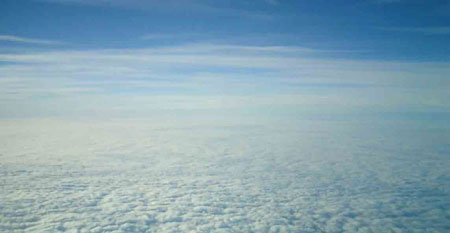 Now you can be a bird and fly over Manly to see how the Earth is cared for.
Fly over North Head and watch it disappear. Some of the building sites are here or proposed. Check out the Corso 'before pictures'. Watch Shelley beach car-park expand and the bush disappear. See how much land is devoted to push balls around, rather then develop it as a community park with fresh water for native animals. Watch the blue harbour converted into a boat-park. Check out that Beach strip being privatised with gear and ads. Don't' forget to count all the many pools,re water shortages.
You can enter significant places of Manly on this Wikimapia
On the Australian version you can collaboratively enter Manly sites or place local comments. Do zoom in!
Wonderful tools to check developments and missing trees.
More: On homeless Bandicoots
Subscribe to:
Posts (Atom)