A compilation of posts on water. Ways of utilising water. As a tip: a cost-effective dump, as 'unintentional' 'run off' or as general human-caused eutrophication of water bodies. Taking risks with public health by polluting the elixir of wet for all life.
Water & public health:
On the use of water and on the creation of dead zones 28082007
The water bodies of the Earth are being used as a cost-effective way to dump the unwanted.
Drinking water and healthy water bodies Pt II 04090207
Sydney's drinking water, we are being told 'is no public health risk'. Some areas of Australian coasts are so polluted, that it “can cause selective inhibition of phytoplankton species”
Drinking water security sewage and emerging bugs Pt III 10092007
"Growing population centres and the inefficient use of water is “the greatest threat to waterways”. Urbanisation, norovirus, disease history
Drinking water, food & health:
Drinking water security, Sydney belly: Cryptosporidiosis, Giardia 17102007
Reducing risks when eating out 21092007
More on Sydney water, Health and Pollution 27092007
Manly restaurants and eateries - a wishlist 13112008
Draining Sub-urbia, 'run off' Eutrophication:
Water chemical mashup over suburbia 23082007
Shelly Beach palm gully creek 20102007
Impervious surfaces, spaces for cars and running toxins in urban heat islands:
The world as a car park - hot and oozing toxins running into our water streams 13092007
Lawns - water guzzling & toxic
Lawn transplants costing the Earth - Manly style 09082007
A mono-culture of petrol and water intensive regime of foreign grasses (lawn), noise, air and soil pollution.
Coastal lawns golf and pesticides 04082005
'Run-off' to Manly Beach, dog feces and chemical cocktails:
Water quality at the beach 09082007
Careless urban sprawl in coastal areas is devouring wetlands and other natural buffers such as dunes and beach grass that would otherwise help filter out dangerous pollution.“ Local beaches are ranked here for both faecal coliforms and enterococci. Some of the waterborne illnesses like gastroenteritis, dysentery, hepatitis, respiratory ailments etc. probably hit people 'out of the blue'. Toxic waste such as heavy metals etc also show their effects only after some time.
Suburbs draining toxins into Manly Beach and Lagoon 16012006  Suburbs drain toxins and feces to Manly beach and Manly lagoon as a way of disposing of these unwanted substances cheaply. All the everyday actions of the everyday people are then drained into the non 'my space'. Socialise externalities" Mr Galloway found that concentrations of nitrogen, phosphorus, copper, lead and zinc in Manly's stormwater exceed ANZECC guidelines for pollutant concentrations in waterways by between two and 168 times."
Draining Manly suburbs pipe at the beach 20102005
Can Manly afford not to share North Head with Penguins? 19102008
Red Tides in the making...
Preventing red tides at Shelly beach, Manly 06102008
Proud to waste water
Wasting water as a life-style 25032007
Desalination mega projects - Water as a commodity
Water and Desalination Factories by M. Barlow 08102008
Privatising water, offshore factories sludge in the ocean
Desalination - A mega project or water conservation and whales 13082008
Mnly tag: water
Blog Action Day 2010 Water, Twitter: blogactionday, #BAD2010
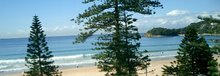
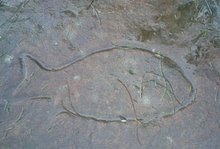
Images: 1. Water sculpture for gathering clouds by the Eora people of the Sydney sandstone region. 2. Ancient drinking trough (for horses ?) in a town square, Lake Constance
16 October 2010
Water on MNLY Blog

15 October 2010
Tweets on the Ocean - The Marine Ecosystem
 Ocean industrialisation
16,000 tonnes of #high-risk waste will be on the #ocean from #Sydney to Denmark http://tinyurl.com/2wywb6h #hexachlorobenzene #plastic risk 03112010
Ecological #footprint of factory farming #oceans http://tinyurl.com/22s4za5 unsustainable #fish #marine #seafood #aquaculture #GAPI #slow 28102010
Have #marinas - have #spills http://tinyurl.com/2atsotv #coast #boats #eutrophication #ocean as #fossil fuel #parking #shore line #habitat 25102010
563 km of offshore #wind factories http://tinyurl.com/2572o9o #coast #ocean #habitat #noise #migratory routes #wildlife energy visual impact 20102010
Industrialising the #ocean, shipping lanes & industrial parks. How much #noise can marine mammals take? tinyurl.com/22qwvmm co2 #whale 14102010
6,000 tonnes of solvent off France's #Atlantic #coast. Colliding #ships http://tinyurl.com/29d2nq6 #toxins #ocean neurotoxin #pollution 08102010
Marine Mammals
140 years old #whale stranded, no place to die in peace http://tinyurl.com/2byjxdn bystanders Vejlefjord Copenhagen #marine #mammal #habitat 03112010
Motor #boats shooting in the migratory paths of the #Humpback #whales at #Manly #Beach #habitat #marine #mammals #fossil_fuel 'recreation' 29102010
Where the #boats slowing down & keeping their distance for the #humpback #whales at #North Head ? http://tinyurl.com/25rvyx3 #habitat Manly 28102010
#Whales and #dolphins at the horizon of #Manly Beach. Beach vegetation not run over by terraforming machinery in flower. pigface scaevola 21102010
#Fishing gear traps baby #whale http://tinyurl.com/25xg5aj #humpback #entanglement #ocean junkspace #habitat #marine mammals RT @WhaleLikeMe 10202010
War games in #dugong & #dolphin #habitat http://tinyurl.com/27htec8 #marine mammals #Shoalwater Bay #Great Barrier Reef Marine Park #GBR au 19102010
Two #Humpback #whales slowly passing #Manly beach, threshing their flippers - and no one notices. #marine mammals 18102010
The #Humpback #whale' s #migratory journey is the longest documented movement by a mammal http://tinyurl.com/2dfjrtw #habitat #ocean clutter 19102010
A record number of #humpback #whales have been found dead on the Brazilian coast in 2010 alone http://tinyurl.com/26rafgt #ocean #habitat 15102010
Glue webcam on #seals and let them fetch data in the deep-sea tinyurl.com/28mz7uz Australian invasive #marine science gas oil #ocean 14102010
Ocean clutter and the marine mammals' habitat
Are #ocean vessels, #drilling rigs, desal factories & ROVs cluttering up the #Humpbacks #migratory routes? tinyurl.com/2f2od3e #whales 13102010
#Dugongs out of a habitat Marinas, #boats, fishing entanglement poaching hunting & pollution http://tinyurl.com/2dxv6r2 UNEP/CMS #Australia 09102010
Accelerated fossil fuel traffic in #whale #habitat does not mix tinyurl.com/2epv9xo #Marine Sanctuary #boats wildlife RT @WhaleLikeMe 12102010
The #ocean as a tip #Whale starving stuffed with our junk in it's stomach http://tinyurl.com/348molu junkspace plastic mammal RT @Earth_News about 05012010
Preview of what an #offshore #wind turbine factory looks like on the horizon.. http://tinyurl.com/3akpuqe #ocean clutter #birds #noise coast 29042010
'Design Flaw Causes Hundreds of Offshore #Wind Turbines to Slide on Their Foundation' http://tinyurl.com/3x8fsnj ocean clutter RT @TreeHugger 29042010 Ocean as a cost-effective dump
In a world of the private motor car train carriages are being #dumped into the #Pacific #Moreton Bay http://tinyurl.com/24ujt5g #ocean #reef Orient Express 16102010
The #ocean as a tip #Whale starving stuffed with our junk in it's stomach http://tinyurl.com/348molu junkspace plastic mammal RT @Earth_News 05052010
Washed Up Whale Found with Gallons of Our Garbage In Its Gut http://bit.ly/csQsdv 21042010 RT @Tree Hugger
Ocean TAKE & dump
Stop trashing the #ocean http://tinyurl.com/386mssv #marine mammals #fishing #junkspace #plastic #Manly #run_off party PR #balloons #boats 06112010
Only about 2% of the Kimberley state waters will be protected while 98% is still open to mining & fishing http://tinyurl.com/27vqt3n #marin conservation rec fishing 22102010
Even when it is declared an #Aquatic #Reserve it still gets #plundered http://tinyurl.com/ybl2edn RT @bondimermaids #CabbageTreeBay #Manly rec take 22102010
#Pelican swallowed three fishing hooks & got entangled in #fishing #debris http://tinyurl.com/29bxqx9 Ban fishing TAKE @ urban coasts #birds 10201020
#Fishing gear traps baby #whale http://tinyurl.com/25xg5aj #humpback #entanglement #ocean junkspace #habitat #marine mammals RT @WhaleLikeMe 10202010
Spills & Toxic Disasters Deepwater drilling
#Deep-sea mineral #mining of hydrothermal vents, Papua New Guinea http://tinyurl.com/35u4d6s #marine #ocean #ecology #PNG #peak #rare-earth 22102010
Spraying #toxins (chemical #dispersants) on #oil spilled into the #oceans? http://tinyurl.com/2a8acsq wildlife aquatic ecosystems PAH GBR au 04052010
Coastal "refuges": Delta Nat. Wildlife Refuge http://www.fws.gov/delta/ & Breton National #Wildlife Refuge http://www.fws.gov/breton/ #spill 30042010
Stop offshore #oil #drilling! http://tinyurl.com/2c4uacq #ocean #clutter #spill #eutrophication #wildlife risks #deepwater #habitat #co2 30042010
Nagging doubt: Should there be a full ban on #off-shore #drilling? http://tinyurl.com/38fhmyu #deepwater #oil rig coast risks ocean ecology 29042010
3rd leak, 5 x as much oil as previously thought gushing into Gulf of Mexico http://tinyurl.com/2adn484 #deepwater #eutrophication #oil rig 29042010
Oil in deep water and safety rules http://tinyurl.com/2924rh3 #offshore drilling #spill #regulation OHS #ocean eutrophication au habitat 28042010
42,000 gallons of #oil per day are polluting the ocean & sloshing towards the wildlife refuge http://tinyurl.com/2uptosm #offshore rig spill 27042010
The deepest oil well in history on fire http://tinyurl.com/33o5kho #oil rig #energy #ocean #eutrophication risk society offshore Australia 240402010
"We have to look honestly at the hidden costs of our oil economy." http://tinyurl.com/2fvs3wy #BPoildisaster #offshore drilling #spill #cars 06052010
Telling infographics Oil #spill #disaster http://tinyurl.com/3xoy3gh #eutrophication STOP #oil rig risks #deepwater #wildlife RT @TreeHugger 01052010
"Outstanding drilling operations" and top safety award for Transocean, Deepwater Horizon Operator http://tinyurl.com/3yqfd8e #BPoildisaster 06052110
#Oil #spill in Gulf of Mexico will be ignited http://tinyurl.com/3ygtzsy #coast #drilling rig #deepwater wildlife #pollution #DrillBabydrill 29042010
Wildlife still exposed to crude oil spill disaster after 20 years http://tinyurl.com/y3g5u26 Exxon Valdez Australia reef toxin contamination 21042010 Ocean Pollution
#Shelly Beach tide is blooming red #HABs Four #mutton #birds dying on #Manly Beach - out of habitat in long #migratory journey 22102010
Looks as if there could be a #bioluminescent display at #Manly beach tonight - again http://tinyurl.com/27cq7dm #eutrophication runoff HABs 20102010
Ocean 'sci'
Glue webcam on #seals and let them fetch data in the deep-sea tinyurl.com/28mz7uz Australian invasive #marine science gas oil #ocean 14102010
Marine Conservation
Blue #gropers & #wobbegong sharks tracking http://tinyurl.com/24qnm9r #tagging #Cabbage Tree Aquatic Reserve NoTake BBQ RT @bondibluegroper 08102010
Coastal Marine Reserves Conservation Marine Parks
Palau can afford its waters to be a #marine mammal #sanctuary for the protection of #whales, #dolphins & #dugongs http://tinyurl.com/2d2l6eb 26102010
More #marine parks, no #offshore #drilling, #no-take #sanctuary zones http://tinyurl.com/288z8dw #ocean #conservation WA #humpback #whale 22102010
Dear Eastern Subs #Coastal #Marine Reserve, Wish you can get a NO Take, No boat-parking area soon #habitat #conservation RT @bondibluegroper 12102010
More>>
Tweets on sharing the planet with other species Biodiversity or kicking others off the planet
20 March 2009
Landmark Figs of North Head and Sealed Soil
 North Head - a visit
Along North Head Scenic Drive, as the title suggests, there is no walking or cycling path to visit the National Park of the unique northern headland of Sydney. Joggers, walking visitors and cyclists dodge the speeding cars to get to THE view. This year one bandicoot has been recorded as killed.
Increased urban structures: light pollution and eutrophication
On the right of the roundabout a new carpark has been built, converting the bushland into an impermeable surface. The run off from the hill would run straight to Collins Beach. From tall poles mega-watts bellow down on the surface and adjoining bushland. For the endemic fauna the artificial lighting has severe consequences. The CO2 emission is another matter.
Butchering natural heritage:
Further, opposite the Artillery more 'scorched earth' carparks. On the right side of the Artillery are four giant ancient fig trees framing a cafe as the main landmark. All four have been severely cut back with no apparent reason. Hard to believe council would approve such unaesthetic butchery of the natural heritage of Manly. The limbs missing did not seem to be in the way of any human mobility. At the Fairfax Walkway
Again the cemented walkway is impeding all natural drainage and erosion gullies dig deep. Encouraging large tourist coaches and not providing sanitary facilities, leaves the landscape littered in paper tissues flying in the wind and more. Apparently blind or illiterate dogwalkers bring their pets into the National park despite it all.
Images: 1 Google Earth, North Head Scenic Drive, roundabout an carpark before being sealed and light flooded. Collins Beach 'down the hill' .
2. Two of the figs to the right side of the cafe/Artillery
18 March 2009
Bird-Unfriendly Structures in Manly Aquatic Reserve
 Cormorants used to perch on this lamp pole in the day and owls used to sit there at night. Now it has bird-unfriendly spikes all along it. Adjoining the Fairy Bower Pool and Manly's Cabbage Tree Bay aquatic reserve the urban wildlife has been sitting there for years in the absence of large trees. These native shorebirds are being repelled from their habitat.
Possible arguments for the bird repellent structures could be the animal feaces.
On the same grounds one would have to act on:
The tonnes of untreated dog faeces running into the bay and beach.
The multiple decaying and smelling pipes draining Bower street onto Marine Parade and finally into the ocean.
The public health hazard of invasive species (Common Mynas) encrusting (Sydney Road/ Central Ave.) Manly CBD in their faeces. The tables and plates of eateries are densely visited by this species, leaving their traces.
The feeding of seagulls could be actively discouraged.
Urban wildlife could be encouraged by:
refraining from habitat destruction
controlling introduced pets
reducing glass surfaces in human dwellings
reducing nightglare
planting more trees
not exposing them to mobile tower radiation
Update: By November 09, Bird spikes get discovered by humans in Manly
12 March 2009
Oil Spills, Ships and Readiness - The Moreton Island Case
The spill of toxins, explosives etc in Queensland is serious. More from the Moreton Bay Blog, Bayjournal
Australian Senator Discusses Oil Spill
Video via cheatah55
17 December 2008

02 December 2008
Manly Beach Drift "wood" - December
 A monthly summary of what has washed onto the shore or beach through the winds, tides, waves or human action. Marine debris, flora and fauna, dead or alive:
30+ dead Leatherjackets again, possibly Meuschenia flavolineata, (10-20 cm long). Kids p laying 'ball' with them. Millions of mostly still alive Ladybirds at the water's edge, struggling. There appeared to be no 'white collar', probably a native. Many aphids, scale insects, mealybugs, and mites will not be eaten this season by this 'gardener's friend'. As with the mass occurrence of dead crickets (021108) it is unknown how they ended up in this environment.
The usual 'fast food' wrappers and many 'gift-wrapping strings' with balloons, ready to entangle. Beach worm 'harvesting' and fishing 'classes' now at the waters' edge. High speed kite surfing poses a serious danger to swimmers/surfers and beach users.
Image: sandsculpture, kelp and pine needles 021208
A seagull had both feet tightly entangled by a fishing string. It could hardly walk or balance. Do we really need 'recreational taking' on busy urban beaches? Container ships hovering on the horizon. 031208 Thousands of Ladybirds struggling at the water's edge again. Seagulls gorging on the live ones. No one seems to notice, as strangers are usually recognised, by exhibiting curiousity and looking at objects at the beach. For the locals it is just a tabula rasa to do stuff on. Giant sand castles with deep trenches, possibly to trap joggers in the dark?. Various container ships cluttering up the horizon, possibly heavy in junk for the coming exchange festivities. At the North Steyne cliff end a White-faced Heron (Egretta novaehollandiae) was stalking insects and amphibians in the urban run off. Rock engravings of the Eora people depict this coastal bird doing its thing for thousands of years. An off leash dog did not allow the bird to continue feeding. 041208
 A 2 m long log covered densly in living Crustaceans. The Goose barnacles were of white/blue colour. The life raft was returned to the sea. A pelican was gliding north, looking like a flying ancient lizard.
A double rainbow again, nicely offset against the plump white clouds. A few blue bottles , many dog paw prints in the sand and black dog feces plastic bags sloshing in the water. 051208
Post Care Day and after rain. A huge soggy pond at the pipe. Leaf litter plus sub-urban run off, hanging around the surf. A large amount of garbage, mainly plastics: wrappers, bottles and an unusual amout of 'party ballons' with long 'fancy' wrapping ribbon of all colours- ideal to entangle. Inflated baloons blowing around. Again, full nappies, a syringe and chemical loo cleaner.
A near-death shearwater, an unusual number of seagulls with only one leg. Many blue bottles, nice kelp of all different shapes. Painted driftwood and building materials. The daily dog on the beach, hopping about on the prize winning North Steyne beach. A person flying his surf kite over the heads of swimmers/walkers ('obstacles') at very high speeds. Above the water, control of the medium seems to be beyond the guy stearing it. One day a beach user will be injured by these speeding installations. Council probably is liable for such eventualities. 081208 A few small Abalone shells (Haliotis coccoradiata), rarely larger than 3 cm. A nice audio-scape coming from the rows of pines: Sulphur-crested Cockatoos (Cacatua galerita), Red Wattlebirds, (Anthochaera carunculata) and Ravens (Corvus coronoides). Black faced Cormorants flying north. 091208
Powerful fast clouds stroke the beach. Welcome Swallows (Hirundo neoxena) surfing the dunes at high speed, mopping up insects. Ravens eye the dead fish. Rich leaf litter, blown down the hills from endless noisy debris blowers which move the sub-urban debris into the public gutter and down to the beaches. Civilised places have given up the polluting of air and water a long time ago. 101208
> Drift "wood", November 2008
02 October 2008
Manly Ocean Care Day - Of Albatrosses and Red Tides
 As another 'ocean care day festival' is approaching in Manly it is time to focus on the 'care' bit. In the holiday season the beach is specially subjected to a tidal wave of of unwanted 'convenience' packaging and 'recreational' plastic.
Out of the ordinary was a large Shy Albatross (image) (Diomedea cauta cauta, pdf, measuring some 95-100 cm, wingspan 240-260 ) found at the North Steyne end of the beach on 300908. 10 puffer fish were also rolling on the sand. This giant bird is still hunted for 'sports' and chokes on human plastics. As there is no habitat left for it in the Manly region, the next possible place could be just north of Sydney. Five albatrosses and pelicans have been found poisoned at Tuggerah Lakes. "It was believed the sudden outbreak of botulism was caused by rain washing chemicals and fertilisers into the stagnant water of the lake."
If it isn't run-off from human settlements that has killed the birds and polluted the water, then it is also possible, that it is the mix of high temperatures, due to human-caused emissions, as well as the flushing of unwanted wastes into the water bodies. The result is a warm brew encouraging the growth of toxic micro-organisms. Even if no red tide is visible, the toxins (brevetoxins) still lingering, damage the nervous system, just like the botulism bug. Maybe the shy giant made it out to sea and was overcome by the HABs, to finally get washed up at Manly. Does anyone care?
A red tide is at the moment hovering around the corner in Clontarf's Sandy Bay, (Manly Daily, 021008, image). Red tides love warmth + plenty of human caused run off. They then breed toxins which have the ability to kill life in the ocean/bay and on land. Although there is a fine of $ 1 million for dumping baddies into the water-ways, there seems to be none for doing it with a trickle (eutrophication) over time.
Clontarf / Bantry Bay Estuary Management Planning Process - Data preparation in 0807, (pdf) reveals a lot about the the Sydney Harbour Foreshores and Waterways Area, such as Castle  Rock and Bantry Bay and includes parts of the Balgowlah Heights, Clontarf and Seaforth suburbs.
65.5% of the space is for human habitat, 22.0% for their sealed roads and 10.2% for parks and public spaces. The 'storm water drainage network' is visualised in this document. The appropriation of freshwater is also accounted for. Giant lawns and pools spill into the 'bush', which is often cleared to see the marina (image). The foreshore appears transformed into a space for fossil fuel vessel parking. The estuary/bay is slowly looking like a large boat-parking area. Private dinghies clutter up the 'public' reserve. As in Manly, unleashed dogs are emptied of their untreated feces into the bay.
The environment- human interface is summed up as being in conflict:
The degradation of the environment does not only rob species of a habitat, but it also diminishes life quality for all living and to come. Running out of space and resources in an ever shrinking world
- "Seawalls for protection of properties versus its damaging impact on natural ecosystem
- Groundwater abstraction and possible saline water intrusion in aquifer
- Beach raking for safety versus its impact on invertebrates
- Dog walking off leash and impact on shore birds
- Powered and sailing boats and their wake impacting on seawalls and beach erosion
- Access to mooring versus their impact on sea grass beds, ability to spread caulerpa taxifolia
- Powered boats and the safety aspects for swimmers and kayakers
- Ad hoc boat storage and its impact on amenity and habitat:
- Ad hoc access ways to foreshore for convenience versus destruction of habitat." (pdf)
 is no fun. The diy cocktail of heat, plus draining liquid wastes equals red tides, or dead zones, that are void of life and toxic to ALL. Just breathing the mist is a hazard, eating the contaminated fish/seafood can be deadly. Jelly invasions ( the only creature thriving on this human-made environment ruin the beach- Beach closures, due to toxic blooms or jelly blooms are costly. 'Business as usual' in a risk-society could play it all away in just a generation.
The oceans are getting so hot, acid and degraded by us. Species are either fished out by us or their habitat is ruined. Lobsters, seals, whales, dolphins and crabs etc etc are affected by the red tide toxins and are wishing to leave their habitat, they thereby die.
It would be a sad world which leaves a
red ocean behind
no fish and life in it
no ocean and foreshore birds on the horizon
no beach or bay without a noisy smelly and dangerous motor
no beach or bay without human infrastructure cluttering up the landscape
Let's care!
Images:
1 & 2 Dead Shy Albatross on Manly Beach, 300908
3 Sandy Bay, Clontarf, Google Maps
4 Clontarf/Spit Bridge, Google Maps
Animation: Ocean care day animation, Manly Beach
Links:
Toxic Blooms: Understanding Red Tides, FATHOM
HABs, Harmful Algae and Red Tides, Woods Hole Oceanographic Institution
Sea Birds affected by red tide toxins, Florida conservation 2006
Entanglement in or ingestion of anthropogenic debris in marine and estuarine environments - key threatening process listing, DECC
Rock Snot, a hazardous algae in Tasmania, has had devastating effects on inland river catchments in New Zealand abc 270808
Update 101008
- The red tide at Clontarf mentioned above has been identified as Noctiluca scintillans (Manly Daily p3, 101008). The same type of algae bloom has also been found at Seaforth, west of the Spit Bridge and Woollloomooloo Bay. NSW Health recommends that people avoid contact with all blooms. This dinoflagellate is also linked to " anthropogenic eutrophication...along the southeast coast of Australia". In India, it has been implicated with "the decline of fisheries". At night Noctiluca glows in a bright blue bioluminescence, as viewed on Manly Beach before.
Suspected blooms should be reported to the Regional Algal Committee during business hours (02 4729 8138), or the Department of Environment and Climate Change’s Environment Line (131 555) after hours. Toll-Free Algal Information Line - 1800 999 457 according the the NSW Department of Water and Energy
Update 231008
- Brush et al. Historical Land Use, Nitrogen, and Coastal Eutrophication: A Paleoecological Perspective. Estuaries and Coasts, 2008; DOI: 10.1007/s12237-008-9106-z "During the past 300 years, many of the wetlands have been drained, and the landscape was converted to agricultural fields and urban and suburban development. Since precolonial time, the mesohaline estuary has become increasingly eutrophic and anoxic."
19 September 2008
Little Penguins, Electrocuted Birds, Mauling Dogs, Bogong Moths, Spilled Oil and Artistic Inspiration
 A visit to the the Manly Art Gallery, where the current exhibition is by Bruce Goold. The designer/printmaker displays woodcuts/linocuts of iconic Australian objects. Nautical themes and Aussie flora and fauna get mingled with sub-urban culture jamming. The fragipani, banana and (unfortunately) bamboo convey that coastal holiday feeling.
Some thoughts on the following themes seen there, which are relevant for the northern beaches:
'Telegraph crows' 1995 depicts Australian Crows getting electrocuted in power lines. Think about it every time you flick on that convenient switch, how many birds and other fauna get killed and crippled by this underdeveloped landscape feature bringing power to you.
The design with Bogong moths was very timely as they will start their annual migration next month. This gets too messy for tidy-town then.

The few remaining little penguins in Manly get regularly mauled by off-the-leash dogs. One of their 'habitats' at the Manly Cove is a busy human infrastructure with fireworks, bands and other mass events. The little bird needs to live in a partial marine and partial terrestial territory. This is the space where human impact in Manly is most noticeable.
 Habitat for Manly's endangered Little Penguin population (pdf) , Manly Cove. More than a webcam needed here.
'Pasha Bulka' 2008 visualises the stranding of a huge cargo ship beached on a Newcastle surfing beach in 2007. 'Heavy fuel oil ' ran into the Pacific Ocean. Such scenarios are not unthinkable for the Manly region. For now, we get the sulphur particle emission from ships that are near Manly.
Outside the Art Gallery there were numerous very large motor bikes parked on the “pedestrian and bicycle path only”. Aerial garbage is a new thing here: Plastic kites in Manly Beach pines, a very long nylon fishing line dangling from a tall palm in front of the gallery, waiting for that next bird to entangle. Aqua-parking as far as the eye could see in Manly Cove, right along the penguin's feeding grouds. Wharf construction set the acoustic ambience.
See also Bogong migration incompatible with humans
Links:
- Endangered Population of Little Penguins (Eudyptula minor) at Manly, NP, pdf
- Caution: Electrocution! Suggested Practices for Bird Protection on Power Lines, BUND, pdf
Update: 0709 The slaughter of 11 Little Penguins by a dog/s in their last mainland habitat on mainland NSW.
11 September 2008
Smoking and its socialised effects in Manly
 Secondhand smoke exposure in Manly's public places, such as the beach, the streets, lanes and out-door eateries is causing direct physical injury to people wishing to share these public spaces. Lunch-time would be a prime time to enforce the law in these places. The no-smoke signs are a prefered smoking location.
After the big rain, the beach was thick with butts, causing the leaching of toxins into the environment. The paved environments are also carpeted with this toxic anti-product.
Mega litter and toxic run-off into beaches and waterways:
- 7 billion cigarette butts are littered by Australia's 3.7 million smokers every year.
- Cigarette butt litter still accounts for around 50% of all the litter in Australia
Cause of dangerous and costly fires:
- "..for every 1,000 smouldering butts that are discarded, 40 fires could result."
- 7% of Australia's bushfires are caused by discarded cigarettes - that's over 4,500 fires a year caused by cigarettes and smoking materials.

10 September 2008
Manly's Bandicoot & Wildlife Code
Replacing the unique with the ever-same
The unique Manly treasures, such as bandicoots (little penguins etc) and the sprawl of human urbanisation make for a predictable outcome. Wildlife habitat and sprawling sub-urbia are incompatible. Attempts to limit the negative impacts by "best practice" recommendations and "awareness education" are dubious. We are assured that the owners of the St Patrick's Estate townhouses were given their bandicoot awareness education. "The houses themselves also had to be bandicoot-friendly.."
Manly's surging dog (cat etc) population is making a practical statement to replace the unique Australian biodiversity with a monoculture of foreign animals. The interface between wildlife refuge and human infrastructure and their destructive packs is the killer-zone.
Effective protection of threatened Australian wildlife
Manly’s North Head developments are said to be contingent on " keeping their dog in at night and never letting their cat outdoors unless it is in a sealed cat run." But there are dogs ON the beach (illegally) every morning and night, sometimes even defecating ON the beach on a busy Sunday. They are un-leashed most of the time, hunting little penguins or hunting bandicoots at night in Shelly Beach bushland. With a lack of enforcement and a population wanting to expand the ever-same, the diverse uniqueness of the Manly ecology is sacrificed.
via Pets curfew in building code, Manly Daily 100908
See also:
Bandicoot Habitat I
More on Bandicoots in MNLY
Images: 0808 all via Google Maps
1. - 3. National Park, St Patrick's Estate townhouses developments
4. End of Osborne Rd
5. Montpelier Pl./ Bower St. development


19 August 2008
Humpback whale calf lost in Sydney's buzz
 Imagine a baby and its carer get separated at a busy freeway node – impossible to find each other again, the weakened child mistakes a parked SUV for its mother and attempts, in vain, to get nourishment. Helpful creatures manoeuvre it out into the 'wide and open spaces' where it might be hopefully reunited with its mother.
Humpback calf lost in Pittwater
Such is the story (sad video) of a very young humpback calf found in isolation from its mother in busy Pittwater bay, north of Sydney. These slow-moving marine mammals, with their offspring in tow are on age-old journeys across the globe. For eons they have traversed their same marine territories. First, they were massacred by Australian whalers, now the whale watching industry has to lure the tourist dollar. Their habitat has also changed rapidly: The sheltered bays and the open ocean are more like the terrestial world's car-parks, oozing repair workshops, endless wider roads to shoot private mobility capsules along. The largest obstacle to their efficient flow are soft-bodied, slow-moving organisms, known as pedestrians and wildlife.
Boating Habitat
Aqua motoring in the Pittwater region (or anywhere else) operates according to t he same mind-set. One look at Google Maps reveals the area is criss-crossed with boats racing and most of the shores are more akin to "car-parks". Industrialising and commercialising the water-bodies and the marine habitat brings about many "externalities" for the environment. Eutrophication from combustion powered boats, from sprawling sub-urbs and the associated 'shared debris' turns the beautiful Pacific and its bays progressively into dead zones. Not just for seasonal visiting whales - but for all living creatures. If they do not get entangled by anthropogenic debris or get infected, human business also robs them of their habitat, the open ocean.
Mega fauna is in the way
The intensification is a take-over by the terrestial mammals of the habitat of the whales, that do not have any other habitat to survive in. On the open oceans, whales are simply in the way of busy shipping lanes and other boats.. "In places where marine traffic is heavy, vessels fast and whale numbers expanding, violent encounters are increasingly common.” As on our roads - many cetacean and other marine animals are being maimed or killed by the 'collisions'. The wildlife of the oceans is becoming a "a hazard to sea craft" in their own habitat. In some areas the International Maritime Organization has designated an "Area to Be Avoided" for container ships to avoid killing them.
Noise
Even when not assaulted by aqua motoring the noise and vibration caused by the  human racket will diminish their life or even kill them: "The throb of mighty engines and the thrash of propellers as 60,000 huge vessels plough the world’s sea lanes; the hammer of diesels and scream of outboards as 4 million fishing boats and more than 10 million ferries and pleasure craft surge to and fro; the thump and ping of military and fishing sonars; the deafening crash of seismic ships seeking oil and gas; the blare of acoustic harassment devices; the grinding of drills and dredges; the low-frequency growl of scientific experiments designed to monitor global warming."
Could it be, that in such a hostile habitat the whale and its calf became seperated though a degraded habitat and many missiles interjecting their journey?
> > Part II, Whale calf rescue, Sydney Basin
See also:
Desalination, Drilling rigs Sth of Sydney & Whale migration
More on Whales
MSM Updates:
- 'Out with the sharks', abc news, 190808
- Three weeks old calf "abandoned" and "doomed to die" speculations, SMH, 190808
- "The baby has further injured himself from its attempts to rub up on boats, with clearly visible sores on its back. In a last-ditch effort they convinced the whale to follow their boat out to sea, and it disappeared from view about 1km off Barrenjoey headland. It wasn't in good condition." Manly Daily, 190808
Images:
1. Part of Warren Langley's, Manly Visions, glass art at Manly Library
2. & 3. dotAtelier, inspired by Eora Rockengravings of the Pittwater region.
13 August 2008
Desalination - a Megaproject ! or Water Conservation and Whales
 Today's news of the construction of a 16-storey drilling platform off Kurnell, Cape Solander assured us that "The six-month operation will..not have any impact on migrating whales. I have every confidence the whales will swim around it..There will be no impact on the residents of Kurnell"
Will the whales still make it past Manly?
Could Manly become another 'Kurnell'?
Once water conservation is off the agenda, the high cost and high energy option of desalination plants appears to be the only way to continue unsustainable practices on the driest continent. The environmental costs, apart from turning the sea/shore into an industrial zone (image) are carried by the wildlife and its biome.
The following reading list is highly recommended on topics that will not disappear in our life-time:
Desalination projects & transparency:
Phil Dickie of melaleuca media investigatives the options of desalination plants in "Making Water - Desalination option or distraction for a thirsty word" 0707 for WWF’s Global Freshwater Programme. "The first global survey of desalination from a non-industry perspective" (pdf) Regarding Australia:"All of the areas where seawater desalination is rapidly assuming a more prominent water supply role had more cost effective and less potentially environmentally damaging alternatives available. This is particularly true of demand management, water conservation and water efficiency measures, where many of even the more advanced economies such as Australia do not uniformly require easily achievable water and energy efficiency standards in new buildings."
Megaprojects & Transparency:
Bent Flyvbjerg, on megaprojects, Chapter 1 of his book Megaprojects and Risk: An anatomy of Ambition, by Bent Flyvbjerg, Nils Bruzelius, and Werner Rothengatter (Cambridge University Press, 2003). Some of his interests are transparency in policy planning and strategic misrepresentation wrt megaprojects.
Links:
- Towra Point Nature Reserve, Kurnell
- Botany Bay National Park
- NSW Fisheries - Towra Point Aquatic Nature Reserve
- Amid Water Shortage, Australia Looks to the Sea, Patrick Barta, The Wall Street Journal, 110308
- Ecotoxicological marine impacts from seawater desalination plants, Rachid Miriaand Abdelwahab Chouikhib, Desalination and the Environment Volume 182, Issues 1-3, 1 November 2005, Pages 403-410
- Environmental impacts of water desalination along the coastal region of Israel and the Palestinian Authority (pdf) (environmental impacts and noise pollution)
- Sydney Water, Desalination Factsheet
- Riverkeepers fighting to not mush up the "small aquatic organisms into the cooling mechanism; the resulting impingement and entrainment from these operations kill or injure billions of aquatic organisms every year." (pdf)
- Protests against desalination in Victoria, abc 140708
- Scorched Earth for water plant we might not need, SMH, 0807 (Great image of the 'scorched earth' near Towra Point Nature Reserve!)
Image: GoogleMaps, Cape Solander , Kurnell, (NB note the ocean colour, approx. 2007)
Update 210808
- Plans to dredge Botany Bay as part of a $1 billion port expansion, taking 60 hectares of land to construct five new shipping berths. abc 190808
Update 300808
- "Australia could be using 400 per cent more energy to supply its drinking water by 2030 if the policy trend towards seawater desalination were to continue...seawater desalination was likened to a petrol-guzzling "six cylinder" family car by one of Australia's top water bureaucrats at a major summit in Melbourne." The Age 290808
- On offshore drilling platforms in the coastal path of hurricanes, the ecological and economic damage. Science Daily 290808
- What's the Deal With Offshore Drilling? Will it do any good at all? Jacob Leibenluft, Slate, 120808 (A good overview of the environmental impacts of offshore industrial activities)
Update 091008
- Peak Energy also was concerned about the impact on the sea dragons at Kurnell.
- Water and Desalination Factories by M. Barlow, Environmental Folly
- Climate-caused acidity of oceans, creates a noisier environment for whales, apart from the construction and operation noise of such a large infrastructure (click graphic!)