A compilation of posts on water. Ways of utilising water. As a tip: a cost-effective dump, as 'unintentional' 'run off' or as general human-caused eutrophication of water bodies. Taking risks with public health by polluting the elixir of wet for all life.
Water & public health:
On the use of water and on the creation of dead zones 28082007
The water bodies of the Earth are being used as a cost-effective way to dump the unwanted.
Drinking water and healthy water bodies Pt II 04090207
Sydney's drinking water, we are being told 'is no public health risk'. Some areas of Australian coasts are so polluted, that it “can cause selective inhibition of phytoplankton species”
Drinking water security sewage and emerging bugs Pt III 10092007
"Growing population centres and the inefficient use of water is “the greatest threat to waterways”. Urbanisation, norovirus, disease history
Drinking water, food & health:
Drinking water security, Sydney belly: Cryptosporidiosis, Giardia 17102007
Reducing risks when eating out 21092007
More on Sydney water, Health and Pollution 27092007
Manly restaurants and eateries - a wishlist 13112008
Draining Sub-urbia, 'run off' Eutrophication:
Water chemical mashup over suburbia 23082007
Shelly Beach palm gully creek 20102007
Impervious surfaces, spaces for cars and running toxins in urban heat islands:
The world as a car park - hot and oozing toxins running into our water streams 13092007
Lawns - water guzzling & toxic
Lawn transplants costing the Earth - Manly style 09082007
A mono-culture of petrol and water intensive regime of foreign grasses (lawn), noise, air and soil pollution.
Coastal lawns golf and pesticides 04082005
'Run-off' to Manly Beach, dog feces and chemical cocktails:
Water quality at the beach 09082007
Careless urban sprawl in coastal areas is devouring wetlands and other natural buffers such as dunes and beach grass that would otherwise help filter out dangerous pollution.“ Local beaches are ranked here for both faecal coliforms and enterococci. Some of the waterborne illnesses like gastroenteritis, dysentery, hepatitis, respiratory ailments etc. probably hit people 'out of the blue'. Toxic waste such as heavy metals etc also show their effects only after some time.
Suburbs draining toxins into Manly Beach and Lagoon 16012006  Suburbs drain toxins and feces to Manly beach and Manly lagoon as a way of disposing of these unwanted substances cheaply. All the everyday actions of the everyday people are then drained into the non 'my space'. Socialise externalities" Mr Galloway found that concentrations of nitrogen, phosphorus, copper, lead and zinc in Manly's stormwater exceed ANZECC guidelines for pollutant concentrations in waterways by between two and 168 times."
Draining Manly suburbs pipe at the beach 20102005
Can Manly afford not to share North Head with Penguins? 19102008
Red Tides in the making...
Preventing red tides at Shelly beach, Manly 06102008
Proud to waste water
Wasting water as a life-style 25032007
Desalination mega projects - Water as a commodity
Water and Desalination Factories by M. Barlow 08102008
Privatising water, offshore factories sludge in the ocean
Desalination - A mega project or water conservation and whales 13082008
Mnly tag: water
Blog Action Day 2010 Water, Twitter: blogactionday, #BAD2010
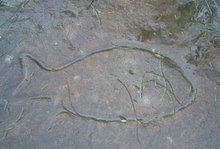
Images: 1. Water sculpture for gathering clouds by the Eora people of the Sydney sandstone region. 2. Ancient drinking trough (for horses ?) in a town square, Lake Constance
16 October 2010
Water on MNLY Blog

17 October 2007
Drinking Water Security
 Sydney Belly
“Sydney Belly”, gastrointestinal illness and diarrhoea is probably as old as Sydney. As long as water and feces are being mashed up the winners are the pathogens. At the moment care facilities for the young and old are being hit by a norovirus (stomach cramps, diarrhoea and vomiting) again.
Crypto in the drinking water
Bugs (“low levels of cryptosporidium”) found in Sydney's water supply it was reported yesterday are “not posing any threat to the city's drinking water supply“. A boggling check at Sydney Drinking Water Quality report claims that there are NO Cryptosporidium and Giardia found in the crystal clear water. Going a few days back, this seems to have been the case too.
Cryptosporidiosis
Cryptosporidium is a parasite resistant to most disinfectants. It is “ spread through feces of infected hosts and causes sometimes severe diarrhea in humans and animals.” Once it gets into the body via water, food or unhygienic practices, the symptoms are usually gastrointestinal illness, diarrhoea and sometimes vomiting. "...It is the most common non-viral cause of diarrhoea worldwide... People can literally die of diarrhoea: they can lose over 13 litres of fluid a day.“
Some Crypto cases: Rapidly growing populations outstrip infrastructure
Galway, the fastest growing city in Ireland is the prototype “where rapid expansion of housing developments has not been matched by infrastructure upgrades...236 laboratory confirmed cases of Cryptosporidium infection had been identified, with at least 40 resulting in hospitalisation...sewage is the major source of contamination.” Many in the tourist industry have “installed their own water filtration systems to reassure guests.”
The cause of the Milwaukee Cryptosporidium epidemic in 1993 was "found to be sewage that passed through the filtration system of one of the city's drinking water plants.” “ 400,000 people became infected and 60 people" (or 100) "died as a result of drinking infected water”.
The 1998 Sydney Water Crisis requiring 3 million residents to 'boil water ' was memorable for residents and visitors. Two small bugs, Cryptosporidium and Giardia led to changes in Sydney Water Corporation. Years on in 2007 the two pathogens are still causing “severe gastrointestinal illness”. In SA too there were “ 228 cases of cryptosporidiosis this year, compared to 52 for the same period last year.” Sewage and water mix in Australia, South Africa and many other places. How many is ok?
In Milwaukee there are no more than one Cryptosporidium oocyst per 10 litres allowed. It is “now a criminal offence in the UK to supply drinking-water that has more than one Cryptosporidium oocyst per 10 litres”. The 1998 Sydney incident "has shown no evidence of any illness that could be attributed to drinking water contamination. Accordingly, law suits claiming for illness among consumers have recently been withdrawn from Australia's high court.“
Wait- there is more than Crypto and Giardia
There are other pathogens, but there are chemicals that could have very adverse health effects on humans and animals. “Disinfection by-products (DBPs), endocrine disrupting chemicals, antibiotics, polymers and pesticides”. The question is no longer in a risk-society to aim for not having any harmful substances in the drinking water, but the “Acceptable Daily Intake (ADI) ..which can be ingested for an entire lifetime (70 years) without appreciable health risk” Health and the possible cancer are a matter for probability/statistics. (Micropollutants, pdf)
“Balancing burgeoning public needs for safe drinking water with dwindling supplies will be a major challenge for public works managers and regulators in the years to come.”
Previous:
More on Sydney Water, Health and Pollution
Drinking water security and sewage
Reducing Risks when eating out
Reading:
The Sydney Water Crisis, Another Lesson in Health Risk Communication Failure, Dr. Steve E.Hrudey (Professor of Environmental Health Sciences in the Department of Public Health Sciences)
Organic Micropollutants in Water, pdf (www.waterquality.crc.org.au)
Galway Cryptosporidium Outbreak, Health Stream Article - Issue 46 - June 2007
Critical processes affecting Cryptosporidium oocyst survival in the environment, King, B.J. and Monis, P.T. (2007) Parasitology, 134 (Pt 3); 309-23.Health Stream Literature Summary - Issue 46 - June 2007
Waterquality, CRC, au
"Cryptosporidium"- tag, ABC
Image: Water sculpture for gathering clouds by Eora
21 September 2007
Reducing risks when eating out
The right to know.. What's in the stuff, where is it from?
Occasionally restaurants specify the origin or the quality of their produce.  Free-range eggs being the most commonly declared product in Manly. Most other ingredients, one has to trust, but one can not engage in informed consent. If one does not want to consume food with detrimental health effects, there is very little information provided.
” In Australia alone, more than $1 billion worth of herbicides, fungicides and insecticides are applied each year.“ Part of food literacy might also be that one would like to know the origin and treatment of the food and the ecological footprint of the resource. In various cities people eat local now, even restaurants offer locally produced foods.
Menus with imagination and consideration would be appreciated. Instead it often is the usual fish&seafood-mash up, platters full of lobster by the kg or just meat. Vegetarian dishes containing protein are as rare as organic vegetables on the menus.
Bugs in food and water can cause sickness and death - Sydney 'Gastro'
“In Australia, there are an estimated 5.4 million cases of food-borne illness every year ” In Queensland for example it has “...caused an estimated 10 deaths and 750 hospitalisations in the state every year.” In Sydney, customers do not seem to have a right to know which eateries did not pass as “ the names were best kept secret as revealing them could damage the businesses unnecessarily.“ “Over 80% of foodborne gastroenteritis due to ‘known’ pathogens is caused by pathogenic E.coli, norovirus, Campylobacter and non-typhoidal Salmonella. 32% of all gastroenteritis may be transmitted via contaminated food. Foodborne gastroenteritis results in about 1.2 million people visiting the doctor, 300,000 prescriptions for antibiotics and 2.1 million days of work lost each year.” (pdf) Water as well as food is of course a medium of possible transmission.
Hygiene – as infrastructure and practice
A measure for good hygiene in eateries (or anywhere) are the bathrooms. Facilities and updated cleaning are essential. There seems to be a general decline in the tradition of washing hands (properly, video), often the infrastructure to do so for staff and clients is also lacking.
Recently it was overheard in Manly that a small boy wished to wash his hands after a pee. His male carer convinced him that it is not important. With eateries that do not offer a lavatory one is forced to use the public ones which are in dubious states.
Having (lap-)dogs on seats or eating off dishes is common and a health hazard.
Olfactory assaults
As most bathrooms lack windows some businesses offer 'air freshner sprays' in each cubical. This practice seems more hazardous (pdf) than the previous fumes, the artificial volatile chemical vapours have been distributed into the small confined space. Some of the effects of Volatile Organic Compounds are: ”Eye, nose, and throat irritation; headaches, loss of coordination, nausea; damage to liver, kidney, and central nervous system. Some organics can cause cancer in animals; some are suspected or known to cause cancer in humans”
More cocktails to inhale
Other ambient pollutants in Manly are of course air and noise pollution from  motor vehicles, which often gets topped up with gas/fire heaters (even unflued inside). Occasionally 'romantic' candles add to the cocktail of pollutants. “ Paraffin-based candles.. tend to use wicks which are made with a metal core like zinc or possibly lead." Passive smoking is still an issue, while trying to smell and taste your food. As reported before, most eateries reserve the fresh-air area for people polluting the air. Just where the air is to enter the premise, the combined toxic fumes of the smokers enter the 'non-smoking part' and accumulate there.
Mental spam pollution – while having a drink
Apart from many neon-lit 'convenience' places springing up, another new form of enforced attention grabber has sprung up. Huge screens peddling 'solid state spam', unwanted and unwelcome messages "
It would be advisable to have ecological and ethical audits for businesses, as well as for municipalities, to encourage an open transparent communication with their clients that is sustainable and reciprocal.
See also: Manly Restaurants and Eateries - a Wishlist
Links:
-"...Three-quarters of the world's fish stocks have been over-exploited, mainly by commercial fishing"
- Disclosure on industrially 'farmed fish'
- Choosing sustainable seafood, ca
- Food, Mindfully
- Public rating of restaurants, web 2.0
- One Los Angeles menu boasts dishes where 90 percent of the ingredients were raised within 400 miles.
10 September 2007
Drinking water security, sewage and emerging bugs III
Growing population centres and the inefficient use of water is “the greatest threat to waterways”. Mega cities, such as L.A., are “growing too fast for its water resources”. With the advent of agriculture, and its associated urbanisation people exchanged their produce as well as “parasites and infectious diseases.” (J.Diamond) Dense aggregation of people, changed water and land scapes aiding disease transmission. Road construction projects are the 'highways for diarrhea' as such.” When fecal-oral pathogens meet human poverty and dislocation, diarrheal diseases are a predictable outcome.”
Today sewage infrastructure in Australia has not kept pace with the rapid sprawl on the dryest continent. Demand for drinking water outstrips supply. “If we keep taking more water, we're going to be looking at increased salinity, toxic algal blooms, fish kills” some warn. Add to the algal blooms suburban sewage and one has fuelled the growth of microbial harmful agents. The security of drinking water and the health of the (coastal) population could be compromised.
Urban health, a main achievement of civilisation, was only made possible through modern sewage and water treatment systems. Back in the mid 19th  century an amateur scientist found the connection between contaminated drinking water and sewage bacteria in Europe. The cholera (Vibrio cholerea ) epidemic was transmitted to humans by water. “...An outbreak of the disease is evidence that people have been drinking each other’s feces. Much of modern civilization has been geared toward making sure that this doesn’t happen.” The 1854 epidemic of London was “killing more than ten percent of the population there in a matter of eight days”. Many of the people who lost their lives were well known.The source of the contaminated drinking water was traced to a street pump. The disease thriller The Ghost Map tells us of the mash up. “In many ways, the story...is all about the triumph of a certain kind of urbanism in the face of great adversity, the power of dense cities to create solutions to problems that they themselves have brought about“ (video)
In some developing countries today, such as in China “...more than half the country's population of 1.3 billion people, including 278 cities, live without any form of sewage treatment.” Access to uncontaminated drinking water, in developing and OECD countries might not be guaranteed in the 21 century. Ailing or non-existent sewage infrastructure might compromise the health of the global mega city. Here are some random recent examples:
- At Evans Head “ the outfall near the northern New South Wales town's surfing beaches will pump treated effluent into the sea all year-round, 24-hours-a-day.“
- At Glenelg sewage treatment plant, “the water ..currently goes out to sea”
- “It's alleged 50 000 litres of untreated sewage and trade waste spilled into the rivulet at south Hobart in June last year “
- “...after a sewer main ruptured and spilled untreated effluent into the river system at Culburra, east of Nowra."
- “ More than a million litres of effluent” was detected in Mount Isa creek in north-west Queensland
- Raw sewage was spilled into the Crookhaven River on New South Wales' south coast, Oysterfarm got covered in sludge.
- “ Caloundra City Council has worked through the weekend to repair a sewer pipe that burst during torrential rains on Thursday, releasing raw sewage into the Pumicestone Passage.“
- It is alleged that faulty wastewater drains in England caused the recent foot-and-mouth epidemic.
At the moment " We are seeing a wave of multiple outbreaks that is already spreading across Australia....Noroviruses have accounted for a five-fold increase in infectious gastroenteritis cases in recent years.” The virulent strain norovirus 2006b occurs especially in places where people aggregate densely. (Nursing homes, hospitals and child-care centres and cruise liners.) ” Transmission of caliciviruses is generally by the fecal-oral route, but they can also be transmitted via the respiratory route.”
 Acute gastroenteritis (AGE) is now a global phenomena. Other water bugs, such as cholera, typhoid etc can spread under unsanitary conditions to infect water. The diarrhea enters the drinking water via the ground water supply. V. cholerae, lives in water bodies on plankton...”Coastal cholera outbreaks typically follow zooplankton blooms.” Eutrophication fuels the thick carpets floating on the world oceans, a rich nutrient culture for (re-)emergent microbial diseases.
 Matching infrastructure with population growth, systemic security of drinking water, hygiene, OHS in an informed society could 'buy' another century of health. Treating the world's water bodies sustainably as a treasure would add to the water-security and food-security by simultaneously guaranteeing biodiversity. In cases of epidemics or pandemics, systemic and individual preparedness guarantees survival. In Australia “the water supply and sewage are a user-pays system that operate under a corporation”. Expert 'marketised scientific opinion' guide systemic decision-making.
Meanwhile huge chunks of water bodies are being distributed to 'water' coal mines and cotton fields. The 'privatisation bonanza' goes into full speed to 'finance big infrastructure plans'. The horse industry gets '110-million dollars compensation ' for the virus they had to endure.
More:
On the Use of Water - Or the Creation of Dead Zones
Drinking Water & Healthy Water Bodies Pt II
Antarctic Seals on Sydney Beaches - “ The anatomy of a sea lion is not too dissimilar to the human anatomy”
Links:
Norovirus updates, EU
Norovirus, CDC
Cholera, Textbook
Sick City, Maps and mortality in the time of cholera, Steven Shapin, The New Yorker
Dr. Eisenberg studies infectious disease epidemiology with a focus on waterborne and vectorborne diseases.
Proper hand washing procedure
Neglected diseases
Safe Drinking Water is Essential, National Academy of Sciences
The 1832 cholera epidemic in East London
web 2.0, diy health sousveillance:
Health Map, outbreaks and epidemics by country and disease
Flue wiki
Disease alert, Googlemap
Who is Sick?, map web 2.0
Mobile preparedness