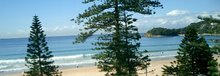
With reported salmonella infections surging in NSW and gastroenteritis reaching epidemic proportions again, it is time to look at the local 'mystery' disease.
The latest outbreak has hit the Northern Beaches' sandy playgrounds. 23 children are suffering from Salmonella paratyphi bio var java, a bug associated with exotics in aquariums.Suburbs cleansed of Australian 'wildlife' only allow interaction-starved young humans to relate to animals as pets, held in captivity. Under the guise of education & child-care living creatures become the objects to form the attention skills of little ones.
After dogs & cats, exotic pets fuel rampant animal traffic and pet shops. Lifted out of their habitats, and/or raised in unsanitary crowded conditions, these exotic beings are then brought (mostly illegally) into the child's space. The exotic bugs come gratis. Reptiles and amphibians became fashionable recently due to their perceived low maintenance and cost effectiveness. ” During 2001--2006, the number of turtles kept as pets in the United States increased 86% to nearly 2 million turtles.” Both turtles and other reptiles are a cause of human Salmonella infection. In the US children in 33 states have become infected with this new emerging disease. “...Salmonella carried by small pet turtles has sickened more than 100 people and hospitalized at least 24 nationwide in the largest recorded outbreak of its kind...” Salmonella Paratyphi B var. Java has been found in most of the cases, “an exposure to turtles, other reptiles, or aquariums containing tropical fish.” was prevalent. In some instances the children were even sharing the unchlorinated pool with the turtle, for some it resulted in renal failure.
The Red-eared Slider (Trachemys scripta elegans) is one such popular pet turtle from the wet-lands of the United States. Popular with the animal trafficking industry, later as another costly invasive pest they are finding their way illegally into Australia, from Brisbane, Canberra, Gold Coast, Hobart and Melbourne. “The CDC has found that potentially fatal diseases such as monkeypox, salmonellosis, tularemia, and plague have been transmitted to people via imported animals such as squirrels, mice, lizards, snakes, and turtles.”
It would be sustainable to learn to share the world with the Australian animals,that still exist and interact by providing a long-term habitat for them and healthy young human beings, learning about ecology and interacting with peers in an intact environment. No invasive pests and no hurled alien bugsAnd more on beach sand...and E. coli
It has been found that bacteria from sewage ( Escherichia coli, fecal coliforms,  and enterococci) accumulates in the golden beach sand of Florida's shores. ” Results showed that wet sand (in the intertidal zone) and dry sand above the intertidal zone had significantly more fecal bacteria than near-shore seawater ”. Feces-derived bacteria actually continue to reproduce on the beach sand, wave action washes some back into the blue surf. Rolling on beach sand could harbour health risks.
Let's not think about the untreated mess illegal dog-walkers leave behind on unsupervised beaches. Lucky, that Manly is girth by a vigilant water quality management.
More:
On Salmonella, CDC
Turtle-Associated Salmonellosis in Humans—United States, 2006–2007, CDC
Stop kissing that turtle, Barf 0908
Update:
280709 Beach sand fecal contamination and salmonella
260212 Salmonella in Sydney playgrounds, Mona Vale, Winnererremy Bay, S. Paratyphi B biovar Java exotic pets reptiles aquarium hygiene Multidrug-resistant Salmonella Java
06012015 Finally, the 'feel good solution' of blaming Australian native animals is here. Blame the last endemic bandicoots and turn a blind eye to pet feces and contaminated sand in which minors aggregate in large numbers (with their pets).
18 May 2008
Sand - Salmonella, E. coli and that cute pet

04 May 2008
Animation of Manly Beach Sydney Australia
After looking at Manly 100 years ago it is time for a contemporary Manly dreaming by Dot Atelier. All depictions and audio are captured in Manly. So, turn up the volume and watch...More on full screen here
09 April 2008
Pictures of Manly 100 years ago
Some photos of Manly 100 years ago. 

20 October 2007
Shelly Beach Palm Gully Creek
 Walking along Marine Parade (Manly Beach to Shelly Beach) today. Wondering why most of the large figs are so sparse and losing their leaves. Herbicide? Better views? Dogs, off leashes chasing the few Eastern Water Dragons trying to rest on the hot sandstones. Bulging black (leaking) plastic bags of untreated! feces hanging around picnic-lawns, near the walkway and beach. Weeds spilling down the nice sand stonewalls from the properties above.
 On the Ocean side, at the Cabbage Tree Bay Aquatic Reserve huge boats parked right in the little bay, stirring up the bottom of the delicate “reserve”. Swimmers and divers risk their lives swimming near these motorised McMasions.
Finally at busy Shelly Beach, all seem to be unaware of the high pollution at the beach, mixing fecal bacteria with blue Pacific water. It is a mystery why Shelly Headland is not part of the National Park or a Reserve. Just handed over to car parking and as a dog loo. Middens and Stone tools mashed up as cement to bang in access for easy fishing. Cunningham's Skinks (pdf) are deserting the area and Bandicoots are living dangerously there at night with dogs hunting.
A state of shame in water management
The stairs near the Kiosk lead up to a remnant of a creek that used to flow into the Palm cove of Shelly Beach in the old days. Today a walkway leads to Bower Street and the water management is a disgrace. Years ago a beautiful rainforest has been planted alog this creek, which has its origin on North Head. Most properties have weeds spilling into the (name-less?) 'reserve'. But the biggest shame are the many blatant PVC pipes directing their point source pollution INTO that water which flows into Shelly Beach. The point at the bridge, where most pipes discharge their private waste looked like oily smelly yuck.  Surface runoff from building sites also just flows into the little gully. How can such a waterway and bushland be treated so carelessly?
But then there are many pipes flowing all along Marine Parade into the Aquatic Reserve. The thick green 'fur' on the rock testifies to this eutrophication which in turn causes harmful algae to grow.
Images: 1.Swimmers having to swim around a yacht on Cabbage Tree Bay Aquatic RESERVE, 2 & 3 Creek Gully, stairs to Bower St. from Shelly Beach, re-vegetated wit run-off at many points.
Update:
Preventing red tides at Shelly Beach, 061008
Links:
Streamwatch
Managing Wastewater in Coastal Urban Areas
19 October 2007
Can Manly afford not to share North Head with Penguins?
 Manly is fortunate to still have a population of the endangered Little Penguins. The 30 cm tall flightless seabird only weighs between 1000 and 1200 g . They are very social and like to live in some foreshore shelters, when they are not in the ocean/harbour hunting for fish and squid.
Humans are deciding at the moment whether they should have a right to a home or even a life. Habitat destruction/robbery, polluted water quality and unleashed dogs are the main threats to the existence of these little Fairy Penguins.
Some humans have already built a big building on top of a penguin colony in the National Park. That is not enough, they now would like to make it bigger and bring many more people to the place. They are willing to spend $21 million to turn the nice bush-land into an “eyesore”. There will be more cars, bright lights, noises and dogs – all of which the little fellows get scared of.  Other people think, that they should build the big buildings and roads where there is already infrastructure. They also would like their hunting ground, the water, protected and made into a Marine Reserve. That would mean, no more dirty runoff, noisy stinking boats, throwing fish corpses and plastic debris around, or even turning little penguins into bait. It is a tough struggle to give these unique creatures a right to exist.
Elsewhere the government has realised how these Penguins contribute to the economy and attract many visitors. They decided to invest many million dollars and buy them a big home: foreshore and ocean where they can live happily for a long time. No noisy, yucky building sites or dogs on the loose will threaten them in their new home there.
In such a place they can do what they naturally like doing, stay with their mates (cohorts), walk together in a ‘synchronized parade’, hunt for food and spend most of their time and life in that little in-group. Only disturbance, mostly from humans and dogs, makes them give up their normal social life.
Previous:
North Head Developments, before and after
Penguins or dogs
Leave some of Manly as Penguin Habitat
Links:
Penguin Images
Poisonous plankton blooms killing Fairy Penguins
Video animation: The plight of the Little Penguin, Animation Oz, Act now!
Images: 1. Street art Manly, 2. Sign on gutter, urging not to pour pollutants down the drain, then to the ocean, then to the fish, then in to penguins or humans.
17 October 2007
Drinking Water Security
 Sydney Belly
“Sydney Belly”, gastrointestinal illness and diarrhoea is probably as old as Sydney. As long as water and feces are being mashed up the winners are the pathogens. At the moment care facilities for the young and old are being hit by a norovirus (stomach cramps, diarrhoea and vomiting) again.
Crypto in the drinking water
Bugs (“low levels of cryptosporidium”) found in Sydney's water supply it was reported yesterday are “not posing any threat to the city's drinking water supply“. A boggling check at Sydney Drinking Water Quality report claims that there are NO Cryptosporidium and Giardia found in the crystal clear water. Going a few days back, this seems to have been the case too.
Cryptosporidiosis
Cryptosporidium is a parasite resistant to most disinfectants. It is “ spread through feces of infected hosts and causes sometimes severe diarrhea in humans and animals.” Once it gets into the body via water, food or unhygienic practices, the symptoms are usually gastrointestinal illness, diarrhoea and sometimes vomiting. "...It is the most common non-viral cause of diarrhoea worldwide... People can literally die of diarrhoea: they can lose over 13 litres of fluid a day.“
Some Crypto cases: Rapidly growing populations outstrip infrastructure
Galway, the fastest growing city in Ireland is the prototype “where rapid expansion of housing developments has not been matched by infrastructure upgrades...236 laboratory confirmed cases of Cryptosporidium infection had been identified, with at least 40 resulting in hospitalisation...sewage is the major source of contamination.” Many in the tourist industry have “installed their own water filtration systems to reassure guests.”
The cause of the Milwaukee Cryptosporidium epidemic in 1993 was "found to be sewage that passed through the filtration system of one of the city's drinking water plants.” “ 400,000 people became infected and 60 people" (or 100) "died as a result of drinking infected water”.
The 1998 Sydney Water Crisis requiring 3 million residents to 'boil water ' was memorable for residents and visitors. Two small bugs, Cryptosporidium and Giardia led to changes in Sydney Water Corporation. Years on in 2007 the two pathogens are still causing “severe gastrointestinal illness”. In SA too there were “ 228 cases of cryptosporidiosis this year, compared to 52 for the same period last year.” Sewage and water mix in Australia, South Africa and many other places. How many is ok?
In Milwaukee there are no more than one Cryptosporidium oocyst per 10 litres allowed. It is “now a criminal offence in the UK to supply drinking-water that has more than one Cryptosporidium oocyst per 10 litres”. The 1998 Sydney incident "has shown no evidence of any illness that could be attributed to drinking water contamination. Accordingly, law suits claiming for illness among consumers have recently been withdrawn from Australia's high court.“
Wait- there is more than Crypto and Giardia
There are other pathogens, but there are chemicals that could have very adverse health effects on humans and animals. “Disinfection by-products (DBPs), endocrine disrupting chemicals, antibiotics, polymers and pesticides”. The question is no longer in a risk-society to aim for not having any harmful substances in the drinking water, but the “Acceptable Daily Intake (ADI) ..which can be ingested for an entire lifetime (70 years) without appreciable health risk” Health and the possible cancer are a matter for probability/statistics. (Micropollutants, pdf)
“Balancing burgeoning public needs for safe drinking water with dwindling supplies will be a major challenge for public works managers and regulators in the years to come.”
Previous:
More on Sydney Water, Health and Pollution
Drinking water security and sewage
Reducing Risks when eating out
Reading:
The Sydney Water Crisis, Another Lesson in Health Risk Communication Failure, Dr. Steve E.Hrudey (Professor of Environmental Health Sciences in the Department of Public Health Sciences)
Organic Micropollutants in Water, pdf (www.waterquality.crc.org.au)
Galway Cryptosporidium Outbreak, Health Stream Article - Issue 46 - June 2007
Critical processes affecting Cryptosporidium oocyst survival in the environment, King, B.J. and Monis, P.T. (2007) Parasitology, 134 (Pt 3); 309-23.Health Stream Literature Summary - Issue 46 - June 2007
Waterquality, CRC, au
"Cryptosporidium"- tag, ABC
Image: Water sculpture for gathering clouds by Eora
16 October 2007
Halloween – it's kinda spooky
 Manly Council is attempting to facilitate 'community' top down. The chosen event this time is Halloween. “Make your Street Spookier” goes the postcard-blurb. We should engage in a “creepy” orgy of consuming and line the streets with debris (plastics): “fake cobwebs, bats" etc., streamers and sugar/coloured lollies and spend big on costumes. Strange ideas for a council that purports minimising waste and has a sustainability statement. The promise is that the road will be closed, but no mention is made where the many spectators will park and what the increased traffic hazard means for wildlife and adjoining streets capes.
Halloween has its origin in the agricultural rites of death and renewal for a new sustainable year. Part of the produce had to be sacrificed to the land spirits and shared within the community. Dark forces had to be soothed with gifts and bonfires held darkness and death at bay. This renewal festival has long been co-opted and commercialised to flog off (mainly plastic) merchandise. Australia has just recently hopped on to this bandwagon.  The are a lot of spooky skeletons in the Australian closet. The plastic bats, spiders, owls, crows, skeletons, the cats, werewolves, haunted houses and zombies might be contemporary props to ward off the the inevitable hot dry future created by mischief-making adults. The horror is ususally projected onto the living native spiders and bats etc - till the ritual spray or habitat destruction puts an end to the spook. The defense mechanism must lay the blame on a sacrificial being, to heal the denial, the anxious state of being. Halloween is a welcomed purging as well as an economic healer now.
Children are very anxious about the future. A world without water and food , but permanent engulfing “bonfires” does not fuel much optimism. Responsible elders not looking after our only common home make the decisions to heat it up unbearable for all, make the sea rise and melt the ice. Daily, many members of this common household have to go forever. The land, waterways and air are used as rubbish tips and all loose their health. Degraded land and toxic landscapes are part of the inheritance. This 'house of horrors' might well be less inhabitable than what their parents inherited and squandered. The disruptive nature of economic and ecological inter generational equity is creepy.  Apart from these many “natural disasters” of a turbulent future, children go through horror scenarios of neglect and child abuse in Australia. Irresponsible use of cars, guns and dogs also sacrifices many young lives. Haunted human relationships propagate in a spooky Zombie culture. It is bewitched how young people are denied independence and maybe a future too.
Till then, put on the big magical denial party and celebrate...
Images: 1. Children at Manly Beach, 2 & 3 Street art Berlin
12 October 2007
Clothing and Manly Demographics
 The immersive consumer market moved along with Manly's demographic trend. Mainly 20-39 year old Anglophones. Postindustrial society seems to provide few stay-at-work-incentives so a nation of 'stay-at-home moms and a few stay-at-home dads' is encouraged. The professional home-maker does not need work-clothes of course, instead a plethora of body-hack shops have sprung up. The make-over services range from blonding without an end, podiatrists' income generators, known as footwear and lots of 'scents to die for'. Internal bras are sure to come, plastic surgery for all is creeping in. Clothing is mainly synthetic and tends to look like life-long maternity wear.
In a post-factual world, lingerie fantasy-wear seems to be the new gear for hard yakka. No, it has nothing to do with the position of women in servitude submission or bondage. As undergarment or mainstream attire it is the uniform of many female 'success stories' that would 'make mum proud'. The drudgery of depressed motherhood is just part of this unsustainable fantasy game.
11 October 2007
Sydney Botanical Gardens
 The Royal Botanic Garden is only 15 (nautical) minutes away from Manly. Pedestrians are the main obstacle to the flow of motorised traffic IN the park. A huge building site WITHIN the garden is very noisy. The industrial site-ambiance drives one to the sunny lawn areas (no plants).
It is a pity, how such a mid-city green gem could just turn into an extension of the noisy, dangerous city. It is not easy finding Australian flora, but maybe it is all locked up in the commercialised constructions. Plants seem secondary to the event spectacles that are drawing the paying crowds to the theme park.
The bats are running out of trees and the native Ibis, robbed of their wetlands are declared another "nuisance species". The chicks are just suffocated in a 'cheap' way.
And the restaurant!- better not go into detail.
The image via Google might show how the garden is eaten up in time, not from the outside, but from within.
Update: A decline in visitor numbers - what a surprise. abc 190509
Bogong migration incompatible with human society
 As every year at this time the bright cities of NSW are swarming with Bogong moths. In the CBD of Sydney they were clinging in the crevises of old sandstone buildings, sheltering from the sun and resting. They did not go for the fauna-repelling cement/glass bunkers to hide. From Circular Quay to the CBD there was a frenzy of humans spraying poisons or sucking them in to industrial vacuum cleaners.
These creatures probably have migrated 'forever' on the same migratory routes. Growing up as a larvae in Queensland, they get a big dose of arsenic in the 'agricultural' fields. When it is time to hatch as a moth, it takes them 1000 km each year to fly to their cool Alpine granite caves. On the way they have to stop over for a rest in NSW, some just get attracted by all the light pollution.
The intolerance of humans to share the wildlife-urban interface in Australia with other creatures is high. In the struggle for control over space, the Australian animals are the ones for the extinction list. Termed by the MSM as “unskilled migrants” or even pest infestations, they are being eradicated. The concept of unique and 'protected' Australian fauna is for the zoo or emblems. After the arsenic, the pesticides generously sprayed around take their toll on the native birds. Appeals to reduce unnecessary light pollution, which attracts the swarms, also fall on clogged ears.
 The ones that make it back to the Australian Alps are eagerly gobbled up by the threatened tiny Pygmy Possum. Both moth and mountain possum are also robbed of their habitat and food sources by human-induced climate change. Snow tourism, sprawl, climate change and grazing cattle illegally deprive these Australians of their habitat. Pygmy, (video) just 'discovered' in 1966 and already on the way out, has as its main diet Bogongs. The snow is melting and the (toxic) Bogongs are not so plentiful.
Maybe the sandstone caves at Circular Quay that were eradicated to make place for the British penal settlement belonged to the Bogongs traditional space/time to ensure sustainable food for fauna and indigenous people. It was also the beginning of the mash up of spring water and sewage, as is a tradition of this unsustainable culture. The growing population quickly outstripped the clear spring at Circular Quay. They filled in the source of the stream to produce more food. Many years on from this Tank Stream saga, the stench of sewage at the Quay and the unavailability of healthy (drinking) water testifies to this culture too poor to manage its resources mindfully.
Huntsman spiders are welcoming them in Manly and the CBD...
Previous:
Bogong clouds over Manly
Other Links:
Bogong Months and Parliament House
Update:
Decline in bogong moth numbers leaves pygmy mountain possums starving, The Guardian, 25.02.2019
10 October 2007
Immersing in Manly's smells, sounds and...
 Olfactory ambience: sewage stench, at Shelley Beach, at Manly Beach and North Head. Dense plumes of nicotine at every doorway and corner.
Auditory ambience: A frenzy of buildings noises overpowering the surf all along the beach and walkway. Have a nice holiday!
Walkability: All “pedestrian zones” were parked out with numerous vehicles all over. Air-pollution in your face when they throw the motors on to “warm er up”.
Bathing: Shelly Beach is a shit and water mash-up. What a waste for such a nice beach. Too poor to keep up infrastructure with population growth?
Garbage and Plastics pollution: Convenience food and drinks encouraged and the anti-products socialised. Image 2: Surfers against sewage
Previous:
On the use of water and the creation of dead zones
Drinking water, sewage and emerging bugs
Daily beach reports
08 October 2007
Tornado at Manly Beach
 A small tornado shot out of a dense cloud and whipped up the ocean at 10.45 am today.Yes, you probably want some pics from the eye of the tornado, here are some big ones. More on tropical cyclones! in NSW. And the video:
Update:
280509 another tornado whirling along Manly beach.
300509 Three tornados breaking out of one mega dark cloud.At 10.30 am a very dark cloud formed over Manly Beach. It seemed to be reaching in long 'threads' for the ocean. In the north ( off Queenscliff) one developed a large waterspout, twisting the ocean for a long time. A small one at Manly beach and a third one behind North Head. The giant super-organism broke into heavy rain.